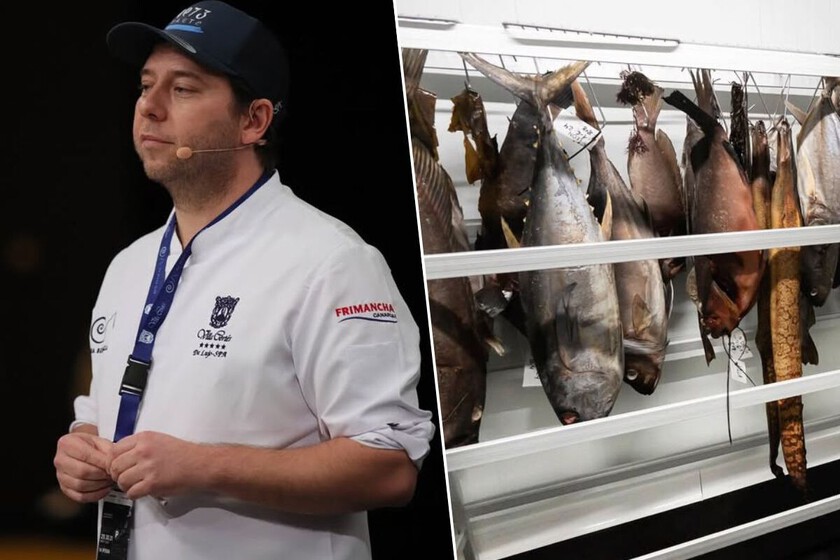
Diego Schattenhofer is a chef who is truly interesting in today's gastronomic universe, where it increasingly seems that cooking has to be a spectacle. Instead, what her kitchen talks about is getting up early, scrubbing floors and learning to cook professionally by reading notes borrowed because she didn't have money to study.
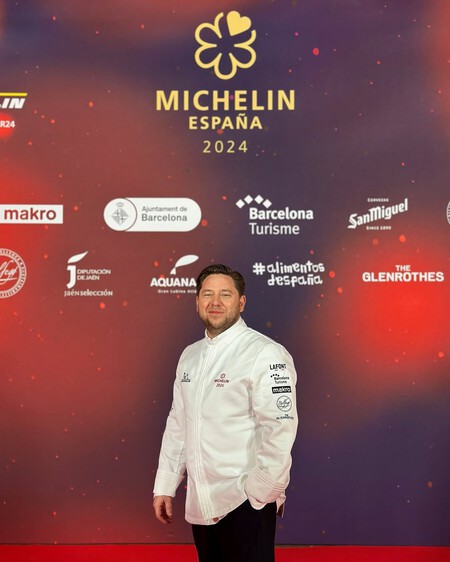
Today he runs Taste 1973, the restaurant at the Villa Cortés Hotel in Tenerife, awarded a Michelin star and converted into one of the most innovative places in Spain when it comes to fish treatment. There he has developed one of the most talked about proposals in contemporary haute cuisine: working with matured fish to enhance its texture, flavor and, in the process, take advantage of the product.
Although the most interesting part of its history does not begin with the Michelin star but much earlier, in a sports canteen in Argentina.
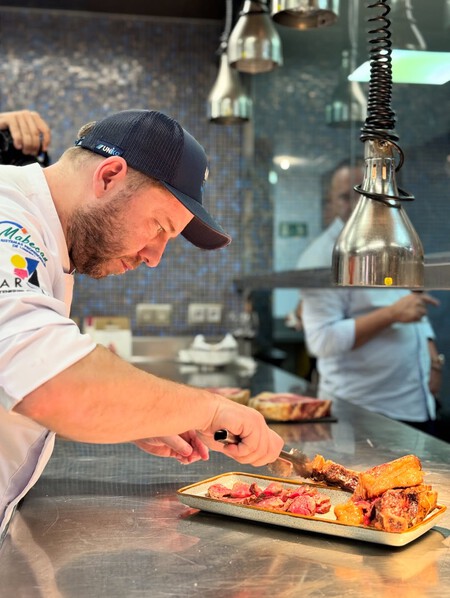
@diegoschatten
Before haute cuisine, grills
Schattenhofer grew up in Chajarí, an Argentine town where cooking was part of the family routine. His heritage mixed Swiss roots and Sicilian tradition, with family members linked to hospitality, food production and an intra-family culture in which eating well was religion.
According to what he said in an interview with the Argentine newspaper 'Clarín', at home they had a sacred rule: not to repeat the menu in two weeks. While other children barely approached the stove, he was already helping to prepare massive barbecues at the sports club where his parents worked. I lit embers, moved trays and made cornstarch alfajores when I was practically a child.
He also grew up surrounded by a competitive spirit. He played basketball and learned early to live with constant pressure, something that continues to apply to professional cooking today. Because, although from the outside luxury gastronomy may seem slow and elegant, he insists that it is an environment of extreme precision where every second counts.
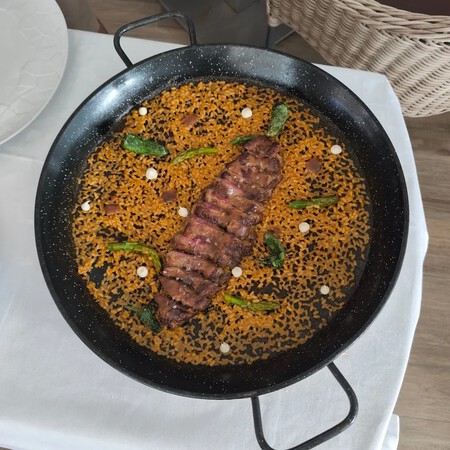
He arrived in Madrid without money and slept on the street
The story takes a dramatic turn when his plans to study in Argentina were thwarted due to family financial problems. Even so, at the beginning of the 2000s, he moved to Buenos Aires ready to learn cooking no matter what. He worked for free, moved from one restaurant to another and survived on tips while he taught himself.
Then Spain arrived. And here things got even more complicated. Without stable papers or a secure economic situation, he went through a particularly difficult period in which he even slept on the street and in bus shelters. He tells it himself, yes, without drama and almost as if that precariousness had been another phase of his learning.
Over time he managed to regularize his situation and began to enter important kitchens. He worked alongside relevant names in Spanish gastronomy and ended up settling in the Canary Islands, where he found a gastronomic territory that was still little explored.
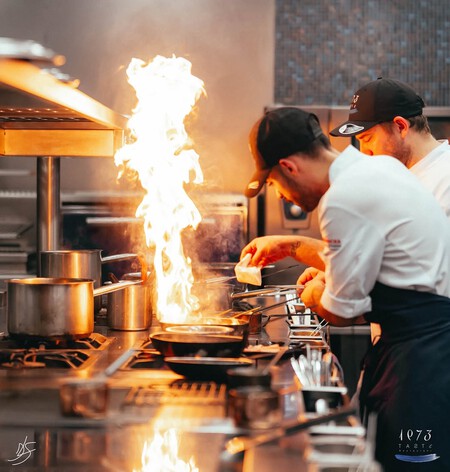
@1973taste.restaurant
The man who wants you to stop thinking that the fresher the fish, the better
Although for years we have been told that the best fish is always the freshest possible, Schattenhofer has been questioning precisely this idea for some time. At Taste 1973 they work with controlled maturation processes similar to those used with certain meats. Their technique consists of controlling temperature, humidity and oxidation to slowly transform the product. The result is a more buttery fish with deeper flavors, as well as nuances that are even reminiscent of nuts.
Said like this it may sound strange, but within Spanish haute cuisine there is more and more interest in this type of process. The interesting thing is that he does not present the technique as a simple gastronomic eccentricity but focuses it on combating food waste. In gastronomic meetings he has explained that a large part of the fish ends up being discarded during the culinary process and that better understanding how to preserve and transform it can change that reality.
Obsessed with understanding why a dish excites
Years ago he began collaborating with scientists, engineers, neurologists and specialists from different disciplines to investigate how gastronomic memory works. The project ended up becoming Gastro Sinapsis, a creative laboratory where cooking, science and narrative coexist. Because for the chef a dish should not be limited to being good. It should activate something else in the diner.
@1973taste.restaurant
That is why, in his restaurant, stories about Canarian fishermen appear, aromas designed to awaken memories or explanations about the exact origin of certain ingredients. The experience it offers does not seek to impress only technically, but also emotionally.
In the end, behind the chef who today gives talks at gastronomic conferences and works with scientific teams, there is still the child who helped his parents on a grill and the cook who crossed the ocean without contacts or money. Only now he uses all that journey to revolutionize the way in which Spain consumes fish.
Cover photo | @diegoschatten and @1973taste.restaurant