At first, Álvarez Gato Street may not catch the eye like other more obvious jewels of the Barrio de las Letras. This is narrow and, therefore, somewhat dark, but also noisy because it is in an area of bars and restaurants. However, the popularly called “Cat Alley” is a mine of backgrounds for beautiful photos. On top of that, it is linked to centuries of literature, symbols and twisted reflections of Madrid's history.
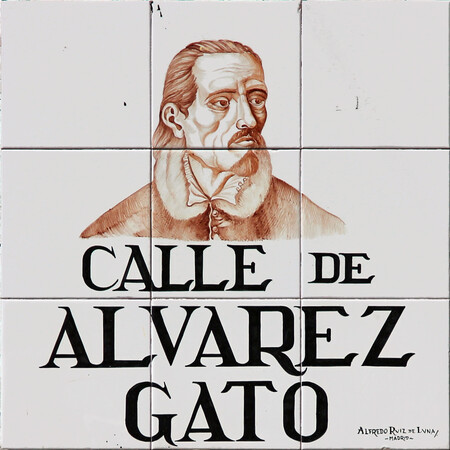
To begin with, it owes its name to the 15th century poet Juan Álvarez Gato, although its special place in the Madrid imagination was earned thanks to Valle-Inclán and the passages from 'Luces de Bohemia' that the author placed in this same alley, turning it into one of the most literary corners of the city.
Luis Garcia
The Alley of the Grotesque
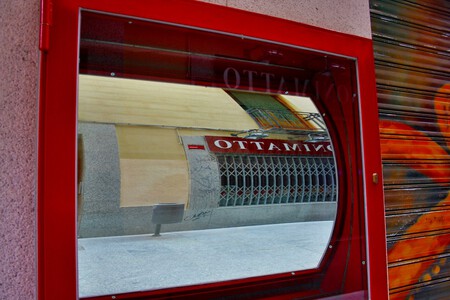
In the second half of the 19th century, this alley concentrated a good number of cafes (gathering, lounges, tablaos) in its premises. It is not surprising that it ended up being the scene of one of the most famous passages of 'Bohemian Lights', when Max Estrella talks with Don Latino de Hispalis in front of some concave and convex mirrors placed on the facade of an old mirror store. These distorted the image of whoever was looking at them and became a perfect visual metaphor for the grotesque: a distorted, exaggerated and crude way of seeing reality.
However, Valle-Inclán was not the only writer who recorded the impressiveness of the magic of this street. Ramón Gómez de la Serna, for his part, said: “In Gato Alley there were until recently, fitted to the wall and the size of a passerby of regular height, two mirrors…”. The philologist Alonso Zamora Vicente also recorded how those mirrors were part of Madrid's collective memory, like a children's game and an obligatory stop on aimless walks.
Carlos Vinas
Unfortunately, the original mirrors disappeared half a century ago. However, today there are other smaller ones in its place, which although they do not have the same symbolic force, continue to give faith and remember that deformed, theatrical and literary Madrid of Valle-Inclán. A plaque installed by the City Council in 1991 remembers the literary episode. In addition, different murals have been added to its charm along the street, which are very photogenic spots to stop to take photos.
One of them is a large graffiti that simulates a library shelf. There are spines of books with titles by Valle-Inclán, while in a corner you can see the caricature of the writer. A very visual tribute to his figure that connects directly with all the literary iconography linked to the street.
rene boulay
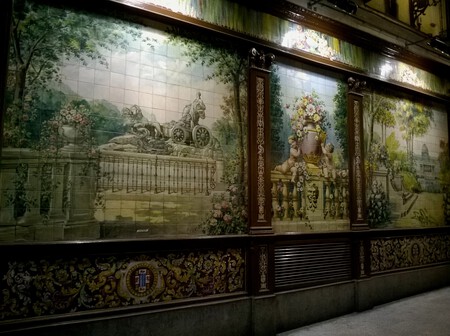
Right on the corner with Núñez de Arce street is the old Villa Rosa flamenco tablao, whose exterior is still decorated with colorful ceramic panels. They were made in 1928 by the ceramist Alfonso Romero Mesa, based on sketches by Juan Ruiz de Luna and they represent postcards from different parts of the capital. Its traditional style gives a very traditional and distinctive charm to the alley.
Bars, bravas and legends
The history and legends that float around this street, however, are many more. One of the most curious tells that a large wild cat was trapped there to make boots from its skin for the Great Captain, a gift from Cardinal Cisneros. The problem is that, since they were made from the skin of said feline, they gave off an imperceptible smell to humans but irresistible to other cats, who came to urinate on them every night.
Carlos Vinas
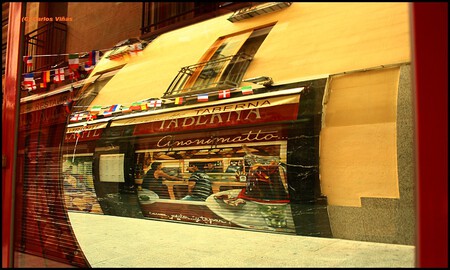
However, what is now Callejón del Gato is a small hive of bars and restaurants. Among all of them, one stands out that has gained fame for its potatoes: Las Bravas, at number 3 on the street. There is no need to explain much more, its name already says it all. Furthermore, it is on its façade where the mirrors we talked about before are located. Another essential photo.
Cover photo | Luis Garcia