Marion Island is part of the subantarctic archipelago of the Prince Edward Islands, about 2,300 km southeast of Cape Town in the southern Indian Ocean. In 1947, South Africa proclaimed the sovereignty of the islands and a meteorological station was established on Marion Island in 1948, with the idea of collecting meteorological data to improve maritime navigation on Atlantic and southern Indian routes. But I'm not here to tell you about how they measured inclement weather, but to tell you how five cats changed everything.
Despite its inhospitable climate, treacherous swamps, and volcanic and glacial landscapes, the Prince Edward Islands were home to hundreds of thousands of seabirds such as penguins, albatrosses, petrels, and prions, and tens of thousands of fur seals and elephant seals. But mice also snuck into the base of the Marion Island weather station after they were unknowingly brought in a century earlier by seal hunters arriving on the island.
The solution to a mouse infestation: taking cats to the island
In 1949 the plague of mice was a problem at the small station, so the solution was to bring in a natural predator to hunt them down. Five cats. The problem came later. The offspring of those cats had gone feral and “hunted smaller petrels or mice, common on the coastal plain” according to RW Rand. In 1951 the first wild cat was sighted and in 1975, the estimated population of wild cats was already 2,139 in just 298 km². Two years later the figure increased to 3,405 kittens according to research by Rudi van Aarde.
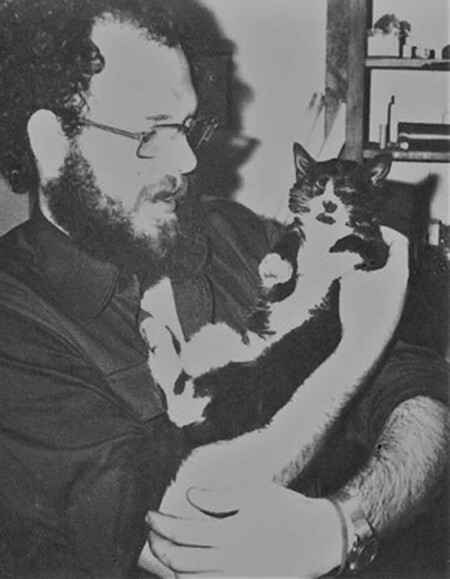
One of the first Marion Island cats
Uninhabited islands like this one are highly vulnerable to invasive alien species. In fact, they are considered the greatest threat to the biodiversity of the subantarctic islands. As an invasive species, the cat completely changed the island because they killed 455,000 birds a year, so the South African Scientific Committee on Antarctic Research (SASCAR) got scared and although a few years earlier they didn't seem to care about cats, in 1975 a cat eradication program was launched. In fact, the most ambitious, extensive, prolonged and expensive project carried out in an island ecosystem was launched.
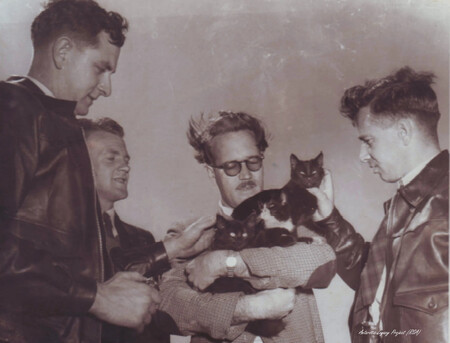
I'm not going to explain to you in great detail how they did it because as a cat lover it pains me, but a combination of intensive trapping, night hunting and a virus, feline panleukopenia, was carried out as a biological control tool. The last cat disappeared from the island in July 1991. But when you eliminate the cats, the mice run wild.
No cats, now the problem is mice (again)
The mice that arrived with hunters in the 19th century no longer had predators to stop them, and they multiplied. A lot. Those little mice became the terror of the birds. Although they barely weigh 20 grams, they became deadly predators for bird populations, from the smallest petrels to wandering albatross chicks that can weigh up to 7 kilograms. Since 2003, house mice have been documented feeding on chicks and adult seabirds.
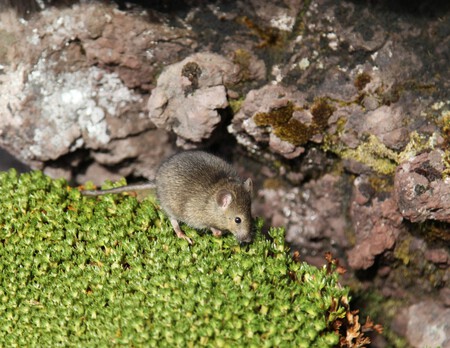
They seem adorable, but they attack the chicks, even killing them.
12 years after feral cats disappeared from Marion Island, another predator stalks the island's seabirds, and it's tiny. The impact of mice is such that a rodent eradication operation has been designed through the 'Mouse-Free Marion Project' and the cost is 25 million dollars. The goal is to eliminate introduced house mice because they endanger the long-term survival of seabirds and other native species on Marion Island. Of course, this time they won't choose to bring some cats to the island to take charge.
In Xataka | Spain dreamed of having the first octopus farm in the world. To the joy of environmentalists, he has been left wanting
In Motorpasion | Juan José Ebenezer, mechanic: “You don't have to leave the car parked with the wheels turned because you can have it end up in the workshop”