The migration of the monarch butterfly is one of those natural spectacles that, although it is repeated every year, we should not take for granted (unfortunately). Every fall, millions of specimens of this orange-winged insect travel the thousands of kilometers that separate Canada and the United States from the temperate forests of central Mexico. A journey as long as it is delicate that, year after year, hangs by too many threads.
Your destination is the Monarch Butterfly Biosphere Reserve, a protected space that extends between Michoacán and the State of Mexico and is recognized as a Natural Heritage of Humanity by UNESCO. There the monarchs hibernate before returning north with the arrival of spring.
The season began at the end of October 2025 and in November the sanctuaries opened to the public. However, they can only be visited until March, so this is your sign not to miss the last opportunity to see one of the most breathtaking phenomena on the planet.
In fact, these last few days are the best to approach the reserve because the sun crosses the forest and the butterflies wake up en masse, fluttering in search of water and nectar.
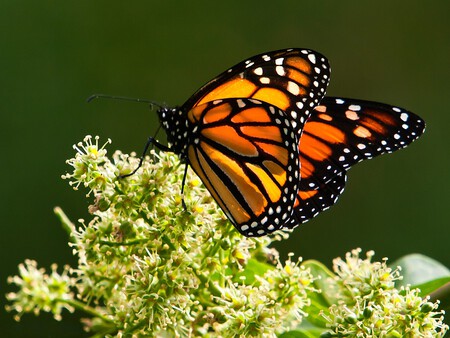
Juan Emilio
Where to see them (and how to do it well)
The heart of this experience is in the sanctuaries open to tourism within the reserve. The best known is El Rosario, in the municipality of Ocampo (Michoacán). It is the one with the largest number of butterflies and also the most crowded. Of course, it must be taken into account that the climb to the observation area requires a walk of about 40 minutes.
In this same municipality there is also the Sierra Chincua Sanctuary, in Senguio. Access is always guided, ecological and with regulated quotas to minimize the impact on the colonies. It is a less traveled option, designed for those who understand observation as an exercise of respect rather than a tourist activity.
For those looking for a quieter environment, Sierra Chincua also offers a more contemplative experience, with tours lasting about an hour on foot or on horseback. And for those starting the trip from Mexico City, Piedra Herrada, in Temascaltepec, is the most accessible option.
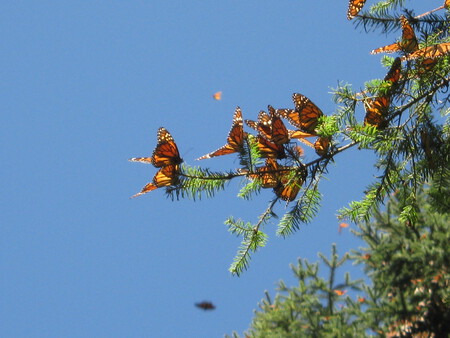
Arkano8
In the State of Mexico, La Mesa, within the Sierra Campanario, offers an experience that goes beyond sighting. The ejido has a deer farm, cabins for lodging and an environment especially valued for its views of the night sky. It can be reached by road from Villa Victoria or El Oro, and tends to attract travelers interested in longer, quieter stays.
Another unique point is El Capulín, on Cerro Pelón. From here you can see the plain of Los Tres Gobernadores and a very visible transition in the vegetation, from the coniferous forest to more open areas. The route is about four kilometers along forest trails and requires a certain physical condition, but in exchange it offers a broader reading of the landscape that supports the migration.
It should be noted that all the sanctuaries have toilet services, sales of traditional food and crafts, as well as trails with delimited routes to do on foot, horseback and bicycle, in addition to offering local guides and extreme sports such as zip lining. On average, access usually costs 35 pesos with a guide. Although to be able to get on a horse, round trip, the price ranges between 80 and 100 pesos.
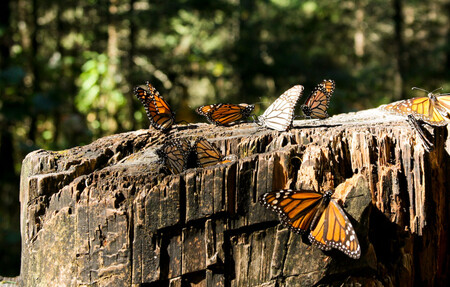
Carlos Adampol Galindo
Of course, there are also strict conservation rules. You cannot use flash nor are you allowed to touch the butterflies or the branches where they rest. You must also avoid drones and maintain silence. It is about observing a wonder of nature, not about altering a vital process. Which brings us to the last but no less important point.
See them today so that they exist tomorrow
No one can guarantee that in ten years this journey will still happen as we know it. Seeing the monarch butterfly today is not only a privilege but an opportunity to help its conservation. Illegal logging, climate change and the disappearance of milkweed (the plant where monarchs lay their eggs) have drastically reduced their overwintering range in the last decade. Organizations like WWF Mexico have been warning for years that recovery is possible, but slow and fragile.
The good news is that, during the 2024-2025 season, the area occupied by the colonies doubled compared to the previous year. But that doesn't mean the problem is solved. It means, rather, that there is still room to act.
Cover photo | Portraitist of landscapes and countrymen