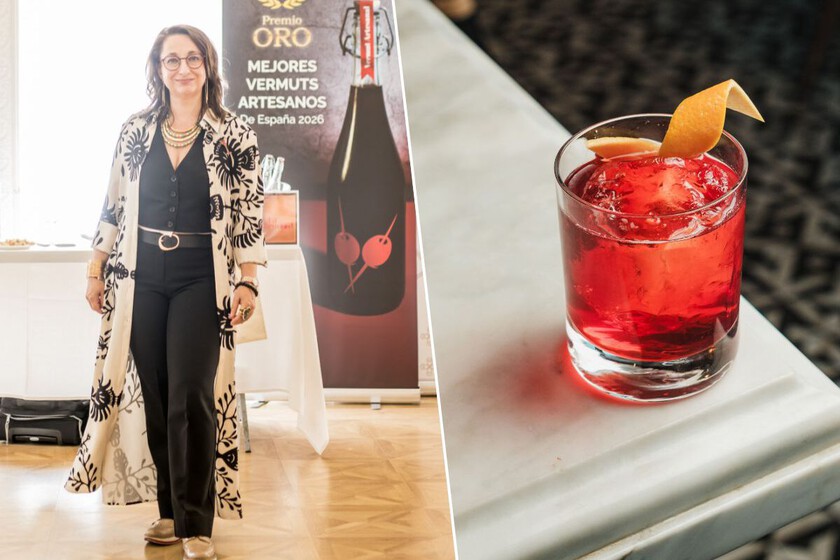
A few weeks ago I met the person with the best stage name in the entire world: Susana Herranz is 'Lady Vermouth' (I wish I was, honestly), and she is also the founder and president of the Association of Artisanal Vermouths of Spain and the Artisanal Vermouth Hall. We met, as it could not be otherwise, at a tasting of artisan vermouths from which I came out doing somersaults (in my defense I will say that there were six vermouths that were delicious) and excited to learn much more about the trendy drink in aperitifs.
The gastronomic revolution of vermouth
Vermouth has always been associated with an aperitif, but in recent times, especially with its popularization in recent years, we can drink vermouth at any time of the day, from mid-morning to the classic afternoon. How does a sommelier defend vermouth as an accompaniment to a complete lunch or dinner?
Vermouth is a drink that can really accompany any dish, at any time of the day, you don't have to focus only on the hour before the meal, the so-called “vermouth time.”
The complexity and versatility of artisanal vermouth leaves a lot of room to harmonize any type of dishes, you just have to find the perfect harmony.
With what common dish (not so much “haute cuisine”, but with something that we can prepare at home to surprise our guests) would a pairing with a good vermouth blow our minds?
Well, spicy meat stews like good Riojan-style potatoes, oxtail, and I could go on always come to mind…
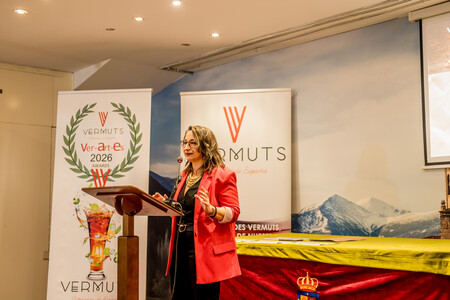
In line with the above, it seems that vermouth is beginning to emerge as the perfect substitute for gin and tonic. Is vermouth winning the battle against other distilled drinks?
The consumption of spirits is declining sharply, people are looking for products with a lower alcohol content and higher quality: this is where artisan vermouths come in, served alone, and cocktails made with this raw material, especially for modern cocktails.
Why is it a more “elegant” and gastronomic option to alternate, for example in the afternoon?
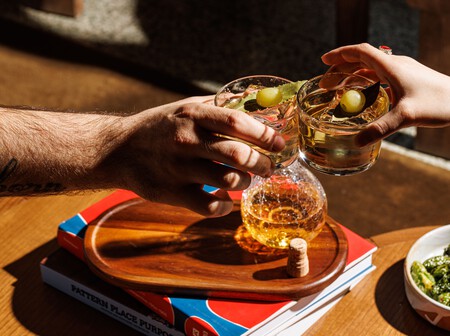
Well, everyone drinks what they want, but a vermouth dresses a lot: the paraphernalia of the orange, the olive, the ice, and a good toast to life, you always want it, it is cool and does not reach the alcohol content of the mixed drinks. I think it is here to stay: a good afternoon worth its salt is associated with starting it with a good vermouth.

How to drink a good vermouth
Regarding the eternal controversy of the orange slice and the olive: are they a sacrilege that masks a bad vermouth or a necessary enhancer?
For a tap or industrial vermouth, for me it is the perfect combination, because it balances the mixture.
If they offer us a high-end artisanal vermouth, how should we demand that it be served to us in a restaurant so as not to burden the producer's work?
Always cold and without ice, or anything else: the product is distorted as soon as we add anything else to it. It should be treated like a white wine.

And about the dreaded hangover and sugar. Industrial vermouth is usually a sugar bomb, which translates into a headache the next day. How does artisan vermouth manage the balance of sweetness?
Normally, grape derivatives are used, syrups, syrups, mistelas… This way we do not use industrial products such as sugar cane honey or refined sugar directly.
Any advice to avoid hangovers or “dangerous” intakes?
As with all alcohols, you should drink in moderation, but it is true that we should eat something before ingesting it. It is true that since it is a cold drink, it is drunk more quickly than a wine, but it is still a 15% drink. A good vermouth aperitif should be accompanied by something to eat.
What is ideal to pair a good vermouth with to accompany food?
Vermouth pairs with many foods, I always say that there is a vermouth for each meal and a meal for each vermouth.
Reclaiming the value of artisan vermouth
Traditionally, Turin vermouth has dominated international cocktails. What is it about the profile of Spanish artisan vermouth that is fascinating both in Spain and abroad?
Its balance and its ease of drinking it alone, Spain is the country where vermouth is drunk the most and especially vermouth alone, without mixing it with anything else.
Beyond wormwood, the combination of herbs is the best kept secret in every house. Without revealing state secrets, what is the strangest, local or surprising botanical (a seaweed, a rare spice, a wild flower) that you have seen successfully incorporated into a vermouth from the Spanish Artisan Vermouth Association?
There is maceration with olive branches, there are Andalusian recipes from the 12th century, there are citrus fruits cut with a knife, coffee, there is fondillon wine, there are Valencian oranges… The reality is that all the Association's vermouths are vermouths with very special profiles and very rooted in the land.
If you had to choose just one Spanish artisan vermouth to convince someone who says they “don't like vermouth”, what flavor profile would you choose?
To start drinking vermouth, I recommend very, very balanced vermouths, perhaps a little more sweet than bitter, but without being too noticeable. In Spain there are excellent vermouths for all palates, for those with a sweet tooth, for those who seek bitterness, and for those who want to experiment. Spain is bringing out all its creative potential in the world of vermouth.
I would like to thank Susana for sharing her vermouth wisdom with us, and I take this opportunity to recommend the two vermouths that came home with me after the tasting and that Susana has available in her store:
- Txurrut vintage: a very sweet white vermouth (and very dangerous, because it enters as if it were water) thanks to maceration with white wines and caramel. It was the first one we tasted and I would have stayed to live there.
- Robles VRMT Andalusian recipe: an original vermouth with Pedro Ximénez, much stronger than the previous one, with a touch of spices that make it super special.
- I also bought the tote bag, because who doesn't want to carry a bag that identifies them as 'Lady Vermouth'? At home I sewed a zipper so I could close it, make it super functional and be able to take it everywhere.
Long live aperitifs and vermouth afternoons!
In Motorpasión | Geologists analyze the sand on the Normandy landing beach and can't believe it: one in every 25 grains is shrapnel
In DAP | White vinegar and cleaning vinegar are not the same: how they are different and how to use them well