For decades, it was one of those names that appear on maps out of pure formality because it was an abandoned town: without neighbors, without electricity, without running water or paved streets. This is Bárcena de Bureba, a district of the municipality of Abajas (in Burgos), depopulated since the 70s… until now. It all starts with two Dutch people, Maaike Geurts and Tibor Strausz, who have started an authentic Dutch colony in the middle of Castilla y León.
From Amsterdam to emptied Spain
For decades, it was one of those names that appear on maps out of pure formality because it was an abandoned town: without neighbors, without electricity, without running water or paved streets. This is Bárcena de Bureba, a district of the municipality of Abajas (in Burgos), depopulated since the 70s… until now. It all starts with two Dutch people, Maaike Geurts and Tibor Strausz, who have started an authentic Dutch colony in the middle of Castilla y León.
From Amsterdam to emptied Spain
Maaike (46 years old and a mathematician by profession) and Tibor (48, a programmer) were living in Amsterdam when they came across a report about desertification in Spain and began to consider the idea of making a radical change in their lives. Their only requirement was to find a place they could reach by train in less than a day from the Netherlands and that the weather was not too bad.
Idealistic
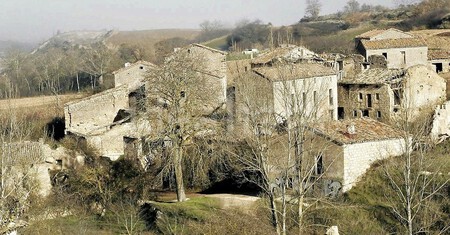
Thus they found Bárcena de Bureba, a town practically in ruins and with about 80 houses distributed in three streets. The lack of infrastructure pushed its former neighbors to leave and, later, a resident of Castil de Lences wanted to turn Bárcena into a tourist destination. The couple bought almost the entire town from him (except for a house, which remains private, and the church, which belongs to the Archbishopric) to found a self-sufficient town. Especially because one of the main reasons for choosing Bárcena was the water.
The Castil River surrounds the town in its lower part and the previous owner had a permit to use its water. The first step to cultivating a garden and a forest of fruit trees. From there the Ardbol project was born and a piece of emptied Spain that, although it still does not have an electrical network, running water or paving, already has solar panels, a postman who arrives there with the mail, a bus stop and mobile coverage.
In addition, Maaike and Tibor have planted paulownia trees, fast-growing trees whose wood they use as part of their medium-term plan. They are also renovating several houses and live temporarily between Bárcena and the municipality of Briviesca, where they take their daughters to school while they finish the renovation of their main home. Meanwhile they are staying in another, better preserved one.
They are not alone
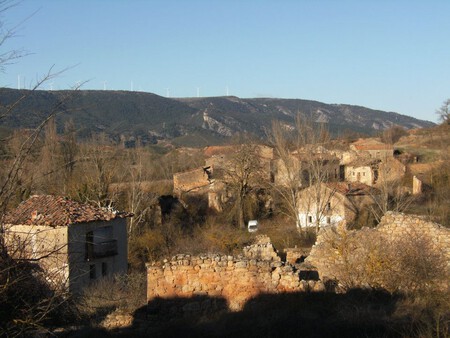
However, they are not the only inhabitants of this new ecovillage. A Spanish man also lives in the town, a descendant of former inhabitants, who bought his house 40 years ago and who has been renovating it with his son for some time. Since the arrival of Maaike and Tibor, several Dutch families have also settled in and learned about the project through media that spread its story in the Netherlands. In addition to a young man from Girona with his pregnant partner and other recent arrivals who still live in tents or caravans while they rehabilitate what will be their homes.
For all of them, Bárcena de Bureba is currently an old town that is beginning to come back to life. Although there is still much to do, the project is long-term and the hope is given above all by the fact that there are already several children in their census, in addition to those who are on the way, something that seemed unthinkable a few years ago when it was a completely empty place (in fact, they boast that they must already be the town with the most children in the region). Here lies what is truly interesting about this story: it is the example of how a place considered lost successfully tries to rewrite its future step by step.
Cover photo | Tomukas