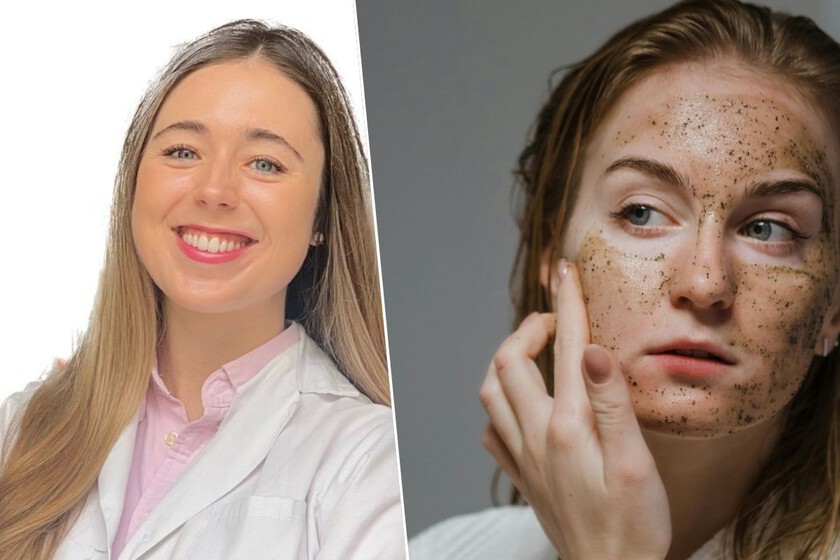
When we talk about facial blemishes we are talking about one of the most common aesthetic concerns: melasma. This skin condition appears in patches and is very common on the upper lip, forehead or cheeks. The reason it appears is due to an overproduction of melanin caused by hormonal changes, sun exposure or genetic predisposition.
Specifically, to treat melasma, the best time to do it is in winter since when it worsens the most it is precisely the months in which there is more sun, such as spring and summer. As explained by dermatologist Leire Barrutia (@desmirphere), now is the best time to be able to apply an intensive treatment and prevent melasma from triggering again when the good weather arrives.

To ensure that our skin is as uniform as possible, the doctor has indicated the steps that must be followed to achieve this. The first of them is to include retinol in our skin care, “it is an active ingredient that we use at night and that will have different effects on the stain. On the one hand, it will have a progressive peeling effect. It will renew the skin and therefore will eliminate the layers of superficial pigment.” But not only that, but retinol will help stabilize the melanocyte, the cell responsible for producing the pigment that is hyperactive in melasma.
In addition, retinol “will help distribute the pigment more evenly in the skin and balance the rest of the skin's functions. The sebaceous function, the barrier function, inflammation, something essential for that melanocyte to remain calm and not start producing excess pigment,” says the expert. There are specific retinols such as Cantabria Labs Retinol Pigment Control Emulsion that also incorporate other types of ingredients that contribute to improving melasma even more.
The second step that Leire recommends is to incorporate a depigmenting serum into your morning routine “that contains, depending on your skin type, ingredients such as vitamin C, tranexamic acid, niacinamide, kojic acid and arbutin,” he says.
After this depigmentation step, the expert emphasizes that it is essential “to apply a good photoprotector, and not just any one will do, but we need a broad-spectrum photoprotector that protects us well from ultraviolet radiation and visible light, and that is also a photocorrector that helps correct those spots that incorporates depigmenting active ingredients,” she comments.
The fourth step is to enhance topical photoprotection with oral photoprotection. “These are capsules that incorporate different ingredients such as polypodium leucutomos that increase the protection of our skin against the sun, something essential in melasma.” As a great option we have the AllSkin Pgimentatin Cantabria Labs. What we must keep in mind, according to the expert, is that these pills will never replace a good sun cream but they will optimize it.

The last and fifth step is “a good cleansing and exfoliation of the skin, this will help us optimize the cell renewal that retinol produces, since this and the rest of the ingredients in our routine can reach deeper layers of the epidermis and can have more effect,” adds Barrutia. SkinCeuticals Replenishing Cleanser is one of their recommendations for cleansing and exfoliating.