There was a time (the Elizabethan court of the 16th century, to be more specific) when women slowly poisoned themselves in order to appear paler. To achieve that symbol of wealth and nobility, many resorted to cosmetics made with lead, mercury or arsenic. The result came with hair loss, neurological damage, ulcers and progressive poisoning that today seems unthinkable in the name of beauty. Or maybe not…
The truth is that all these centuries later we continue to pursue aesthetic ideals with a very similar mix of obsession, social pressure and collective amnesia. The only thing that has changed is the desired color. Now the aspirational skin is no longer white and translucent like porcelain, but permanently golden, as if we have just returned from a week in Formentera (even if it is the middle of winter). And to achieve this, the internet has found a new shortcut: sprays tanning nasals.
The viral product that worries dermatologists
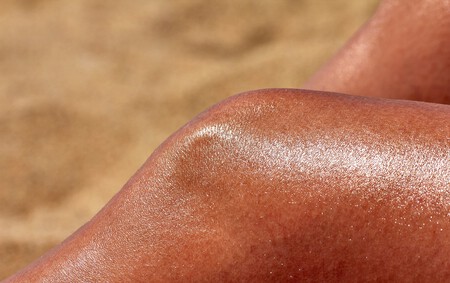
Just a quick search on TikTok or Instagram will reveal nasal sprays with strawberry, peach, or bubblegum flavors that promise to enhance your tan. The problem is that many contain melanotan 2, a synthetic substance not authorized in the European Union or the United States.
Oscar Salgado
It is a peptide that imitates the melanocyte-stimulating hormone and acts by increasing the production of melanin. That is to say, there is a biological basis for what is promised, but just because something works does not mean it is safe.
From the Aesthetic and Therapeutic Dermatology Group of the Spanish Academy of Dermatology and Venereology (AEDV), dermatologist Trinidad Montero has warned that these products are “a real risk to health.” Among the adverse effects associated with its use are nausea, headaches, fatigue, vomiting, hypertension or worrying changes in pre-existing moles and nevi. Which points to a relationship with skin cancer, already demonstrated by some studies.
For her part, dermatologist Marina Rodríguez Martín also warns of the rise of these products popularly known as “Barbie tanners”, recalling that melanotan has not passed health controls and that many of these aerosols are sold without regulation, without traceability and with compositions that are difficult to verify. In fact, its long-term health effects are still unknown.
@farmaceuticofernandez #Memories of the barbie drug #pharmaceuticalfernandez #pharmacy #pharmaceutical #health #learncontiktok
♬ original sound – Farmaceuticofernandez
The UK is so concerned about the use of these products among young people that the Chartered Trading Standards Institute (CTSI) has issued a stern warning to consumers. Although it is illegal to sell medications containing melanotan 2 in the country, these tanners are sold for cosmetic purposes and are outside the restriction.
In Spain, products with Melanotan 2 cannot be legally sold or purchased since it is a substance not authorized for use in humans and its marketing, distribution and sale are completely prohibited by the Spanish Agency for Medicines and Health Products (AEMPS). Which does not prevent nasal tanners from reaching our country through other means.
Tanning as a new status aesthetic
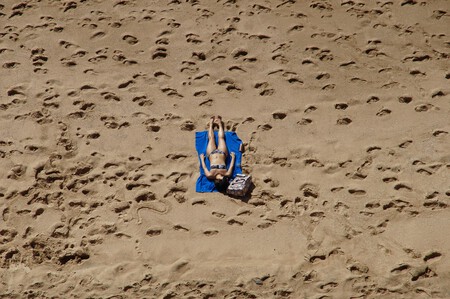
For decades, tan has functioned almost as a visual marker of success. Coco Chanel helped popularize tanning in the 1920s after accidentally appearing sunburned while on vacation on the French Riviera. Since then, golden skin went from being associated with physical work outdoors to representing leisure, travel, free time and economic relief.
Alejandro Juarez
Today the algorithm has taken that idea to the extreme. The clean girl aesthetic, the seemingly eternal vacations on Instagram and the obsession with always looking rested and healthy have turned the permanent tan into another fashion accessory. The problem is that tanning is often confused with health, when dermatologically speaking, just the opposite happens.
Because tanning is not an indicator of skin health but is a defensive response of the skin to aggression. In that sense, another of the recent trends that worries experts the most is the so-called “solar callus”, a viral practice that advocates exposing yourself to the sun without protection so that the skin generates a supposed natural tolerance. A theory without any scientific evidence,
The AEDV itself insists that tanning is a sign of accumulated damage from ultraviolet radiation. Even if the skin stops burning easily, cellular damage continues to occur and increases the risk of premature aging and skin cancer.
Part of the appeal of these new nasal products lies precisely in the fact that they are sold as an easy, quick and apparently less dangerous solution than lying for hours in the sun. But inhaling unregulated substances is not harmless either. To which must be added the false sense of security when no tan, not even one enhanced by melanotan, avoids the effects of UV radiation.
It is difficult not to see a certain historical irony in all this. Before, he would get sick from erasing any trace of sun from his face. Now some put their health at risk to look like a penny. The aesthetic ideal changes, but not the logic: we continue treating the body as a project to be corrected according to the trend of the moment. Whatever the cost and even if it means turning our lives into the plot of a body horror.
Cover photo | Philippe Murray-Pietsch
In Xataka | A photographer climbed to 4,000 meters in the Alps to take an impossible photo at -28ºC: the double arc of the Milky Way
In Decosphere | Amazon liquidates a double-height triangular bungalow-type prefabricated house with a bathroom and kitchen for less than 17,000 euros