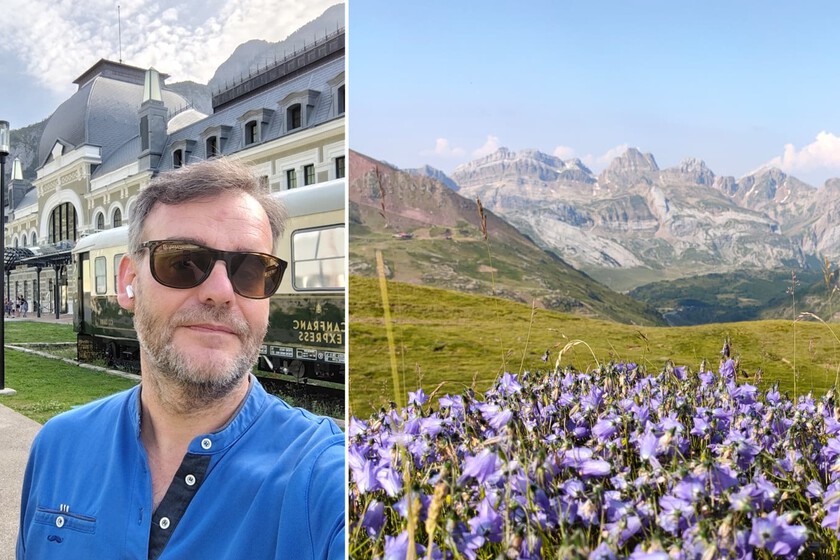
Although every year I take a long trip during the holidays, the truth is that I always like to spend a few days in the Aragonese Pyrenees to disconnect and enjoy its landscapes, its natural heritage and its gastronomy. For me, it is a real necessity because it allows me to rest and recharge my batteries, reconnecting with places that make me feel good, in my place…
I have been going up to the Pyrenees since I was a child, when I was already going up with my parents visiting places like Ordesa. And as the years have passed I have continued to return again and again. Therefore, more than a list of recommendations, this selection is also a journey through my own memory, through those corners that, no matter how much time passes, continue to seem magical to me.
The Hecho Valley, Ansó and the Oza Jungle
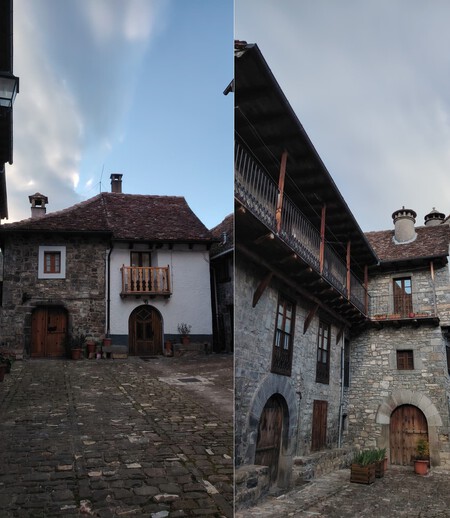
Traditional architecture in Ansó
If I had to choose an area to start, it would be Jacetania. And there, it is essential to visit Hecho (or Echo, in Aragonese) and Ansó, two of the towns that have best preserved their identity in the entire Pyrenees, with those houses of popular Upper Aragonese architecture, with their sloping roofs, their chimneys topped by witch scarecrows or their shields proudly displayed on the doors of the old mansions for many generations.
And then there is the Selva de Oza, which is one of those places that impresses the first time you see them and continues to impress the tenth time. A forest of beech and fir trees that hugs the Aragón Subordán River, with areas to leave the car and walk leisurely. Also leaving from the Selva de Oza itself is one of my favorite routes in the entire Western Pyrenees: the one that goes up to Aguas Tuertas. It is a high mountain plain through which the river meanders in an almost postcard manner, surrounded by meadows and with the mountains looming in the background. It is not a short walk, but it does not require a special level, and the visual reward is one of the greatest I know in this area of the Pyrenees.
In the anteroom of the Valley, and before crossing an impressive gorge called the Boca del Infierno, you must not miss visiting San Pedro de Siresa, one of the oldest monasteries in Aragon, where it is said that Alfonso I The Battler, the Aragonese monarch who conquered Zaragoza, was baptized.
San Juan de la Peña, the monastery that seems to come out of the rock
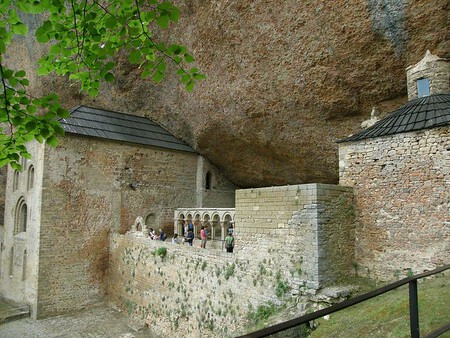
San Juan de la Pena
This is one of the places that I most like to show to those who come to the area for the first time, because the reaction is usually the same: surprise. The old monastery is literally wedged under a huge rock, and that mix of Romanesque architecture and natural rock creates an image that is not easily forgotten. It is considered the cradle of the Kingdom of Aragon, and the first kings of Aragon are buried there along with several members of the Aragonese royal family.
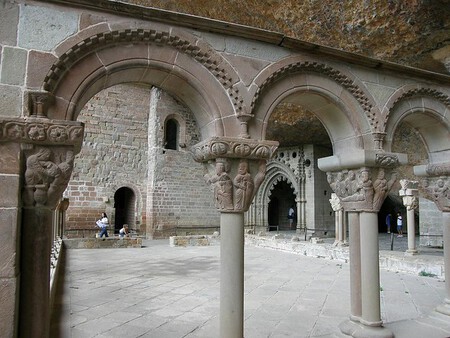
San Juan de la Pena
The access road, with its curves through the forest, is already worth the trip. And from the viewpoint near the new monastery, the views of the Pyrenees are some of the best I know without having to climb any peak. As a tip, before starting the climb to the monastery of San Juan de la Peña, you must stop to enjoy Santa Cruz de la Serós. There you can enjoy the church of Santa María, the only remains of a female monastery from the 11th and 13th centuries where women of the Aragonese nobility lived, and the small Romanesque hermitage of San Caprasio.
Canfranc, the station that changed lives
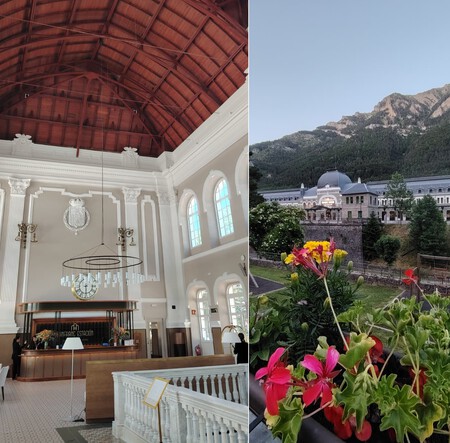
If there is a special place for me, it is Canfranc. I spend as much time as I can there, and apart from the beauty of the surroundings and the impressive 19th century station, it represents the Aragonese tenacity for the constant fight to recover the station and reopen the railway line closed in the 70s after a landslide.
As a child, I saw that abandoned station, half ghostly, with old trains resisting the passage of time on the tracks. And now, that station built at the beginning of the 20th century to link Spain and France by rail, has been transformed into a luxury Barceló hotel, giving life again to the building, and also to the Aragón valley. Even if you don't stay there, you can visit the impressive lobby, stroll through the gardens, which still retain that slightly decadent air of grandeur that I like so much, or enjoy its gastronomic offering, among which being able to enjoy a Michelin star restaurant in some recovered old train carriages stands out.
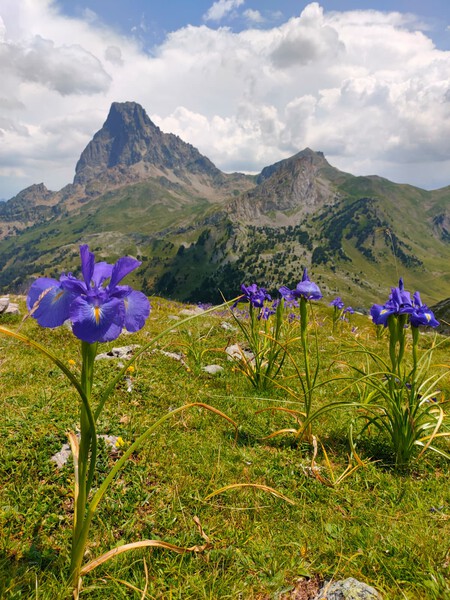
Route from the Astún chairlift
In the Aragón valley, going up towards the French border following parallel to the Camino de Santiago, we will find Candanchú (which was the first ski resort in Spain), and Astún. From this winter center there is a chairlift to the Lakes, which allows you to visit several ibones (glacial lakes), and cross to France through the Collado de los Monjes, allowing you to enjoy incredible views of the Midi d'Ossau.
Jaca, the first capital of the Kingdom of Aragon
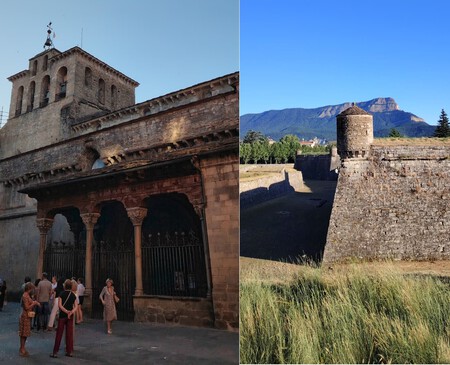
The cathedral and the Citadel of Jaca
Before or after visiting Canfranc and the Aragón valley, you can visit Jaca, the capital of the Jacetania region, which is at the foot of the Peña Oroel. Among the attractions of what was the first capital of the Kingdom of Aragon, the 11th century Romanesque cathedral, the citadel of San Pedro, with its moat with deer and its star-shaped floor plan, and its historic center stand out.
As a recommendation, you should not miss pastry shops like Echeto, La Switzerland or Vincelle (the Jacetan pastry shop is top-notch), nor the restaurants and tapas places (Like La Tasca de Ana) that dot the city. And if you go outside of the summer months, you can also skate on the Ice Rink to the south of the city. Beyond the monuments, Jaca serves me above all as a logistical base.
Biescas, Panticosa, Sallent de Gállego and Lanuza, protagonists in the Tena Valley
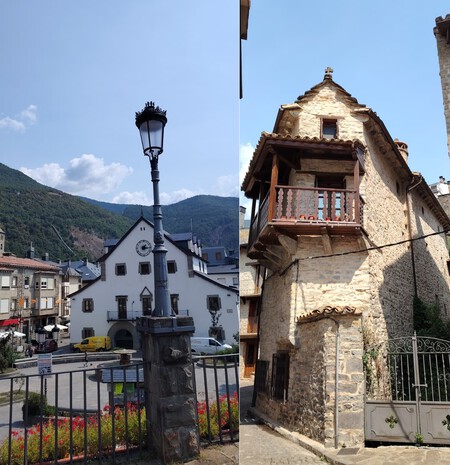
Biescas
Biescas is one of those Pyrenean towns that invite you to stop without haste. Located at the entrance to the Tena Valley and crossed by the Gállego River, it combines the lively atmosphere of a town with all the services with the charm of the traditional architecture of Alto Aragón. Its streets preserve stone mansions, quiet squares and the church of San Salvador, and there are vermouth shops, tapas bars and restaurants that are worth visiting. Very close, it is also in Lacuniacha park, ideal if you go with children.
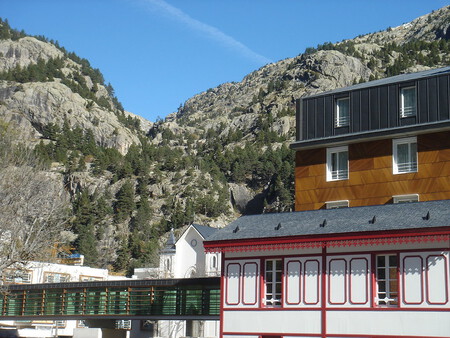
Panticosa Spa
The Panticosa Spa is one of the most surprising places in the entire Pyrenees. Located at an altitude of 1,636 meters, in the heart of the Tena Valley, it is surrounded by peaks that exceed 3,000 meters and a landscape of lakes, waterfalls and forests that make it a destination where nature and architecture merge in a unique way in a small spa town in the mountains.
Sallent de Gállego, for its part, is one of the most charming towns in all of Alto Gállego. I especially like walking through its old town at sunset, or to enjoy its wide gastronomic offer. And very close, Lanuza is worth a stop in this town recovered after having to be abandoned to build the reservoir that bathes the town. Maybe it sounds familiar to you because a unique festival is held there, the Southern Pyrenees, thanks to its floating stage.
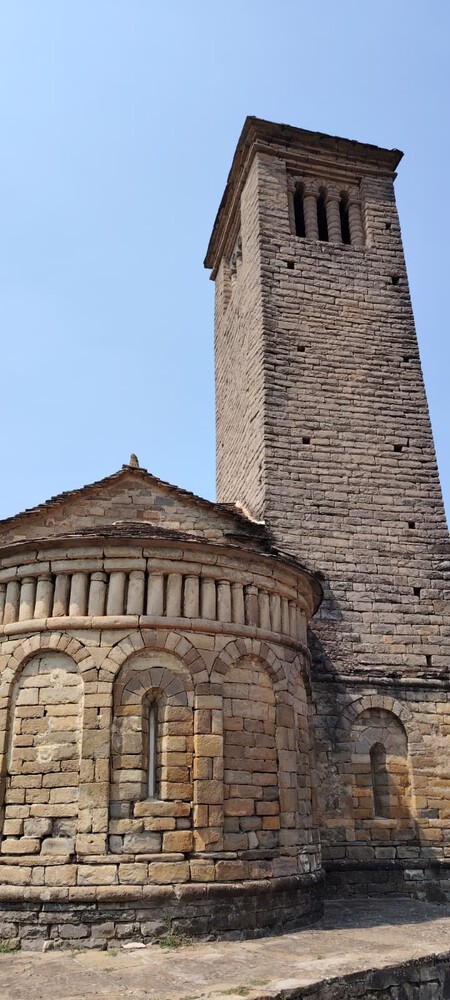
Serrablo Route
And if you like art, and in particular Romanesque art, you cannot miss visiting the Serrablo Route. It tours a series of small churches built between the 10th and 11th centuries that constitute a unique group of Serrablés Romanesque, a style with its own characteristics that is hardly found outside this region. Distributed among quiet towns and surrounded by forests, meadows and mountains, these churches stand out for their slender bell towers, the characteristic baqueton friezes and an architectural sobriety that fits perfectly with the landscape. Beyond its historical and artistic value, the route is also an excellent excuse to discover some of the most authentic and less traveled corners of Alto Gállego.
Torla, the gate of Ordesa
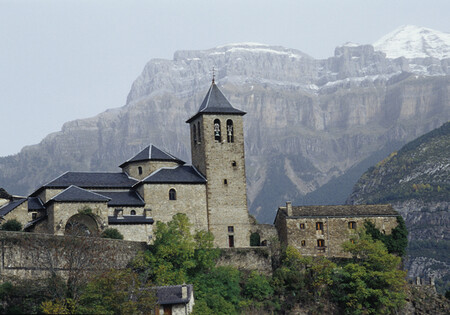
Torla, with the Mondarruego in the background / Aragon Tourism
Torla is another of those towns with a mountain atmosphere that should be noted. It is the entrance to the Ordesa y Monteperdido National Park, and the photo of its hamlet with the Mondarruego in the background is one of the most spectacular in the Pyrenees. Still, although this is a town that you have to know, it is better that you forget about visiting the Ordesa Valley.
At this time of year it is saturated with visits, you have to take the bus to the meadow where the routes begin, and the truth is that it is a shame not to be able to enjoy this wonder of nature in conditions. Therefore, it is better that you visit it out of season, when there are much fewer people, and you can breathe its essence better. As alternatives, you can visit the Bujaruelo valley, or the towns of Broto and Fiscal.
L'Aínsa and the Pineta Valley
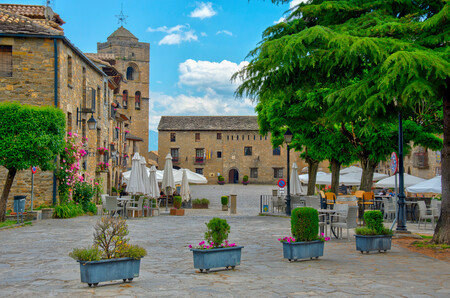
Plaza Mayor of L'Ainsa / Huesca the magic
Aínsa is probably the town that is most recommended if you visit the Sobrarbe region. Its porticoed main square, with the castle in the background, and the cobbled streets of this medieval town is one of the most beautiful postcards you can find in this area of Aragon.
From there, going up to Bielsa, with its traditional architecture, and to the Pineta Valley is highly recommended. Pineta is a glacial valley surrounded by three thousand mountains and with dozens of waterfalls that fall down the rocky walls that make it up. And no matter how many times you've been, it continues to impress. There, at the bottom of the valley, is the Parador Nacional de Pineta, in case you are looking for a place to eat or sleep. In the area, it is also worth visiting the Gistáin valley, or Chistau, in Aragonese.
It is worth visiting towns like Gistaín, known as the town of the three towersSan Juan de Plan y Plan, enjoy landscapes such as the Basa de la Mora (ibón de Plan), the meadows of Biadós, gateway to the Posets massif, or ascend to the Urdiceto lake. All of this in a valley that has preserved its traditional architecture, the chistabín—one of the varieties of Aragonese—and a natural environment of enormous beauty within the Posets-Maladeta Natural Park.
Benasque, the roof of Aragon
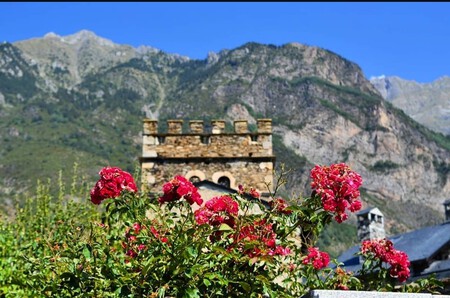
Benasque
I end with Benasque because, for me, it closes the circle. It is the gateway to the Maladeta Massif and Aneto, the roof of the Pyrenees. The town is very charming, preserving the typical mountain atmosphere, with very careful architecture, lots of stone and wood, and good places to eat after any walk.
Nearby is Anciles, a small town that hides a Michelin star restaurant, Ansils. And very close is Cerler, one of the main Aragonese ski resorts, and Campo, the dream paradise for paragliding lovers. If you like medium-level hiking, the surroundings of Benasque, towards the Ibón de Cregüeña or the Benasque baths, offer high mountain landscapes without needing to be an expert.
Photographs | Nacho Viñau, Tourism of Aragon, Huesca La Magia
In Motorpasión | Juan José Ebenezer, mechanic: “you don't have to leave the car parked with the wheels turned because you can have it end up in the workshop”
In Xataka | In 1997, they covered a wasteland in Costa Rica with 12,000 tons of orange peels. 16 years later no one recognized the landscape