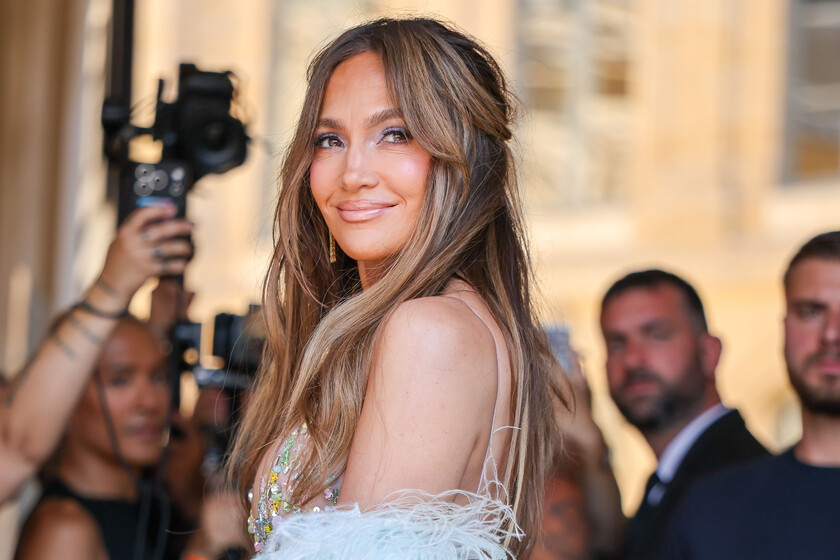
Little by little we are understanding that gray hair, although it is a sign of aging, can be very attractive and shiny, and this is a real liberation for many women. But on the other hand, we must also understand that there are people who prefer to hide them to continue showing off a beautiful trendy hair color; either because they don't quite look gray, or because they are very young and prefer to cover them to show off a more uniform hair.
But the best of all is that there are many new techniques to integrate gray hair. There is no longer the need to resort to comprehensive attempts that enslave hairdressers or aggressive coloring. Of course there is a lot we can do, there are other products beyond traditional dye and different ways to treat gray hair. These are some of those that we bring you from the professionals who have spoken with Semana magazine.
Mud camouflages gray hair and does not damage hair
Thinking about covering gray hair is going directly to thinking about traditional dyes, those that have always been there for generations. But things have changed a lot and there are other products that work very well without damaging the hair. One of these techniques is the use of natural muds, which are also known as henna, and this product is capable of covering gray hair and at the same time improving the texture of the hair. We can say that it also acts as a treatment and that is noticeable in the shine and softness it provides.
“Muds are the evolution of henna and guarantee a natural color, without chemical attacks,” comments stylist Noelia Jiménez. The use of mud is perfect for gray hair because it offers a finish very similar to that of a traditional dye but without negative effects.
In the case of mud, although there are specific hair salons that are dedicated to its application, it is also a product that we can apply ourselves at home.
According to Victoria Moradell on her social networks, we should not think that mud does not cover or has little pigmentation, because in reality it is “an infallible method, only with plants and at home.” She herself confesses that her hair is gray-free and very dark after use.
Ammonia-free coloring, the favorite of hairdressers
Another very popular option in recent years is the use of ammonia-free coloring. Hairdressers consider it to be one of the best options to obtain good gray coverage. “When you don't want to completely cover the gray hair, but rather blend it naturally, the best thing is an acid color without ammonia. It provides shine, softens the contrast of the gray hair and leaves a very elegant result, without a root effect or sensation of artificial color,” stylist Miguel Bling tells us.
On the other hand, hairdresser Mª José Llata also highlights the benefits of this method. When “you are not looking to cover the gray hair completely, but rather to achieve a more natural effect, I recommend opting for an acid color without ammonia,” says the expert.
This type of color offers very natural results, which is why they are currently widely used to integrate gray hair, give shine to the hair and obtain a more uniform finish. “These colorations allow the hair to maintain movement and shine, avoiding that flat or artificial effect. With this approach, a harmonious result is achieved: the gray hair blends, the hair looks hydrated and the color looks elegant and luminous, without losing naturalness,” explains stylist José García.
Gloss, the best method for a mirror effect
Many times we are amazed looking at the hair of some celebrities, especially because of the intense shine they give off. We have a clear example in Queen Letizia who sports very shiny hair and although her gray locks are visible, they look blurred.
The bet of Letizia and those who now choose a good integration of gray hair, is for the famous color bath that is also known as gloss. Hairstylist Juan Carlos Braña assures that probably the product that makes the queen's hair look this juicy and healthy is because “it has a gloss, a coloring to increase shine and correct gray hair,” he points out.
This type of technique consists of using a very subtle colored veil that blurs and integrates gray hair, with a tone very similar to the natural base and at the same time acts as a treatment, providing shine and strength to the hair. It falls off with washing, which is why the root effect is not noticeable because it does so in a very soft and natural way.
The subtle highlights that do hide
When it comes to integrating gray hair, highlighting work has gained a lot of strength. What is achieved by creating highlights is integrating the gray hair between the highlights that are created and the results are incredibly beautiful and natural.
The highlights that are most used for this purpose are usually balayage highlights, as indicated by hairstylist Noelia Jiménez. What these highlights stand out for is “creating a subtle contrast” between natural hair and white hair. As the highlights are so diffused, they allow the gray to blend with the rest of the hair. The root effect is very hidden and the hair gains dynamism and dimension.
Another highlighting technique that is widely used when there is gray hair is babylight highlights. They are characterized by being very subtle and fine highlights from the roots to the ends. “These white highlights are distributed evenly, creating an effect of luminosity and softness in the hair,” explains Jiménez.
The expert also highlights highlights in strands: “This technique helps hide gray hair by creating points of visual interest in the hair,” she adds. On the other hand, there would be layered highlights. With this strategy, highlights are created in different layers of the hair and a lot of depth is gained. In this way “you can hide the appearance of gray hair by mixing it with the highlights,” says Noelia.
In Xataka | Today in Lidl, the solution to wasted plugs behind the sofa or furniture to charge several devices at the same time
In DAP | On Saturday, August 29, Lidl will launch a fast and powerful blender in stores that will cost less than 15 euros