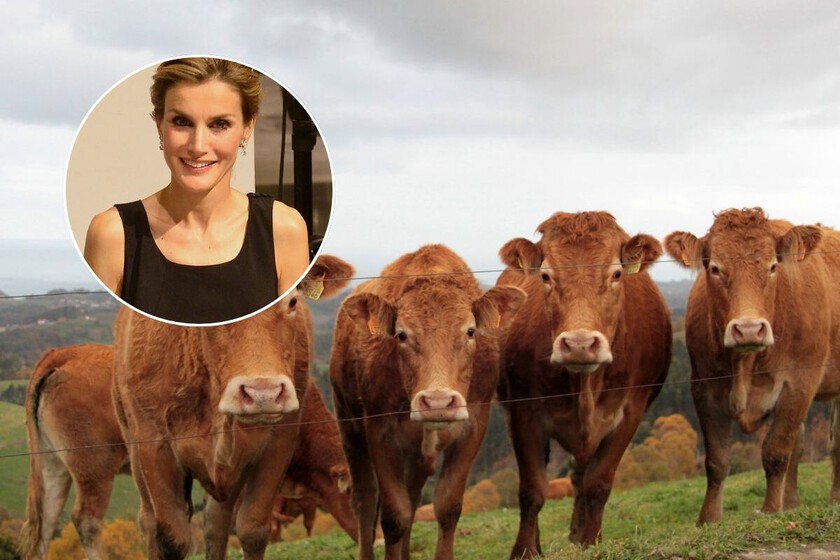
Sardéu (or Sardedo in Spanish) is a small Asturian village that, without making noise, keeps a history linked to the Royal House through the current queen of Spain. Here was the house of his paternal grandparents Letizia Ortiz, Menchu Álvarez del Valle and José Luis Ortiz Velasco. And here he spent a good part of his childhood summers.
The City Council of the municipality of Ribadesella continues to keep in mind that the queen, before becoming queen, enjoyed the council since she was a child and that, even before her grandparents settled permanently in Sardéu, she spent a good part of her summer holidays there. Over time, that family bond also became a personal relationship with the territory that is still part of the queen's public image today.
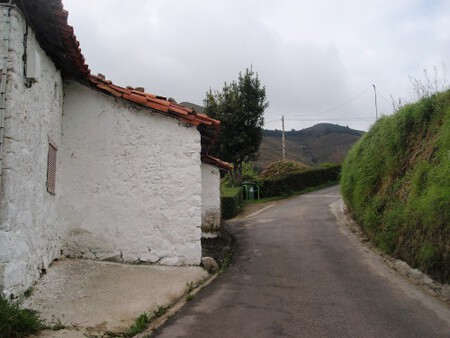
The grandparents' house, known as La Arquera, is the main setting for that connection. Menchu Álvarez del Valle explained in an interview that she had acquired it in 1982 and that, after retiring early, she moved there permanently with her husband. Describing it as a place where you can wake up in the morning and look at the mountains and tranquility from the window.
The house also became a family refuge after the wedding of Letizia and the then Prince of Asturias. The couple went to Sardéu on several occasions to visit her grandparents, even in the first years of their marriage. In fact, in December 2003, a few days after their engagement was made public, Felipe accompanied Letizia to the family home for the first time to meet her grandparents.
Ribadesella Town Hall
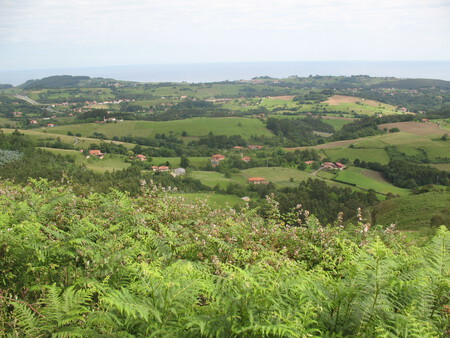
However, more than to contemplate this residence, it is worth visiting Sardéu to this small rural Asturian village because it is surrounded by meadows, farmhouses and karst landscape, in a territory where the Cantabrian Sea, the mountains and prehistory coexist just a few kilometers away.
What to see in Sardéu
You should not arrive in Sardéu expecting to find a monumental square, a succession of palaces or a typical historic centre. Its appeal is precisely the opposite. It is a small, dispersed and quiet rural area. It is one of those places where the landscape has as much weight as the architecture. La Arquera's own house is part of that history, although it is worth remembering that it is a private home and is not a monument that can be visited.
One of the most interesting heritage elements of the town is the Casa del Barréu, a 16th century construction that also had a unique role in the history of Ribadesella. During the War of Independence, the Riosella municipal corporation that had fled the town met in this building. It is one of those examples of rural heritage that allow us to understand that small Asturian villages also keep important episodes of local history.
César J. Pollo
But if there is an unexpected reason to stop in Sardéu, it is underground. In its surroundings is Cova Rosa, a cavity of enormous archaeological and geological interest associated with Upper Paleolithic occupations. Archaeological investigations have found materials corresponding to the Solutrean and Magdalenian periods.
Of course, Cova Rosa should not be understood as a typical tourist cave. The Ribadesella City Council expressly points out that it is a Partial Nature Reserve and that its public access is prohibited due to the importance of the insect colony it houses. That is, it is part of the heritage of the place, but not part of a tourist itinerary.
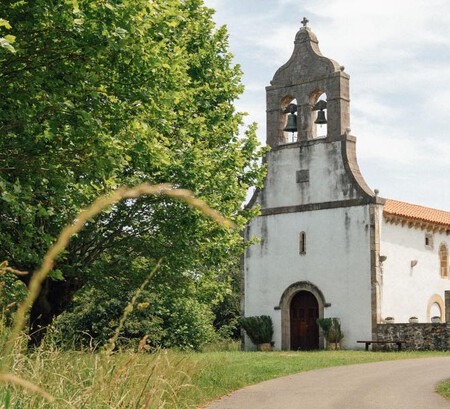
To complete the visit you must go to Moru, where the church of San Salvador is located. The temple preserves elements of Romanesque origin, including the apse, the triumphal arch and several carved corbels, and is built on a hill from which you can enjoy one of those panoramic views that explain better than any brochure why this area of Asturias is so special.
Ribadesella Tourism
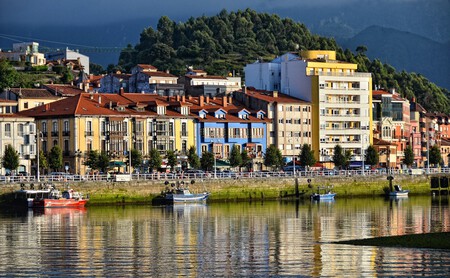
And, of course, there is Ribadesella. A few kilometers from Sardéu appears the fishing village with which the Ortiz family has historically maintained such a close relationship. Its old town, the promenade, the port, the hermitage of the Virgen de Guía and the Santa Marina beach allow you to change in just a few minutes the rural silence of Sardéu for a much more seafaring Asturias. The City Council, in fact, named part of the promenade Paseo Princesa Letizia in recognition of that link.
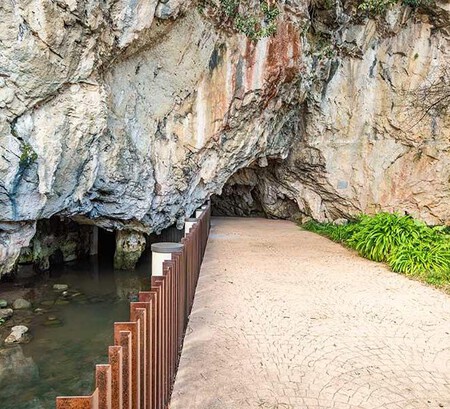
The great cultural visit in the area is the Tito Bustillo cave, one of the most important collections of Paleolithic art in Europe. The cavity, discovered in 1968, preserves more than a hundred engraved and painted representations and is part of the Asturian rock art complex recognized by UNESCO. For anyone who wants to understand the history of this territory beyond its green landscapes, it is an essential stop.
Ribadesella Tourism
Where to eat delicious and cheap in Sardéu
Sardéu is too small to have its own gastronomic route, so the most sensible thing is to travel to Ribadesella, where there is enough on offer to eat well and varied: cider bars, fish, seafood, beans, meats and traditional cuisine are part of the trip.
One option is Mesón El Labrador, whose profile fits what you are looking for in a getaway of this type: Asturian cuisine and moderate prices. It's the kind of place to go to after a morning exploring towns when you just want to sit down with a hearty dish and eat like you're at home.
It is also worth booking a table at Sidrería El Tarteru, one of the most highly rated options in Ribadesella. Its cider house atmosphere and a menu focused on Asturian cuisine make it a very representative stop of local gastronomy. In addition, you can eat for 20-30 euros per person.
Another alternative is Sidrería La Guía, located in the center of Ribadesella and also with a price range between 20-30 euros. Its location allows you to combine the meal with a walk through the historic center and then go to the port area or the Santa Marina beach.
Raul AB
What to do around Sardéu
One of the great advantages of Sardéu is that it allows you to have two different Asturias within a few kilometers. On the one hand, the rural landscape of the inland villages; on the other, the Cantabrian Sea, with beaches, cliffs and coastal paths.
The first stop should be Guadamía, a small beach and very different from the large sandy beaches of the Asturian coast. It is located on the border between Ribadesella and Llanes and is dug into the rock, so that at high tide it can look like a huge natural pool. The landscape is especially striking for its karst character and the rock walls that surround it.
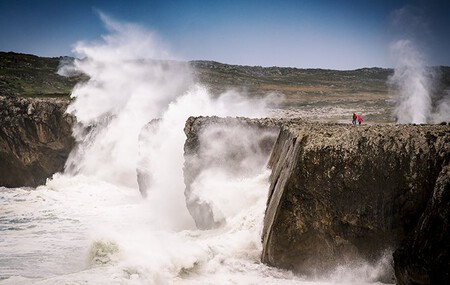
Very close by are the Jesters of Pría, one of the most unique natural spectacles in Asturias. They are cracks and cavities connected to the sea through which, when the waves hit hard, the water is thrown upwards accompanied by a characteristic roar. Of course, they depend completely on the state of the sea, so stormy days are the ones that offer the greatest chance of seeing them in action.
Asturias Tourism
For walking, one of the best options is the Cliffs of Hell route, which starts from the Guadamía recreational area and runs along the coast of Ribadesella. The official circular itinerary is just over 11 kilometers, is classified as easy and allows you to discover formations such as the cliffs of Castro Arenas and Tomasón, the Pozo Tuerba and the islets of Palo Verde and Palo Pequeno. It is a coastal route, more panoramic than mountainous, and a good way to understand the landscape that surrounds Sardéu.
If you are looking for something even quieter, the Guadamía River path allows you to travel about four kilometers between the interior and the coast, linking riverside landscapes with the karst formations of this part of the Asturian coast. It is a particularly interesting alternative for those who want to walk without facing a demanding mountain route.
And for those who prefer to change the Cantabrian Sea for the mountains, the Mofrechu peak offers a completely different perspective. At 891 meters high, it is one of the most representative peaks in the Ribadesella area and from above you can see both the Cantabrian Sea and the town itself and the Picos de Europa. The official route from Collado Tresllende totals 8.38 kilometers and has a cumulative slope of 649 meters, which requires greater physical preparation than coastal walks.
Asturias Tourism
There is also Vega beach, one of the largest sandy areas in the council and a particularly attractive option if you are looking for a more open and wild beach. Its approximately 1,500 meters of sand are part of the Natural Monument of Entrepeñes and Playa de Vega, a space that includes dunes, cliffs and paleontological sites. It is also an area appreciated by surf fans due to its usual waves.
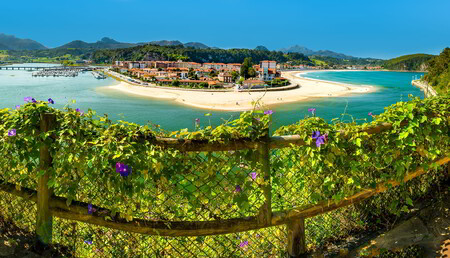
And, finally, there is Santa Marina, the urban beach of Ribadesella. More lively and accessible than Vega or Guadamía, it has around 1.2 kilometers of golden sand and is flanked by a promenade where numerous modernist and Indian villas survive. It is the perfect place to end the tour: after getting to know the rural landscape of Sardéu, return to the sea and walk through a Ribadesella in which the Queen was Letizia long before becoming the most powerful woman in Spain.
Cover photo | Dawlad Ast and Informa Board
In Xataka | In 2008, Spain filled a 300-meter-deep coal mine with water. Four years later it became the largest artificial lake in the country
In Decosphere | Jorge Morales, industrial engineer: “When we have a room that is exposed to the sun all day we have to try to put up an awning because it is a direct saving”