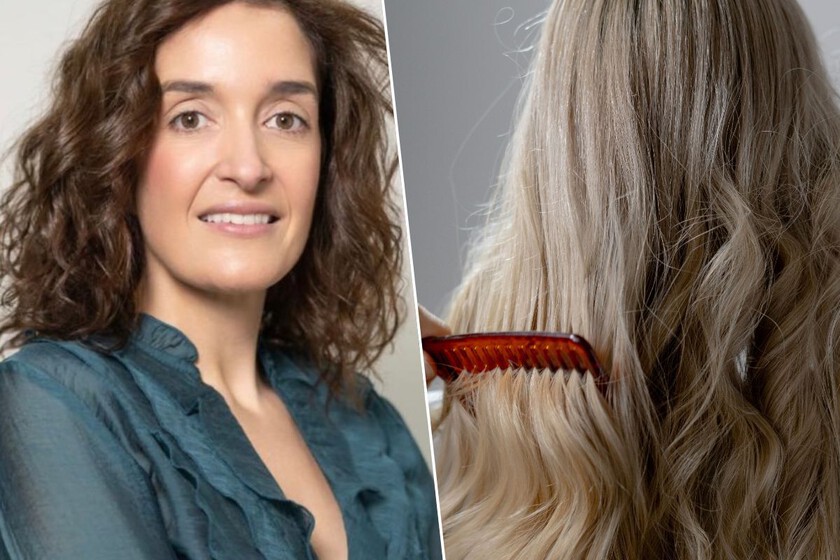
If we talk about hair, there is a fairly widespread concern and it is usually hair loss. There may be many factors that cause this fall and it may be due to an unbalanced diet, hormonal changes, stress or hereditary factors. As trichologist Cristina Hoyos commented to the publication Woman: “Hair loss in women has increased in recent years, becoming one of the most frequent reasons for consultation in dermatology. Although alopecia was traditionally associated more with men, today we know that it affects a growing percentage of women, with not only aesthetic but also emotional impact,” she points out.
The expert with more than 15 years of experience behind her has observed that “the increase in cases responds to several factors, the most important of which is chronic stress and hormonal changes that are increasingly earlier, but also restrictive diets, the frequent use of aggressive hair products and treatments, and probably all of this is associated with greater awareness that leads to more consultation,” explains Hoyos.
In addition, to all this we must also add that “we live in an environment with a greater inflammatory load (oxidative stress, pollution, sleep disturbances), which also influences the health of the hair follicle,” comments the dermatologist.
The three main reasons for hair loss highlighted by the trichologist
Chronic stress is one of the main triggers of temporary hair loss (telogen effluvium). The fall is more diffuse and appears 2–3 months after a stressful event. Situations such as work overload, prolonged anxiety or lack of rest alter the hair cycle, pushing more follicles into the hair loss phase.
Another reason is to follow a very low-calorie diet where there is no deficiency of iron, zinc, essential nutrients, group B vitamins and essential nutrients for keratin synthesis. What happens in these cases is that the body prioritizes these nutrients for other organs and leaves hair growth, which is not essential, in the background. Which means that there will be a watery telogen effluvium and may even aggravate underlying androgenetic alopecia.
The hormonal changes brought about by pregnancy, postpartum, polycystic ovary syndrome, thyroid disorders or perimenopause can trigger hair loss. In the case of female androgenetic alopecia, there is a genetic predisposition with sensitivity of the follicle to androgens.
The expert explains that unlike in men, hair loss “in women usually manifests itself as a progressive loss of density in the upper area of the scalp. Very tight ponytails, tense braids or extensions can cause traction alopecia, a type of mechanical hair loss that, if maintained over time, can become irreversible,” says Cristina.
But the way we treat our hair also has a lot to do with it: “the frequent use of straighteners, bleaching, aggressive straightening or perms do not usually cause hair loss from the roots, but they do cause fragility, breakage and weakening of the hair fiber, which gives the sensation of less volume.”
Tips to prevent hair loss
What we must keep in mind is that each person can have hair loss due to a different origin, which is why a professional diagnosis is important to find the reason and the best personalized treatment.
So, there is no generalized solution and according to Cristina, the first step is to identify the cause. “Analysis with ferritin, thyroid profile and hormonal evaluation may be necessary. Supplement iron or micronutrients only when there is a confirmed deficiency. In many cases and depending on the diagnosis it may be necessary to prescribe treatment with medication such as minoxidil or antiandrogens, however, self-medication is not always useful and can be counterproductive. There are also complementary adjuvant therapies such as platelet-rich plasma, capillary mesotherapy or low-power laser,” explains the trichologist.
Even so, there are tips that can be very useful when it comes to making your hair healthier and more beautiful:
- Try to reduce stress.
- Improve rest.
- Follow a balanced diet rich in iron and protein.
- Perform physical exercise regularly.
- Avoiding tight hairstyles and the use of excessive heat will help the hair fiber look healthier.
In DAP | How to properly preserve zucchini at home so that it remains in perfect condition for weeks or months
In Xataka | Today “a masterpiece that will go down in history” arrives on Netflix, thanks to an original approach to a unique science fiction story