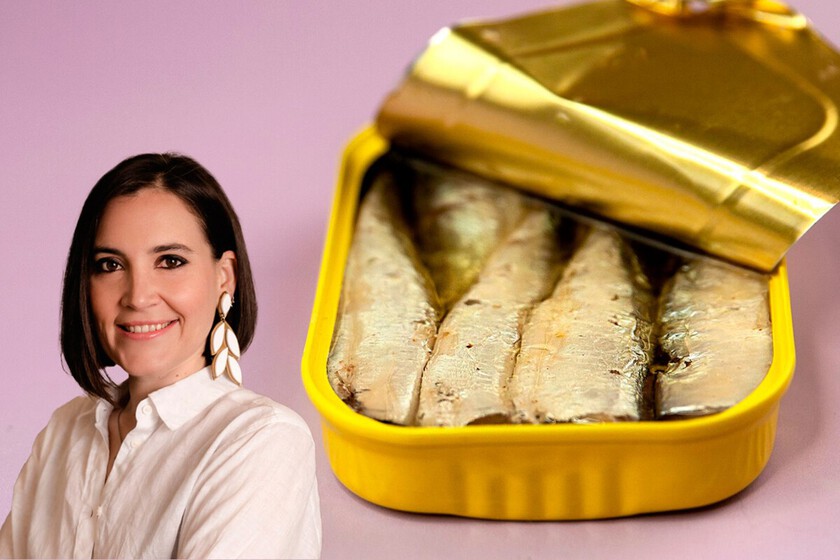
You open a can of sardines, eat half and keep the rest on a shelf in the refrigerator, for another occasion. Maybe you put a little plate on top. The problem is that this dish is not going to give the preserve the protection it had in the can before opening it.
Pharmacist and food technologist Boticaria García explains it with an image that is difficult to forget: “An open can in the refrigerator is a convertible with a highway to infection and deterioration.” He explains that when you uncover it, the food comes into contact with air, oxidation begins and “it can take on a metallic taste,” he says. Plus, it can break down sooner or worse.
In the refrigerator, an open preserve shares the stage with many other products. The refrigerator is a feast of bacteria at low temperatures, which is why “food that is poorly preserved or contaminated by handling with bacteria such as salmonella, E. coli, campylobacter either staphylococcus aureus “he may be doing his thing.”
What to do with the leftover preserves
The Spanish Agency for Food Safety and Nutrition itself recommends storing refrigerated food in closed containers. Therefore, the solution is to transfer the contents to a clean, closed container (such as a container) and put it in the refrigerator. Of course, what does not comply with this recommendation is leaving the can uncovered or simply covering it with a plate.
Finally, Boticaria García suggests consuming what we have left over in three or four days: “Not because on the fifth day the sardine explodes, but the more time passes, the easier it is for it to deteriorate,” he adds.
Cover photo | Karen Laårk Boshoff / Boticaria García
In DAP | Ikea lowers the price of one of its simplest but most effective accessories, perfect for organizing dishes
In Xataka | Already in Action (and discounted) the solution to have light on the terrace, balcony or patio without works and without the need for plugs