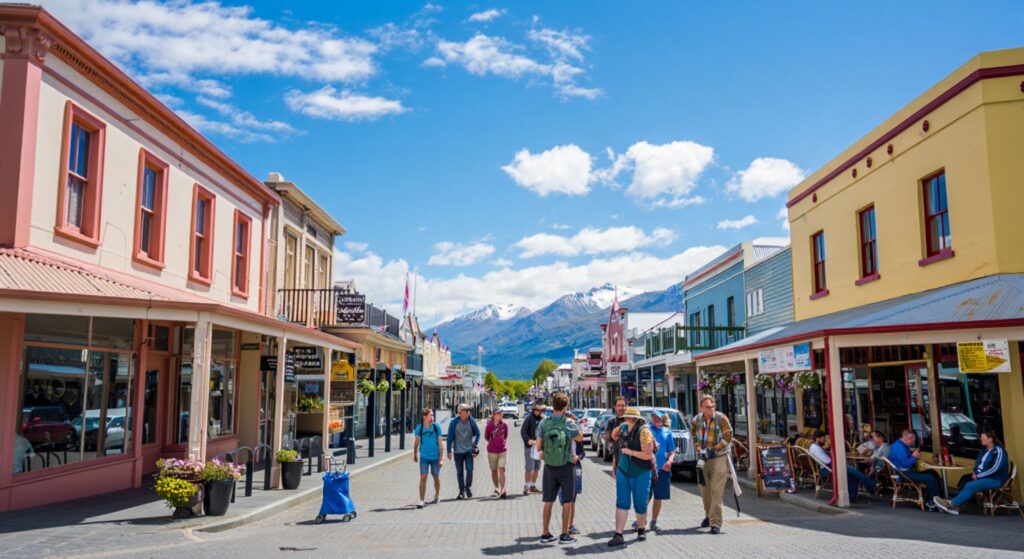
At dawn, the main street yawns; by nine, it’s swallowed by idling buses. For residents, this paradise now feels less like a town and more like a corridor. The place didn’t ask for fame; it arrived like a tide and refused to recede.
On the South Island’s edge, a settlement once ran on shearers, mussels, and mornings. Then a drone video caught the bay at golden hour, and everything tilted. Visitor numbers spiked, rentals vanished, and the algorithm became the new mayor.
From secret to spectacle
The cliff path used to be a whisper, a ribbon of flax and ocean. Now the ridge trembles daily with footsteps, selfie sticks, and shouted directions. “You used to hear the tūī before traffic,” says Mara, a teacher. “Now you hear reverse beepers and luggage wheels at dawn.”
Local pride turned to fatigue as parking spilled into driveways and front lawns. Families learned to time errands between bus arrivals and departures. A picnic spot became a queue, a lookout became a stage.
When a boom stops feeling like a blessing
Money is coming in, but many locals say it’s not staying. The cafe expanded twice, yet staff can’t afford a bed within commuting distance. “We hired five baristas, and three live in vans by the river,” says Sia, who runs the counter. “Something has to give, or the town breaks before the season ends.”
Short-term listings multiplied, landlords converted sleepouts into mini motels, and winter morphed into shoulder season. The boom made wages decent while making life fragile. Even the volunteer fire crew has a crew shortage on busy weekends.
Infrastructure stretched to breaking
The public toilets are tired, the wastewater ponds are tetchy, and the bins are always full. Road verges look bitten, and the estuary edges are scuffed. Locals wonder how long the pipes can cope with peak loads.
Freedom campers seek solitude, and find a layby with zero drainage. A sudden southerly wind turns a picnic into a rescue call. “We’re proud to help,” says Tama from the volunteer brigade, “but we’re not an overflow plan for a national industry.”
The cost to land and culture
The dunes are frayed, the penguin burrows disturbed, and fragile moss gets flattened. What begins as a shortcut becomes a path that never heals. The place has its stories, and some sites are sacred beyond scenery.
Guides are tired of policing manners while trying to care for guests. “You can visit our home without claiming it,” says Anahera, a ranger. “The welcome is a promise, not an all-you-can-take.”
What locals propose
Many here still want visitors, just not this relentless rush. They picture a pause, a plan that makes staying sustainable. Ideas are modest, practical, and urgent:
- A seasonal cap on day buses, with pre-booked timeslots
- A visitor levy that funds toilets, tracks, and rangers
- A “park and ride” hub with shuttles to fragile sites
- Clear freedom-camping zones with toilets and tanks
- Rental rules that protect housing for workers and families
Learning to host without disappearing
There’s a difference between being welcoming and being consumed. A town can’t keep smiling while losing its voice. Hospitality thrives when home life still has space to breathe.
Some operators now pivot to slower tours and smaller groups. They’d rather earn a little less and last much longer. “We’re selling our time, not just our views,” says Jono, who runs kayaks at the bay.
A new pact with the road-tripping world
Tourists aren’t the enemy; unpriced pressure is the enemy. The queue is the enemy; the trampled reed bed is the receipt. Charge for what truly costs, protect what can’t be replaced.
Visitors can help by booking ahead, using shuttles, and staying overnight. One night means dinners, music, conversations, and tax. A longer stay turns a backdrop into a relationship with a place.
What it would feel like to belong again
Imagine mornings with birds, not forklifts and tour horns. Imagine a tide that rests, not one that never turns. Kids biking to school without weaving through parked coaches.
The town wants to share its beauty without losing its bearings. It wants to hear the language of the wind between weekends in January. It wants a future that’s prosperous because it is still home.
“We can still be kind, just not careless,” Mara says, tightening a hi-viz vest. “If we get this right, the welcome will finally sound like balance.”