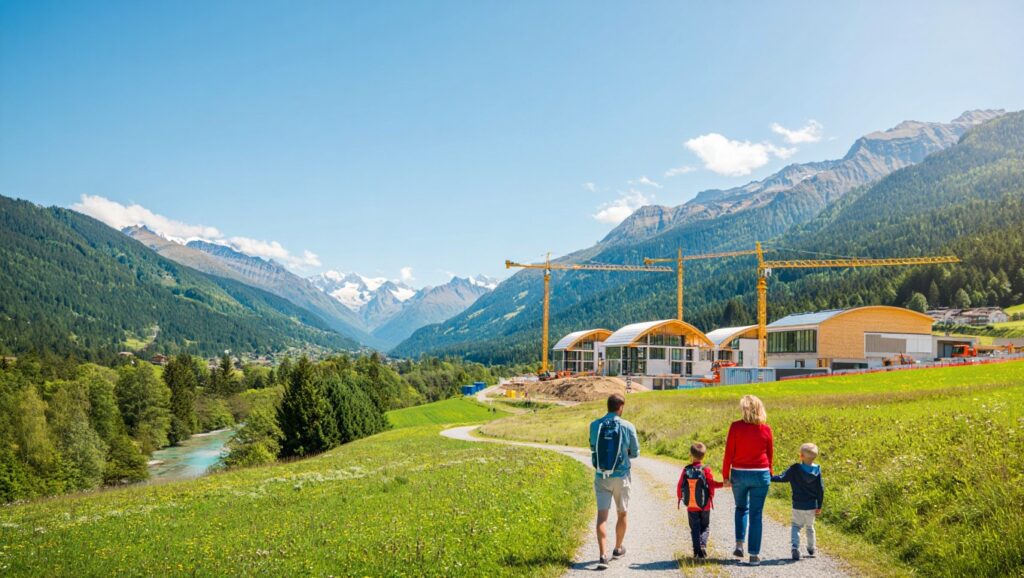
For years, it was barely mentioned in conversations about Auckland real estate.
Overshadowed by coastal suburbs and high-profile developments, this quiet valley sat just outside the spotlight, known mostly to locals who preferred to keep it that way.
Now, almost without warning, it is turning into one of the most talked-about places to live in the wider Auckland region.
Prices are rising, demand is accelerating, and new residents are arriving every month, drawn by a combination of space, nature, and something that has become increasingly rare in Auckland: breathing room.
A place long ignored by the property rush
While Auckland expanded outward and upward, this valley remained largely unchanged.
Older homes, small roads, and pockets of native bush defined the landscape, and for a long time it was seen as too quiet, too remote, or simply not fashionable enough.
That perception has shifted dramatically.
As central suburbs became denser and less affordable, buyers began looking beyond the obvious, and this valley suddenly started to make sense in a way it never had before.
Space, nature, and a slower pace of life
One of the biggest draws is the environment itself.
The valley is surrounded by rolling hills, walking tracks, and protected green areas, offering a sense of calm that contrasts sharply with Auckland’s traffic and noise.
Residents talk about waking up to birdsong instead of sirens, and about being able to step outside and feel removed from the city without actually being far from it.
Commute times remain reasonable, but the lifestyle feels entirely different.
Why demand is rising so fast
Several factors are driving the sudden surge in interest, and together they are reshaping the area’s future.
-
Growing frustration with overcrowded inner suburbs
-
Remote and hybrid work reducing the need to live centrally
-
Limited housing supply in greener areas
-
Rising interest from young families and first-home buyers
-
Investors spotting long-term potential before prices peak
What was once considered a compromise location is now being seen as a strategic choice.
Locals are noticing the change
Long-time residents say the shift has been subtle but unmistakable.
More cars on the roads.
More renovation projects.
More “For Sale” signs disappearing within weeks.
Cafés and small businesses have begun to appear, catering to newcomers who want local amenities without losing the area’s character.
At the same time, there is growing discussion about how to manage growth without destroying what made the valley attractive in the first place.
Still affordable, but not for long
Compared to Auckland’s most sought-after suburbs, property prices here remain relatively accessible.
That window, however, appears to be closing.
Recent sales suggest steady upward pressure, and agents report increased competition for homes that would have struggled to sell just a few years ago.
Buyers who once hesitated are now moving quickly, afraid of missing the next major upswing.
A future hotspot in the making
Urban planners and property analysts are increasingly pointing to this valley as a long-term winner.
Its combination of location, land availability, and lifestyle appeal positions it well for sustainable growth, especially as Auckland continues to grapple with density and affordability challenges.
What makes this shift particularly striking is how quietly it is happening.
There has been no major announcement, no flashy redevelopment project, and no sudden rebranding campaign.
Just a steady flow of people discovering what was always there.
From forgotten to sought-after
For decades, this valley existed in the background of Auckland life, overlooked and underestimated.
Today, it is being re-evaluated by a new generation of buyers who value space, nature, and balance as much as proximity and prestige.
Those who moved in early already see the difference.
Those who are only now starting to look may soon find that this once-forgotten valley is no longer a secret.