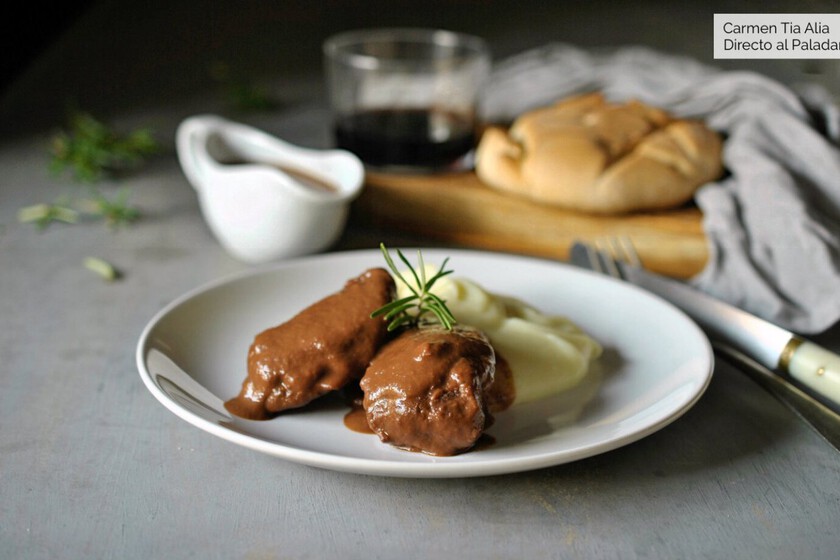
Cheeks are one of those pieces of meat that, when well treated, become a bite worthy of a queen. They just need a little care and calm to achieve it, because a traditional cheek stew does not have as much mystery as it might seem, although it does have a couple of tricks.
The first is not to be in a hurry. Any stew requires a little patience, which will be highly recommended at meal time. In this case, the recipe can be made in a pressure cooker if we have one, which saves us a lot of time. If you don't have one and want to eat better but don't have time to spend hours in the kitchen, I recommend that you buy one. It is an investment for your palate.
The second trick gives us Karlos Arguiñano and it makes the cheeks more tender and even more honeyed if possible, and it is done before starting to cook. When we buy cheeks at the butcher shop, they come as is and the most common thing is that as they come, they go into the casserole. But if we want to avoid harder parts remaining in each piece, we must clean them well before cooking, as the Basque chef explained.
How to clean cheek pads well
In general, the cheeks are sold without bone, but not without the fat or subsequent fabric. We could ask our butcher to clean them, but we can also do it at home without any problem. We only need a sharp knife to remove the remains of skin and external fat and with a simple gesture, make them even more melty and tender, without hard parts that spoil the dish.
What we have to do is the same as we would do to remove the skin from a salmon, for example. We take the fabric with one hand and place the cheek piece on the board, with the fabric supported. With the other hand we put the knife in contact with the fabric, leaning towards it and make a zig zag cut towards the other end to remove it, as Arguiñano explains. This butcher adds that we have to pull the fabric in the opposite direction to that of the cut.
@el_as_carnicero I recommend and teach you how to clean pig cheeks #elascarnicero #butcher #navidad #tips #fyp
♬ original sound – El As Carnicero
As chef Beltrán Alonso, from the Madrid restaurant Casa Mories, explained to Directo al Paladar, it does not matter whether they are pork or beef cheeks, because we will act the same, “cleaning well all fat and what is not worth it”, that is, we will also remove excess bones or skin, in addition to the cloth that Arguiñano mentioned. By removing the back fabric, the hardest part, what we achieve is that the entire piece is tender. Once they are well cleaned, we can make them however we like, always starting with a good stir-fry as recommended by Basque chef Martín Berasateggui.
Our favorite cheek recipes, in addition to the traditional ones with red wine, are the ones stewed with tomato (which in addition to being super healthy, are delicious) and the Pedro Ximénez cheeks. But you can choose any one because whatever it is, if you do it with care and affection, it will turn out well.