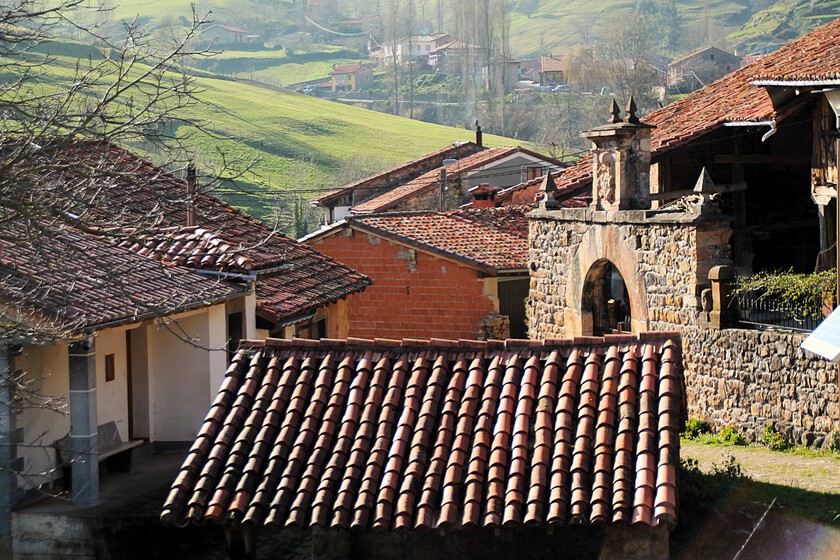
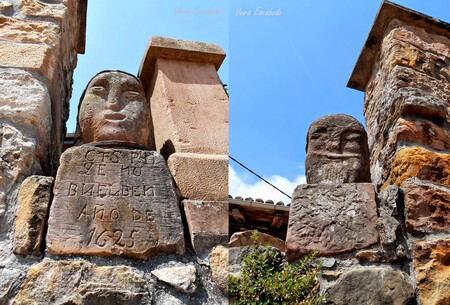
In Lafuente, two stone heads welcome visitors from the wall of a mansion. Below the female figure, an inscription dated 1625 says: “How many pass away do not return.” However, four centuries later, the town has ended up being part of a film in which returning to the past has a lot of weight: 'The Black Ball', by Javier Calvo and Javier Ambrossi.
This small town in the municipality of Lamasón, in the interior of Cantabria, was one of the locations chosen for the plot set in 2017. Indeed, the trip of Carlos González's character to the town where his grandfather had lived was filmed here. Off screen, Lafuente only has 17 neighbors but it also preserves a multitude of stories between houses next to old roads, a Romanesque church and the valley landscape.
Vera Escobedo (Lamasón City Council)
Their relationship with the outside world didn't begin with the Javis cameras either. The Camino Lebaniego passes through here, a branch of the Camino de Santiago that crosses Lamasón in the direction of Santo Toribio de Liébana. Lafuente is one of your stops before gaining altitude towards Burió and the Hoz hill and, therefore, a place to stop and look before continuing to climb.
What to see in Lafuente
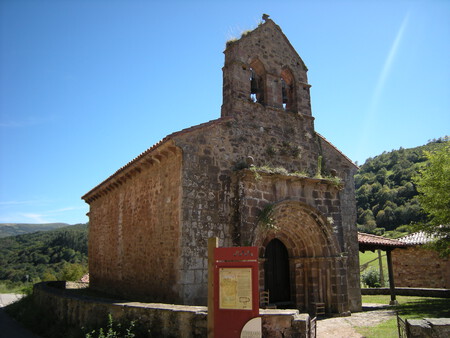
The church of Santa Juliana is located at the entrance of the town, next to the road that connects Puentenansa with La Hermida. Built between the end of the 12th century and the beginning of the 13th century, it is declared an Asset of Cultural Interest. The temple has a single nave and a semicircular apse. Its façade, with several arches that draw inwards and begin to point, is a testimony of the transition from Romanesque to Gothic forms.
José Antonio Gil Martínez
Next to it appears the Couple of Lamasón, the two sculptures that we talked about at the beginning and that flank the entrance of an old mansion. The date 1625 appears in the woman's inscription, although the origin of both pieces is uncertain. However, this lack of a closed story about their past is part of their interest: we can observe their faces and read the message, but we can only imagine their identity because it is not documented. What it does seem is that it is related to stations located on the cemetery road.
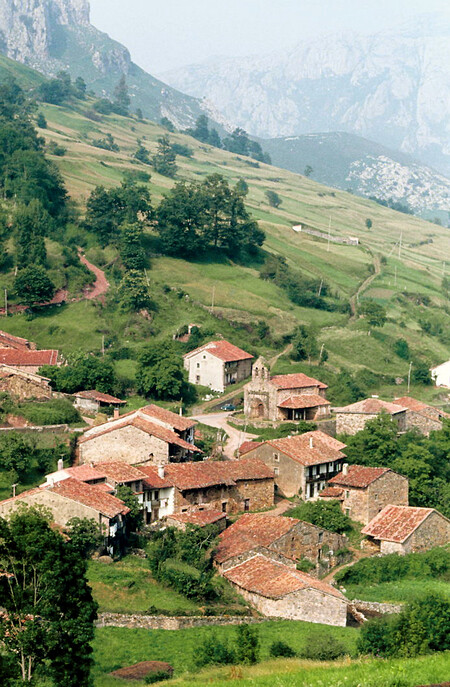
The route continues between the houses arranged in a row following the old paths, an organization that is also preserved in other areas of the municipality. In front of the church, the bridge, the laundry and the mills speak of the importance of water as part of daily work and an element that organized life in the valley.
Where to eat delicious and cheap in Lafuente
To sit at the table, it is advisable to extend the trip to Celis, in the municipality of Rionansa, where Casa Jandro is located. Its menu includes traditional dishes such as beans with venison, mountain carico or mountain stew.
It is a perfect place to learn about two different ways of cooking beans in Cantabria. Carico is prepared with red beans, chorizo and blood sausage. While the mountain stew combines white beans, cabbage and slaughter products. However, for those who prefer meat, the menu also offers baked goat, cheeks or Tudanca cow chop.
Another option is located in Quintanilla de Lamasón, where Casa Miguel is committed to home cooking, also with stews and meats among its main proposals. Although their specialty is stuffed hake, an alternative for those who prefer fish or to take a break from so many spoon dishes.
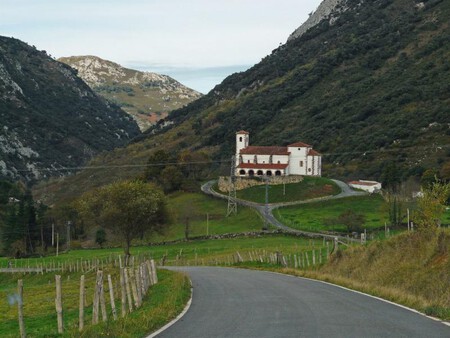
Nansa Valley and Peñarrubia
What to do around Lafuente
To continue on foot, the Camino Lebaniego itself leads towards Burió and the Hoz hill. The climb allows you to contemplate the valley from above and then connects with the descent to Cicera. Of course, it is an excursion with a slope, where the route gains altitude from Lafuente before crossing towards the municipality of Peñarrubia.
Another stop is the Santa Catalina viewpoint, over the Deva gorge. It is located about 600 meters above the La Hermida gorge, with views over the canyon and the surroundings of Liébana. After exploring Lafuente at the height of its houses, this is a way to change the scale: now the road is below and the rock walls dominate the landscape.
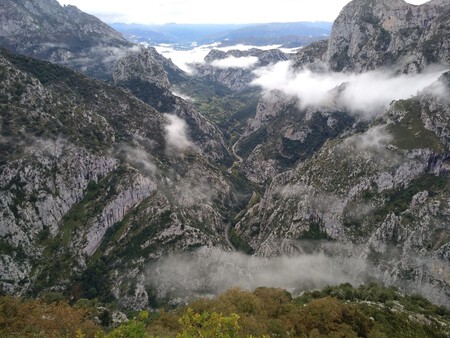
Cantabria Tourism
You can also complete the visit by exploring the Lamason itself a little more. In Quintanilla, mansions with sunrooms, arcades and shields are preserved. Among them, the one that carries the arms of Agüero and Dosal stands out, with its semicircular arches. Although, in reality, you can extend the visit as long as you want by following the old roads of the valley and stopping at the houses that grew up next to them.
Cover photo | Nona Delgado
In DAP | Nutrition experts confirm it: “The healthiest fried fish is not made with flour, but with chickpeas and panko”
In Xataka | Lidl solves (for 7.99 euros) an everyday problem at home when the cold comes, the rains return and the humidity rises