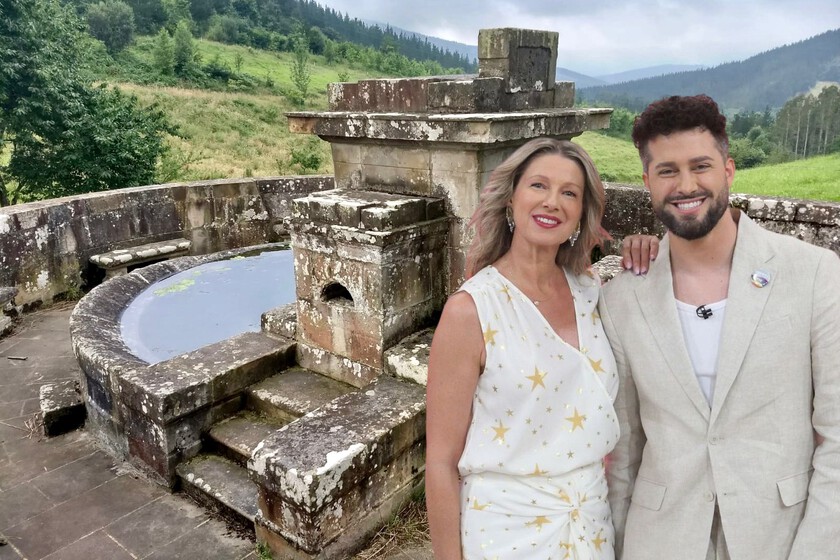
Anne Igartiburu and Javi Hoyos share a set every weekend on 'D Corazón', the TVE La 1 program, although to get closer to their origins you have to point out two different points in the north of the peninsula on the map. While she was born in Elorrio, Vizcaya; He is from Santander. Or what is the same: she came to Madrid from a town in the Basque interior, where the facades preserve the surnames of those who once made their fortune. While he came from one of the most beautiful cities in Spain.
Therefore, the television couple serves as the perfect excuse to talk about two destinations that each deserve a getaway. In Elorrio, the proposal stands out for the shields and galleries of its palaces. In Santander, it is best to follow the bay until you find an art center suspended on pillars, gardens between beaches and a former royal residence.
Elorrio, the palatial villa of Anne Igartiburu
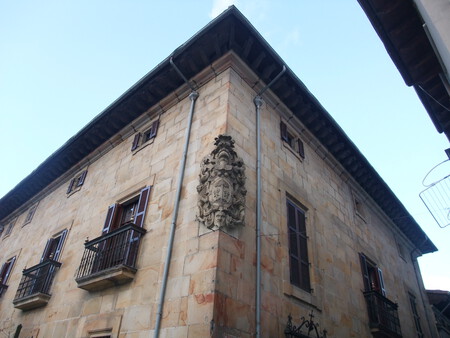
In Elorrio, a palace can have two different facades separated by three centuries of distance. For example, the one in Casa Jara that faces Berrio-Otxoa street belongs to the original 17th century building, while the one that overlooks the square was built in 1934. It is one of the most characteristic details of the architecture of this region of Durangaldea, where Anne Igartiburu was born.
Between palaces, emblazoned houses and stone crosses, the historic center testifies to the architectural ambition of past neighbors and which contrasts with the green landscape of hills and rural neighborhoods that surrounds it. In fact, its nature has been compared to the landscapes of Ireland, due to its similarity in some parts.
The origin of much of the town's prosperity was in iron. The blacksmith and iron workshops supplied markets in the peninsula, Europe and America, and families like the Arespakotxaga became rich trading with the mineral from Udalatx in Andalusia and the Indies. The fortunes that trade brought were visible in the streets, in the size of the houses, their galleries and the shields that still speak of the lineage of their owners.
Javi Guerra Hernando
To build the Arespakotxaga palace in 1620, three plots were occupied and part of the medieval wall that surrounded Elorrio was demolished. However, the building deserves a complete visit. Especially since, on the rear façade, there is a four-arched porch that can go unnoticed if the walk is limited only to the main entrance. It is something similar to what happens with the previously mentioned Casa Jara, whose facades from different periods force you to surround the building to be able to observe how they evolved over the centuries.
The Basilica of the Immaculate Conception is also part of that history of prosperity. Its architecture brings together Gothic and Renaissance elements, a Baroque altarpiece and a tower reminiscent of the Giralda. Elorrio was shaping its heritage for generations, incorporating styles and extensions that today coexist in a mix just steps away.
Robert Al
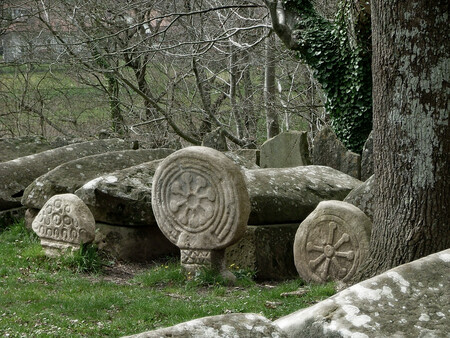
On the outskirts, the Argiñeta necropolis takes the tour even further back in time. Its tombs and steles, with pieces dated between the 7th and 9th centuries, allow us to get closer to the communities that inhabited this territory in the Early Middle Ages. Although, yes, the current provision is different from the original.
Santander, the city by the sea by Javi Hoyos
In Santander, Javi Hoyos' hometown, the walk can begin under a museum. The two volumes of the Botín Center rise on pillars next to the Pereda Gardens and leave the bay in sight. Renzo Piano, in collaboration with Luis Vidal + Architects, designed the building as part of an intervention that brought the gardens closer to the water. Today, it offers a privileged view of how the city opens to the sea.
From here you can also discover a Santander that no longer exists. The fire that occurred on February 15, 1941 devastated the historic center in less than 48 hours and forced a good part of the city to be rebuilt. Today, the Fire Route allows you to follow that disaster through ten stops with old photographs. Comparing them with the current streets is an activity to explore the place, getting an idea of how much Santander has changed, already giving an image to those homes and businesses that disappeared under the flames.
Michael Fabre
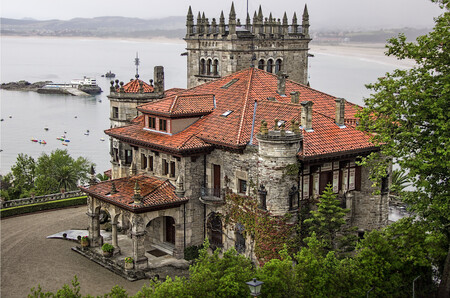
Towards the Magdalena peninsula, the route leads to the Santander of the royal summers. At the top stands the palace that was the summer residence of Alfonso XIII and Victoria Eugenia for seventeen years. Its history took a turn later with the arrival of the summer courses at the Menéndez Pelayo International University, to which it has remained linked since 1933. So, yes, the former residence of the kings is also a meeting place for students, researchers and writers.
Getting to El Sardinero, the emblematic beach area of Santander, is an ideal way to extend the walk. Between its two beaches, the Piquío Gardens have occupied the Piquillo rock since 1925, a ledge that offers views over the sandy beaches and the Cantabrian Sea. It is a good place to end the tour, with the beaches on both sides and the sea in front.
Cover photo | RTVE and Joxe Aranzabal
In Xataka | Five years in prison and more than 1.5 million euros for defrauding Social Security in the largest hotel scheme in Córdoba
In Xataka | Ukraine is making steel coffins for its soldiers, and they are designed to keep them alive on the front lines