You may have never noticed this detail, but all flight attendants sit on their hands during takeoff and landing. If you travel often, it is normal to stop paying attention to the explanations that are told to us in detail before the flight begins, but this simple gesture, which no one had ever told us about, can make a difference on a flight in terms of the general health of your body.
After fastening their seat belts, stewards sit with their hands under their thighs and rest their palms down on their legs. It turns out that this position would help stabilize the body, something that would minimize the risk of injury during turbulence or sudden movements on the plane. Not only that, it helps make hands immediately available in the event that an evacuation or safety measure needs to be implemented. This is what cabin crew member Katherine Drossos explained in the magazine 'Travel + Leisure'.
“The exact placement or posture of the hands may vary slightly depending on the airline or type of plane,” the expert clarified. Furthermore, he added that the great purpose of this support posture is clear and would be: “to maintain stability, alertness and immediate preparation during the most critical phases of the flight.” Of course, we as passengers do not have to follow this tip, but it is true that after learning about its benefits, I am willing to put it into practice myself, for prevention reasons.
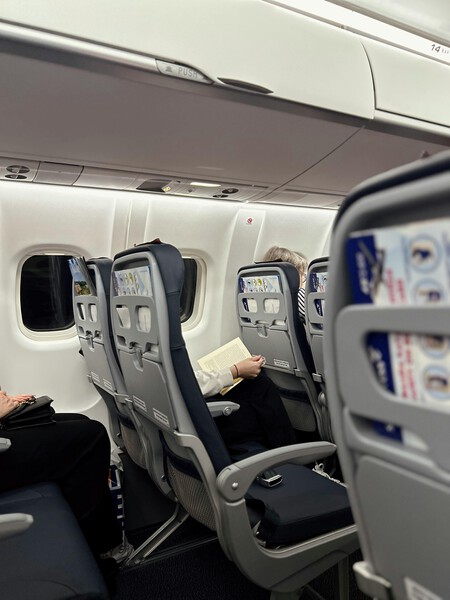
Other things that flight attendants do to make your flight better, and you don't even realize it
Stewards also have codes or gestures that they use to communicate with each other without raising an alarm in the crew. Be warned of problematic situations with a passenger or even a tiny fault that can be resolved internally without causing a stir on the plane.
Of course, these would not be the only procedure that the flight attendants always follow after giving us all the instructions before the plane takes off. Katherine Drossos has explained that once they are seated, in that position: “they conduct a silent safety review, mentally reviewing emergency procedures, identifying exits, and confirming evacuation orders and responsibilities.” Without a doubt it is quite an extra, because it means thinking about your own safety as well as that of the entire plane.