It is about two centimeters long, lodges in the muscles of many saltwater fish and leaves larvae in their digestive systems. Although it is also found in some crustaceans. This is anisakis, that parasite that enters the human body through the ingestion of raw, salted, marinated, smoked or undercooked infected fish. Two days after eating it, symptoms appear, including: crampy abdominal pain lasting 10 minutes, vomiting, diarrhea, hives…
This is why in hospitality there is a regulation that requires freezing all fish that are going to be served raw or semi-raw. In the same way, we should also freeze at home all the fish that we intend to consume raw (sushi, ceviches, pickled anchovies…). At least, all the pieces that come from salt water.
Consuming fish infected with anisakis, if it has been cooked for more than a minute at 60º in all its parts, is completely safe because the parasite dies. On the other hand, if we need it raw, AESAN recommends freezing it for at least five days at -20º and in a freezer with at least three stars.

Marek Ślusarczyk (Tupungato)
The five fish with the most anisakis
We should also be especially careful with certain very common fish from the Spanish coasts and fishmongers that tend to have a greater amount of anisakis. Although different studies support a presence of between 25% and 80% of this parasite in the world's fish, there are species that border on the total.
In our country, anisakis is more abundant in the Cantabrian Sea and less in the Mediterranean. Above all, in certain species, as explained in this study led by several universities in Spain and Latin America.

Centers for Disease Control and Prevention
After analyzing nine different and very common species, taking 1,786 fish as a sample, the researchers discovered that there are species that are much more parasitized than others. Furthermore, more presence is always observed in the viscera than in the meat.
In this sense, the highest prevalence of anisakis in this study appears in:
- The horse mackerel (66% of the pieces were infected)
- Silver hake (59.5%)
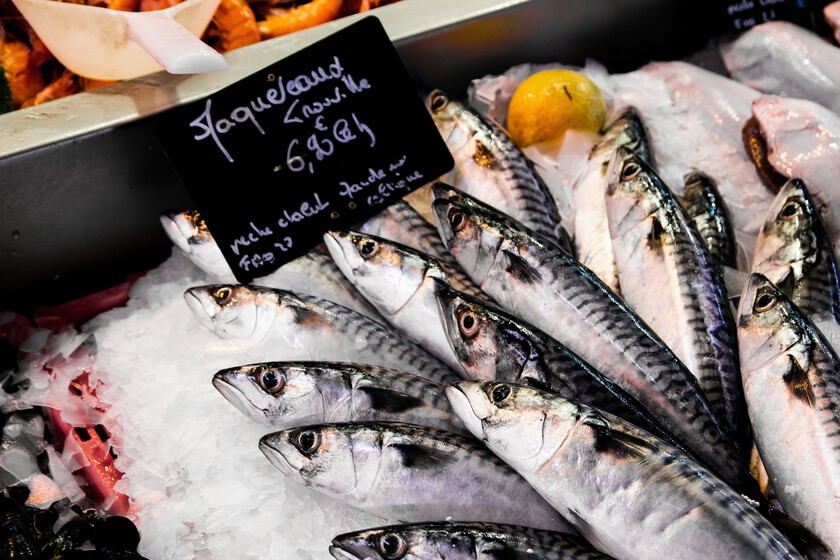
- Mackerel (58.4%)
- Blue whiting (53.9%)
- European hake (45%)
Deported photo | Samuel C.