Those who do not understand will say that there is nothing to see in Soria and, because they are unaware, they will miss the most important rock site in all of Spain. Tiermes has an ancient Celtiberian and Roman city carved into the rock that, after 35 centuries, remains so well preserved that traveling poets call it the 'Petra Soriana'.
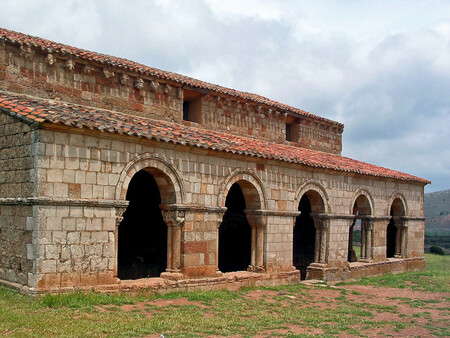
This settlement is tremendously complete. Any visit begins at the Tiermes Hermitage, a fully porticoed 12th century Romanesque temple, which is maintained in an enviable state and full of plant sculptures, animals, geometric designs and religious scenes. From there you advance to El Graderío, a space with steps and stairs without a clear objective: theories say that it could have been a theater, an amphitheater, a meeting area and even a sacred place.
The tour continues through the southern cave complex, with several houses, baths and walls from the Celtiberian era excavated in sandstone, such as the House of the Hornacinas or the House of the Stairs, with remains of the lace of beams from homes at various heights that indicate blocks of up to seven floors. There are also some Roman houses and the Puerta del Sol, a 40-meter corridor that served as access to the city.
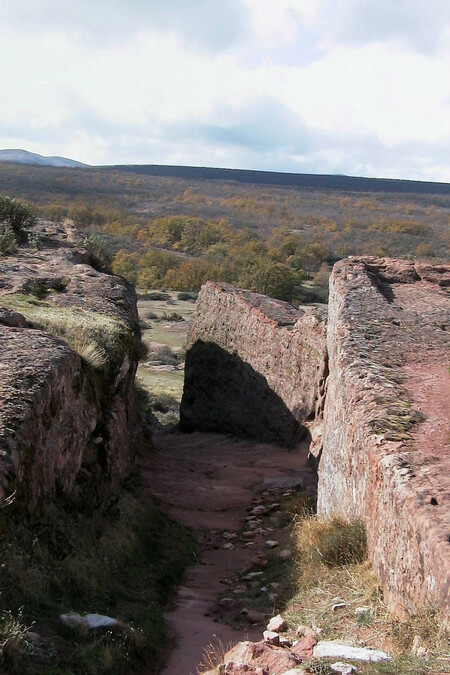
Gate of the Sun
From there we reached the Aqueduct, an impressive hydraulic work that channeled water and distributed it throughout the different neighborhoods of the city. Its underground section allows access, with about eight kilometers of tunnels still intact. Continue through the West Gate with the guard posts carved into the rock and the Aqueduct Houses, huge mansions with murals and grand staircases.
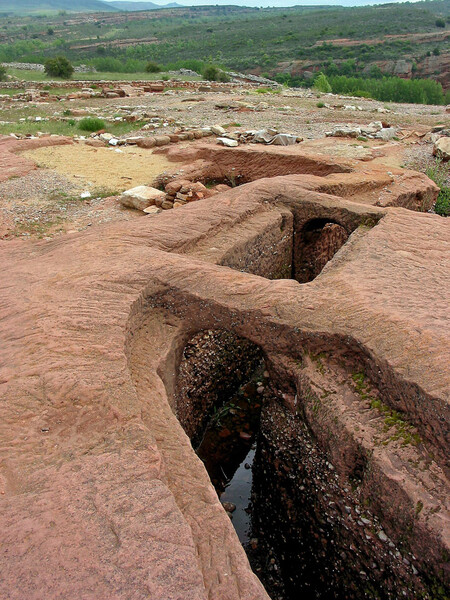
Aqueduct
One of the most impressive buildings in all of Tiermes awaits us at the end of the tour: the Castellum Aquae. Here the water from the aqueduct arrived, was decanted and cleaned to distribute it through galleries. Around it there is a terraced market and a Roman forum, where the most important administrative places of the city were located.
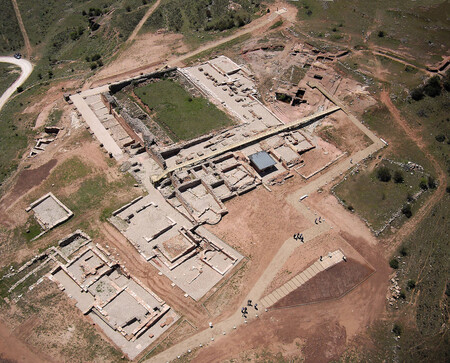
Castellum Aquae
Such a cultural plan ends in the Tiermes Monographic Museum, which complements all the information about the site with models, found utensils and explanatory panels. Admission is free, free and self-guided, because each place has images and graphics that explain what you see and what it was like in the past. We think it's the best plan for history lovers who want to feel a little Indiana Jones.