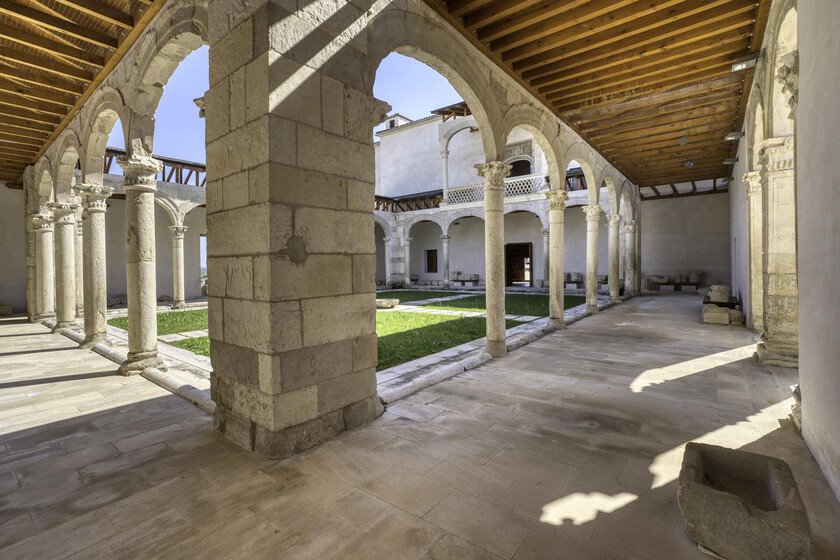
Guadalajara is an autonomous community that is often taken for granted. However, when you give it a chance you don't want to leave. Here are hidden towns near Madrid that are beautiful, charming and without tourists, which still preserve their traditional magic from the past. Cogolludo is one of the best examples, a Historical Complex of barely 500 inhabitants that has nothing to envy of Spanish Florence itself.
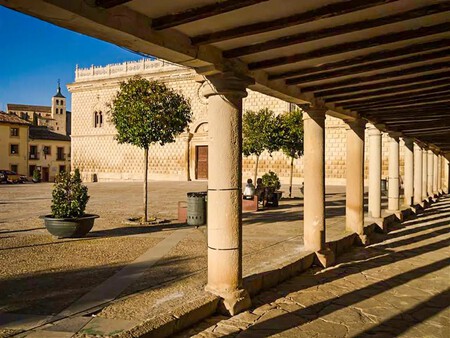
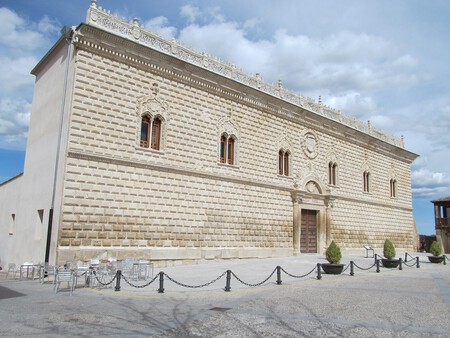
Anyone who visits Cogolludo goes straight to its Doge's Palace, the reason why this medieval town is so often compared to Florence. This monument is one of the first Renaissance buildings in Spain and was commissioned by the Dukes of Medinaceli in the 15th century emulating Florentine models of the time.
Its white façade is fascinating and full of details, with indented cornices, Elizabethan windows and pillow-bearing reliefs in which the horizontality and symmetry are of overwhelming exquisiteness. All of this crowned with the noble shield of the Medinaceli house.
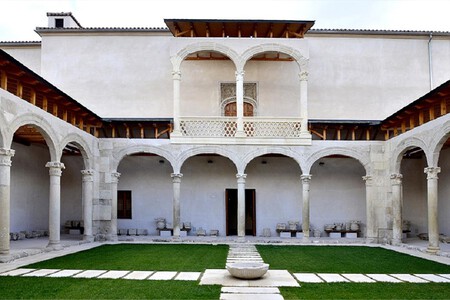
If the exterior is beautiful, the interior is amazing. The entire family palace is built around a beautiful central courtyard in Plateresque style, where the arches and columns with Italian capitals steal all the limelight. In addition, its rooms have Gothic reminiscences and Mudejar plasterwork, among which the fireplace on the second floor stands out. A work of art to walk through, with an entry fee of 5 euros, which can be purchased at the Tourist Office (Plaza Mayor nº 1).
After this charming visit, we took advantage of the getaway to discover the rest of Cogolludo, full of labyrinthine medieval alleys, a beautiful arcaded Plaza Mayor and two 15th century churches: the church of San Pedro and that of Santa María. The latter houses an unexpected treasure: a fresco by José de Ribera that was stolen from the Prado Museum in 1986, found and eventually kept here.
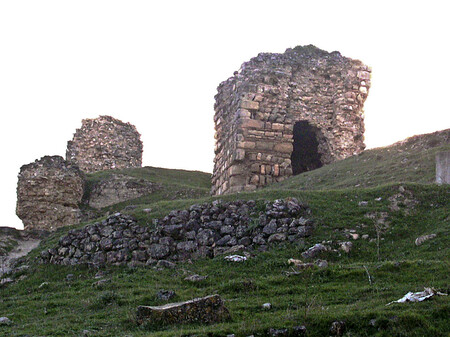
Cogolludo Castle
Cogolludo not only has a palace, it also has a castle. Its ruins are half-buried in the upper part of the town, but the Islamic tower still stands, a witness to the defense of the town in the 9th century. It is an Asset of Cultural Interest and is also worth discovering.