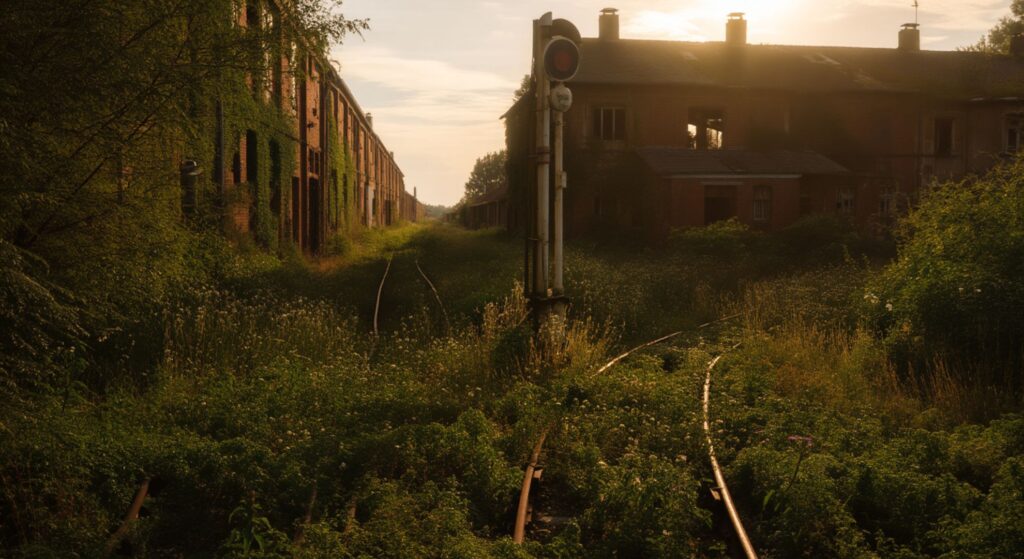
Long ignored by both locals and visitors, an abandoned railway station near Christchurch is quietly turning into one of New Zealand’s most unsettling and fascinating forgotten places, attracting a growing number of urban explorers who are deliberately seeking out locations that feel frozen in time rather than curated for tourism. What was once a functional stop on a regional rail line has become a silent landmark, stripped of its original purpose but loaded with atmosphere, history, and a sense of abandonment that feels increasingly rare.
For years, the station blended into the landscape, passed daily without a second glance, yet today it is being rediscovered precisely because it no longer serves anyone.
A station erased from daily life, not from existence
The station did not close with headlines or protests, but instead slipped slowly into obscurity as rail services were reduced and routes reorganised, until trains simply stopped stopping there. Buildings were left standing, signage remained in place, and the tracks continued to rust in silence, creating a site that looks less destroyed than paused.
Time has taken over where people left off, with vegetation creeping toward the platforms and weather steadily erasing colour, texture, and clarity. According to one visitor, “It feels like you’ve walked into a moment that was never finished, like everyone just left and forgot to come back.”
Why urban explorers are suddenly paying attention
Urban explorers are drawn to places that have not been repackaged or explained, and this station offers exactly that kind of raw, unfiltered abandonment, where nothing tells you how to feel or what to photograph. Unlike restored heritage sites, there are no fences, no plaques, and no attempts to transform decay into attraction.
What makes this station particularly appealing is the contrast between its isolation and its proximity to populated areas, creating the unsettling feeling of discovering something hidden in plain sight. Explorers describe it as a place where every detail feels authentic, from the peeling paint to the warped timber and the echo of footsteps on an empty platform.
From ordinary infrastructure to haunting landmark
For locals who remember using the station decades ago, its new status is difficult to process. It was never considered special, beautiful, or historic, just another stop on the way to work or school, which makes its current appeal even more striking.
“It was just part of everyday life,” explains a former commuter.
“Seeing people photograph it now, like it’s some kind of relic, is surreal.”
This shift highlights how quickly ordinary infrastructure can transform into cultural curiosity once it loses its function.
The risks behind the fascination
Despite its growing popularity, the station remains unmanaged and structurally vulnerable, with unstable surfaces, exposed materials, and no safety oversight. Urban explorers who visit regularly stress that the site’s value lies in respect and restraint, warning against vandalism, theft, or attempts to “restore” anything.
Once altered, the atmosphere that draws people there would disappear, replaced by something artificial and staged.
A broader symbol of forgotten New Zealand
This abandoned station is not an isolated case, but part of a wider pattern across New Zealand, where small transport hubs were quietly left behind as priorities shifted toward efficiency and centralisation. Most were demolished, but a few survived in limbo, neither protected nor erased.
That is what gives this site its deeper meaning, as it represents how quickly functional places can be erased from collective memory, even while they physically remain.
Why its appeal continues to grow
In a world dominated by polished experiences and constant digital stimulation, abandoned places offer something different: silence, ambiguity, and the freedom to interpret. This station near Christchurch is spreading through word of mouth and shared images rather than official promotion, turning it into a destination defined by curiosity rather than convenience.
What draws people is not just the decay, but the unresolved feeling it leaves behind, the sense that this place once mattered deeply and might still matter in ways we have not yet decided.
And that lingering question may be exactly why more and more people are trying to find it.