
The sugar market has operated, for decades, under a maxim that seemed immovable: the consumption of sweet calories was a growing global trend. However, for the first time in modern history, a medical innovation is achieving what years of public health campaigns never did: modifying the biological desire for sweets.
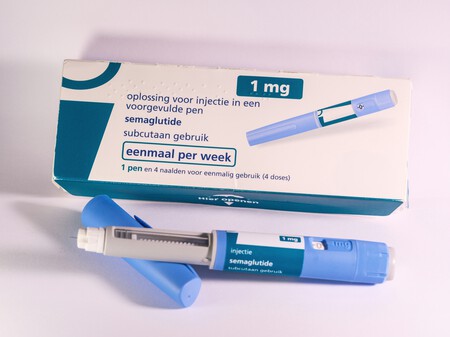
In this way, what began as a treatment for diabetes, with Ozempic, and obesity, with Wegovy, has been transformed into a macroeconomic factor that Wall Street analysts have dubbed the “GLP-1 effect.” And its consequences are reaching even raw materials trading.
When the craving ends
Human beings do not consume sugar only for an energy need, but for pleasure. However, drugs that mimic the GLP-1 hormone act directly on the brain receptors that manage our reward system. Or what is the same: they reduce the release of dopamine associated with the pleasure of eating. For this reason, it has been proven that constant cravings and consumption of products with high sugar content plummet in patients undergoing treatment.
So, although global sugar production remains mainly conditioned by the climate of the producing countries, some cracks have appeared in its demand. Now the market no longer only depends on a good harvest to see prices plummet; He is also afraid of a consumer who has suddenly stopped wanting to eat.
Haberdoedas
According to market operators and analysts, this reduction in craving is having a direct impact on sugar consumption in the United States and other developed economies, much more pronounced than expected since the popularization of these drugs.
A real price crash?
Although the price in futures contracts in New York continues to resist thanks to droughts and ethanol production, the long-term demand curve is revised downwards for the first time in the 21st century. The US Department of Agriculture (USDA) has already seen small but consistent changes in sweetener use. If the adoption of these drugs continues at the current pace and their prices drop with the arrival of generic versions or oral pills, sugar could go from being “white gold” to a raw material with a structural surplus that is difficult to manage.
In Spain, the epicenter of this earthquake is in the beet fields of Castilla y León and Andalusia. After a 2024 of historically high prices that were close to 900 euros per ton, the national market began a sharp decline, already falling below 600 euros in 2026. This 30% drop has set off alarms in cooperatives such as ACOR and giants such as Azucarera, which see how the European production surplus coincides with an unprecedented change in habits in the Spanish consumer.

Wojtek Mich
Spanish beet is facing a profitability crisis and the fear is no longer just the climate, but that national sugar will lose its space in a shopping basket that today prioritizes protein and fiber, leaving sugar factories facing the challenge of managing a product that, for the first time, is left over on the shelves.
Because, yes, while sugar faces a future of potential surpluses and downward pressure on long-term futures contracts, we are seeing a shift of capital to the other side of the plate: proteins. Patients undergoing treatment lose weight quickly, including muscle mass. This has skyrocketed the demand for whey protein and protein concentrates.
Cover photo | Robert Anderson