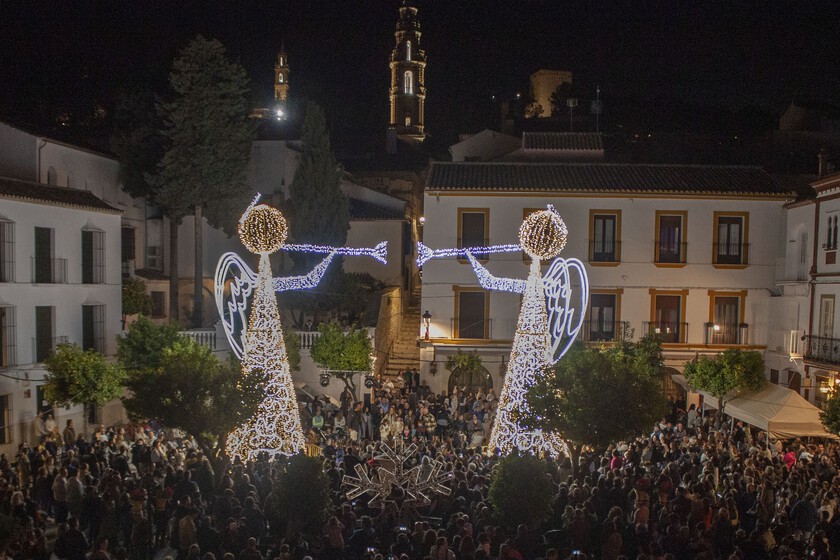
There is a place in Seville that I'm sure Santa wouldn't mind moving to if he got tired of the inclement weather in Lapland. This is Estepa, a town in the Sierra Sur of Seville where one can know when Christmas is approaching without having to consult a calendar. Basically because it completely transforms.
Most people know this town for having eaten the mantecados and Polvorones that are made in its centuries-old factories. This has made it the town that consumes the most cinnamon in Spain and, in fact, if at Christmas, you can easily feel the aroma of this spice. A detail that contributes to making it impossible to walk through its streets without feeling like you are in a living Christmas card.
The town that lights up Christmas before anyone else
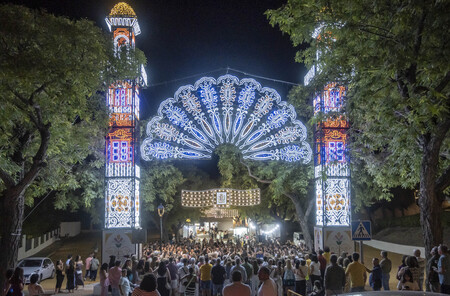
In Estepa they do not wait for that symbolic date that the December long weekend seems to have become to officially inaugurate the Christmas season. Estepa was the first place in Spain to turn on its lights on November 7. The town dresses up for the holidays without skimping on lighting, decoration and a long calendar of activities.
Estepa City Council
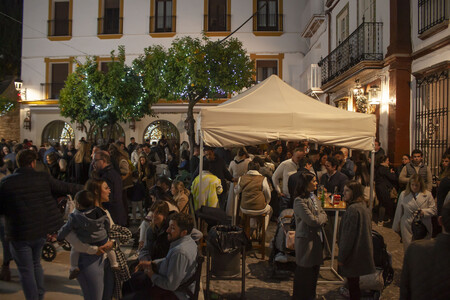
The epicenter, however, is its Christmas Market, which is held over three weekends (November 28-30, December 5-8 and December 12-14). It is a space designed to go with the family and leave loaded with crafts, decoration, local products and, of course, typical sweets. There is music, animation and that cozy atmosphere that makes anyone create a character from one of those movies in which a busy executive from Manhattan returns to her town for Christmas and ends up recovering the lost Christmas spirit.
In addition, the Estepa nativity scene contest is an event that locals take very seriously, with prizes ranging from 150 euros to lots of local products. Because Christmas in Estepa is so spectacular due to the involvement of the neighbors in contests like this one or the Christmas balcony contest, which every year turns the town's facades into a kind of luminous route.
The window contest also contributes to this, in which local businesses compete by creating authentic visual micro-stories full of light, color and festive spirit. However, although December is the time of year when Estepa shines the brightest (literally), the town has a heritage that is worth it all year round.
A walk with a joint historical-artistic title
Estepa begins at its highest point, the San Cristóbal hill, where the fortified enclosure that marked the origin of its history stands. It is a good example of why its heritage has earned it the title of historical-artistic complex.
Beyond the Christmas season, Estepa is a delight to stroll through its historic center, where corners appear such as the Plaza de El Salón, the hermitage of Nuestra Señora del Carmen, Libertad Street with its arch and its little Virgin, or Torralba Street with its legendary story about a tavern owner who got the soldiers of the Napoleonic troops drunk and then buried them in her well.
The itinerary continues with the Torre de la Victoria, the Church of San Sebastián and the Los Remedios neighborhood, where the Vera Cruz hermitage stands out. And, of course, the already mentioned San Cristóbal hill, which in addition to being the balcony of Andalusia (from where on clear days the Sierra Nevada, Seville and Córdoba can be seen) preserves remains of the Alcazaba, the Torre del Homenaje and the old mosque converted into the Church of Santa María.
Estepa City Council
In this area there are also the Convent of Santa Clara (where sweets such as bienmesabe or ochíos have their origin), the Church of Nuestra Señora de Gracia, the Hermitage of the Asunción and the Casa Palacio del Marqués de los Cerverales. Although those looking for nature will find the Manantial de Roya a perfect environment for a hiking route.
Steppe beyond the sweet
In addition to the sweets that have made it famous, Estepa can boast of having an extra virgin olive oil with its own designation of origin (the first in Seville) and of having an ancient olive-growing history. So, if Christmas here smells like butter, the rest of the year smells like toast with oil.
Chocolate lovers also have a mandatory stop at Chocomundo, the largest chocolate museum in Spain. While wine lovers can discover local wines at Bodegas Machuca (the oldest in the country) and El Bodegón.
Cover photo | Estepa City Council