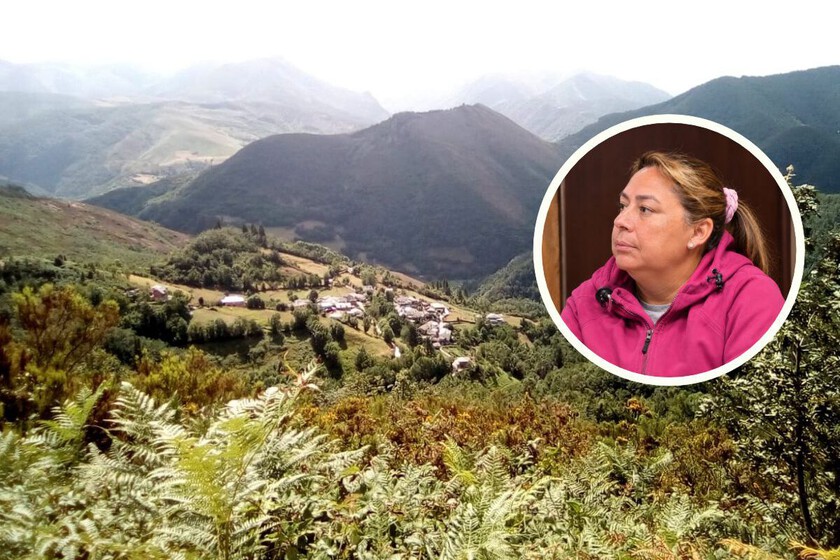
If you have often fantasized about leaving behind the noise of big cities to move to a quiet corner where the clock goes slower and nature sets the pace of the day, you have to keep in mind that taking that step requires looking at reality without filters, and Reyes, a woman who lived for years in apartments in Madrid before returning 24 years ago to Oballo (a small Asturian village of just 30 neighbors in Cangas del Narcea), has shared for Travel from Asturias how It is really everyday life away from the asphalt.
As he made known in this talk while touring the corners of his town, leaving the capital was the best decision of his life thanks to a feeling of spaciousness and belonging that is impossible to replicate in a block of flats.
“It's like living in a very big house; everything makes up the house, not just four walls with four or three rooms; the entire town is part of my house. I even go out in my pajamas; you are at home continuously,” Reyes explained, contrasting that absolute freedom with urban life, where the core of privacy is reduced to 60 or 100 square meters and one walks surrounded by crowds without exchanging a word with anyone.
Community versus services: the real daily life in the village
Betting on a close coexistence where neighbors become part of the family itself, the routine in Obacho revolves around the projects shared through the Peña la Encanta association, whether preparing manual decorations for Christmas around a coffee with cake and frisuelos, or playing games of Parcheesi, chess and ping-pong on summer afternoons.
However, living in a rural environment implies assuming very clear practical limitations: the nearest bar-shop, along with the pharmacy and the doctor, is four kilometers away in Ventanueva, while to make a large purchase at a butcher or fishmonger you have to travel 22 kilometers to Cangas del Narcea, making the freezer an indispensable ally.
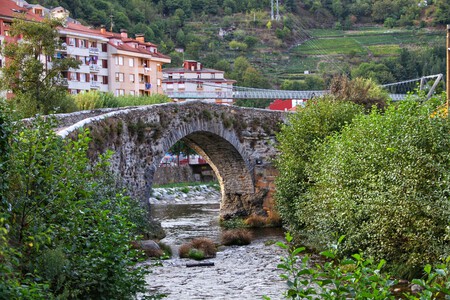
Chapel of Carmen in Cangas del Narcea | Photo by Fernando López-Azcárate Fdez
Although there are no bars or shops around the corner, the baker stops by two or three times a week and a van with fish, meat, frozen foods and basic products comes weekly, in addition to having school transportation and a dining room for the children in Vega.
Regarding its population, a large part of the residents are retired from mining (which was the historical economic engine of the area) and those of working age usually work outside or complement rural tourism with other income, with few houses for sale because the heirs prefer to rehabilitate them to spend long periods of time.
Although Reyes assures that today he would be unable to lock himself in an apartment again and that the quality of life next to the mountain is unsurpassable, he also warns against the danger of romanticizing the countryside without knowing its rules.
“People also idealize everything that I am saying. You have to be very clear about many things, social life does not translate to the street and finding services, the theater, the cinema. It is another social life that you have to like,” he stressed honestly.
In Babies and more | Verdeliss, mother of 8 children at 41 years old: “I don't see aid. The only help we have seen is transportation”
In Genbeta | Paula, 23 years old: “I spent a day at work. I spent so much time searching, I finally got a job and in the end I didn't like it”