Some of us didn't even get to experience it but, before becoming the television idol that he has been for decades, Karlos Arguiñano had already touched the heaven of haute cuisine. We say this a bit literally because, in the mid-1980s, his restaurant received a Michelin star. What many do not know is that, a few years later, that recognition also disappeared like a shooting star, in every sense.
When TV was not “serious” for haute cuisine
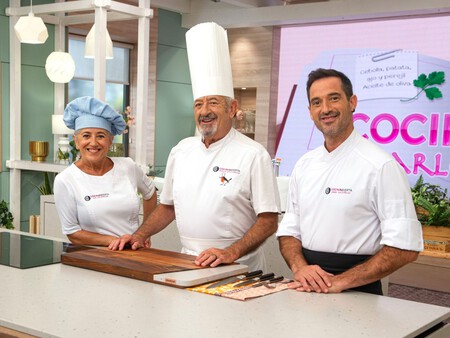
At that time, appearing on television was not exactly the dream of prestigious chefs. Quite the opposite. As Arguiñano himself has said on multiple occasions, his entry on the small screen did not sit well at all in certain gastronomic circles. The idea, as simple as it was elitist, was that if you did television, you could no longer be a serious cook “committed to quality cuisine.” So, when he started appearing on TV, they took away his star.
In this regard, Arguiñano has always assured that he thought: “How can it be that they give me a Michelin star and when I enter the nineties on television they take it away from me? Have I forgotten to cook or what?” For him, that made no sense and he blames it on envy. However, and although it hurt him at the time, Arguiñano has ended up seeing that loss almost as a liberation. In his view, a Michelin star is not only a medal: it can also become a burden.
Antenna 3
This is because maintaining it implies constant pressure, enormous investments, more staff, better tableware, increasingly expensive raw materials, a more ambitious winery. Everything raised to the highest level… with a profitability that, in many cases, is not guaranteed. And that is where he is especially critical: for many chefs, having a star does not mean earning more money, but rather spending more to maintain an image.
In theory, a Michelin star should bring more customers and allow prices to rise. In practice, this does not always happen since these are not mass restaurants but rather they have fewer tables and fewer daily services. In fact, some chefs have openly recognized the economic difficulties of supporting fine dining restaurants, even having several stars. That is why it is not surprising that many end up collaborating with brands, hotels, publishing books, having a presence in the media… And there, paradoxically, Arguiñano was a pioneer.
Antenna 3
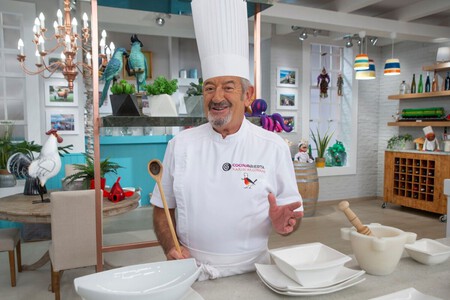
In his case, that world of external income was television, books and a personal brand that has survived fads, contests and generations. Furthermore, despite having lost that star, his restaurant is still open, with his children taking over in the kitchen, and with recognition from other gastronomic guides. What changed was the approach: less obsession with technical prestige and more focus on the real customer. As the Basque has repeated on more than one occasion: “For me, the star is the client.”
Cover photo | kitchens.com