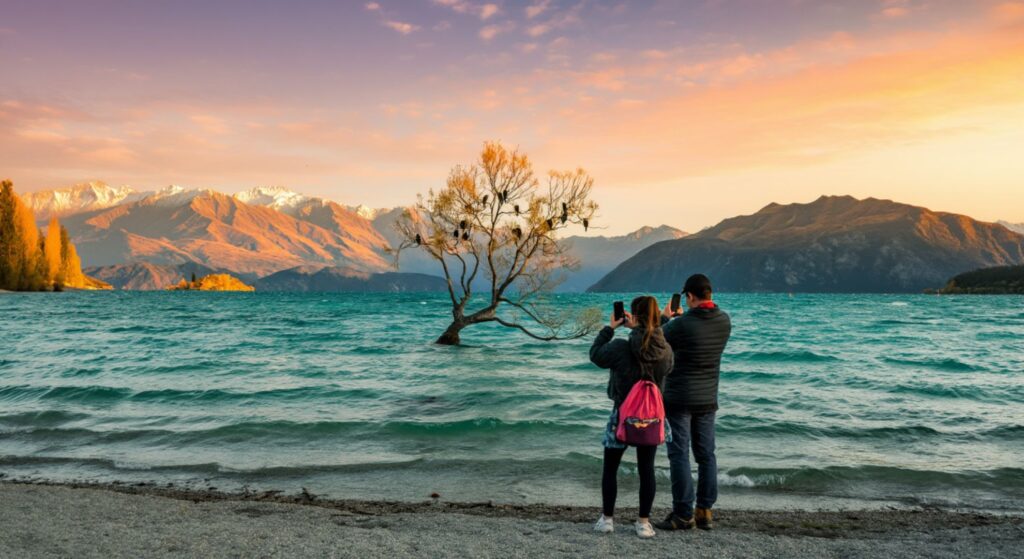
Tucked between lake and limestone peaks, the Austrian village of Hallstatt has finally drawn a line. After years of surging foot traffic and dawn-to-dusk selfie sessions, local leaders have installed a simple wooden barrier at the most photographed lookout. The move is small, but the message is loud: admiration is welcome, disruption is not.
A small barrier with a big message
Hallstatt’s council opted for a low‑tech palisade where tour groups typically cluster, hoping to ease noise and reduce crowding in nearby lanes. “The decision was in response to complaints,” a municipal official told AFP. For now, the barrier is temporary, but if it calms the pressure, it could become permanent.
The village’s popularity isn’t accidental. Its mirror‑still lake, steep chalets, and storybook skyline helped inspire Disney’s Frozen, making it a bucket‑list stop for social‑media‑driven travel. That fame, however, has a cost: coaches idling at odd hours, drones over breakfast balconies, and a daily choreography of tripods and timetables.
Selfies versus serenity
The friction isn’t about photos so much as behaviour. Residents say narrow streets morph into catwalks, while quiet squares become live sets for performative content. The barrier is a symbolic counterweight—a prompt to slow down, listen, and meet a place on its terms.
In practice, it’s a test of limits. How many bodies can a tiny village absorb before daily life feels like a staged exhibit? How do you balance livelihoods built on visitors with the right to a home that still breathes between the buses? These are questions many places will have to answer as travel rebounds with force.

Why this resonates in Aotearoa New Zealand
Kiwis know the dance between welcome and wear. Queenstown’s lakeside boardwalks, Milford Sound’s scenic pull‑offs, and Hobbiton’s country lanes all grapple with visitor flow and amenity strain. At Cathedral Cove, slips and sea‑level issues intersect with crowd pressure. On the Tongariro Alpine Crossing, rangers juggle safety, parking, and seasonal surges that can overwhelm fragile alpine terrain.
Hallstatt’s nudge suggests a broader toolkit. Light‑touch barriers, timed entries, and clearer wayfinding can protect tranquillity without shutting the door. In Aotearoa, pairing such steps with kaitiakitanga—guardianship led by iwi, hapū, and local communities—can anchor tourism in shared values rather than pure volume and virality.
There’s also a lesson in tone. A respectful “not here, not now” can be more effective than a sweeping ban. Think quiet hours on lakefronts, designated sunrise zones for photographers, and community‑backed codes that make manaakitanga a two‑way street.
Simple shifts travellers can make
- Choose off‑peak hours and shoulder seasons to ease pressure.
- Keep voices low in residential areas; the best soundtrack is the place.
- Stand back from doorways, gates, and driveways to avoid blocking locals.
- Leave drones in the bag unless clearly permitted by rules and rangers.
- Pack out every crumb; small messes become big problems fast.
- Ask before photographing people; courtesy travels further than any filter.
Economics without the echo chamber
Tourism brings jobs and joy, but the benefits can be more evenly spread. In NZ, that might mean encouraging longer stays, nudging travellers beyond the usual loop, and investing in toilets, tracks, and transport funded by modest visitor levies tied to clear outcomes. Hallstatt’s barrier, while symbolic, is a reminder that infrastructure also includes intangibles like peace, dignity, and the right to a quiet dawn.
For operators, this is an opportunity to curate quality over sheer volume. Smaller groups, deeper stories, and partnerships with mana whenua can turn a photo stop into a relationship that lasts beyond the last frame. When visitors understand why a rule exists, compliance feels like care, not policing.
The road ahead
Hallstatt hasn’t shut the gate; it has adjusted how the gate swings. That distinction matters for places across Aotearoa weighing conservation against the need to keep towns vibrant. If a wooden fence can rebalance one of Europe’s most photographed villages, then a blend of design, dialogue, and clear expectations can do the same here.
In the end, the measure of a great trip isn’t the sharpest selfie, but the smallest footprint. When we shift from taking the perfect shot to taking good care, both hosts and guests get what they came for: a beautiful place that still feels alive tomorrow.