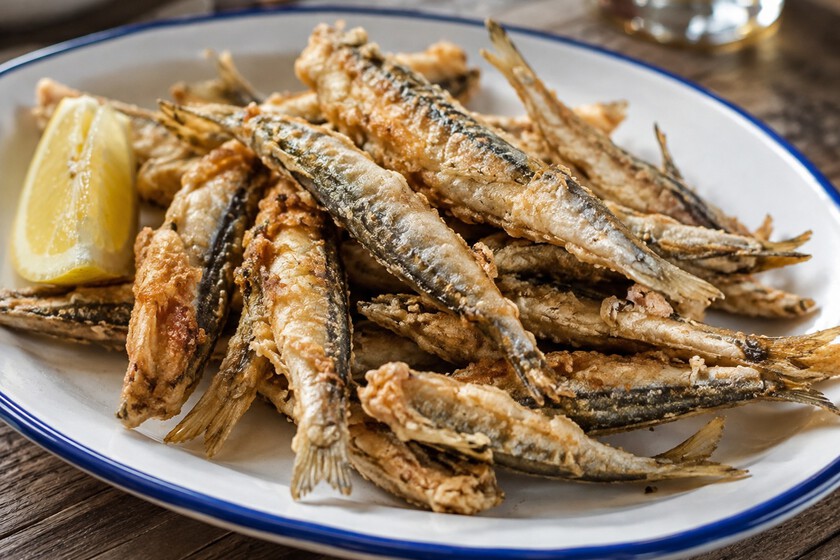
If you have traveled to Andalusia you will know that frying fish is sacred there. So much so that “fried fish” is a regular on the menus of all restaurants. With this special frying, the fish is crispy on the outside and extremely juicy on the inside, but without being greasy at all. On the contrary, a good fried fish is always light and its flavor is unmistakable, but how do they do it? You don't need eggs or breadcrumbs, but follow a couple of tricks that will guarantee that our fish will make the cut even for the most demanding Andalusians.
How to make the best fried fish at home
As the gastronomy experts at Directo al Paladar explain, there are three things to take into account when frying. The flavor, which will depend on the quality of the ingredients (fish and oil); the batter, which should be crispy and at the same time thin; and finally the fat, which should not be noticeable when eating it.
Obviously choosing a good product is key and the fresher it is, the better, so opt for good quality fish. It is important to know that not all fish turn out the same when we fry them. The leanest fish such as anchovies, hake, cod or dogfish, are crazy. If they are small pieces, they can be fried whole but gutted and very clean, and if not, in cubes very clean of bones. As for the oil, it can be sunflower or olive oil, but “the best one for this process is extra virgin olive oil,” as the experts explain.
And now comes the batter: it is only coated with flour and without using egg, and it can be used with wheat, chickpeas or a mixture of both, but always very clean. I like to make a half and half mixture, but we can do it all with chickpea flour and it will be great, very Andalusian. “It is very important to remove excess flour from the fish before frying it,” they explain in DAP. If we do this, the batter will be light and crispy and will not pick up as much oil when frying. To replicate the process at home, we clean the fish well by removing the water (you can dry it carefully with a clean cloth), salt it and coat it in flour. When it is well floured, transfer it to a sieve to remove the excess flour with a few taps so that what is left falls out.
The last trick is the simplest, but also the one we forget the most and it is the way we fry the fish. It should be done with plenty of very hot oil and in batches for two reasons: if we add a lot at once the temperature of the oil will drop and the fish will be greasy, and if we fry it in a pile we will not get the outside to be crispy. I'm not going to tell you to use a thermometer to check that the temperature of the oil is 170º because at home it is unlikely that you will have it for cooking, but that it is very hot without smoking.
When fried, drain the fish well to remove excess oil and make the batter extra crispy. Leave it on absorbent paper before transferring it to the dish in which you are going to serve it, so that it loses the excess fat and all you have to do is enjoy a fried fish of ten.