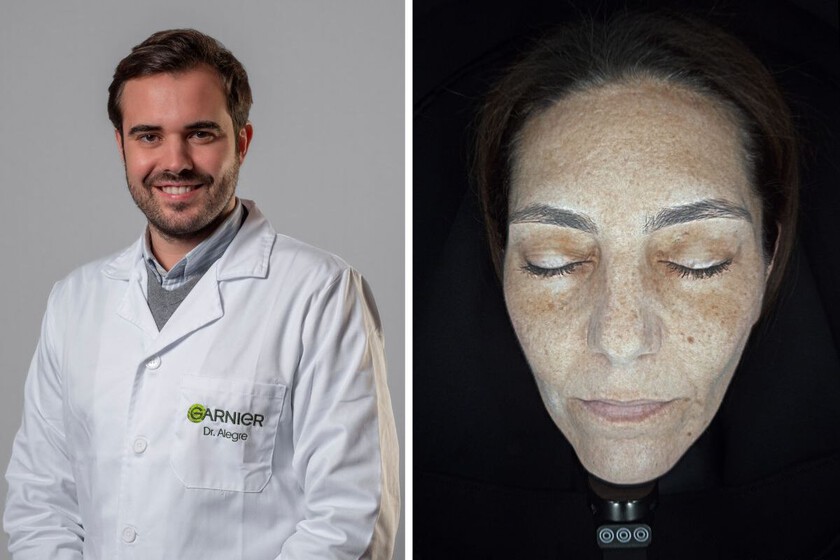
A few months ago I had a facial skin study done and, to no one's surprise, at 42 years old I have a lot of accumulated sun damage.
Personally, I think it is due to several reasons: the main one would be that, if you are like me, born in the 80s, we already know that for years sunscreen was conspicuous by its absence, because we did not have as much information as we have now (raise your hand if you are around 40 and have not done really crazy things like lying in the sun on the beach at midday, or even using creams without sun protection).
The other possible reason I see is that I have been running outdoors and running long distances for more than 10 years, and I must not have been religiously using sun protection for more than 4 years every time I go out. “Well, I'm wearing the visor”, “wow, it's only going to be an hour”… and, one for the other, in the end I went running for a long time without sunscreen on me.
Luckily those times are long gone and we now have a ton of information about the need to use sunscreen every day, rain or snow. But what happens to that sun damage accumulated over the years? Is it reversible or is there nothing more to do?
To clarify these doubts we have spoken with Dr. Adrián Alegre, an expert dermatologist and member of Garnier's 'Board of Dermatologists', who has clarified many concepts and given us clear and very reassuring information.
The invoice of the 80s and 90s on the skin
I love everything related to the 80s and 90s: music, fashion, culture… But not so much the fact that information about skin care was generally reserved for health professionals. From those dusts, these sludge, and those born in the 80s, we have ended up in the 40s with damage to our skin that we could have avoided. Can we reverse accumulated sun damage now?
The doctor answers us: “We can greatly improve its consequences, but not erase all the damage accumulated in the DNA. The “skin memory” is not a condemnation, but it cannot be eliminated with a cream either. At home, daily photoprotection, well-scheduled retinoids and vitamin C can improve different signs of photoaging, such as irregular tone, texture and fine lines. Vitamin C is of special interest due to its antioxidant action and its role in the formation of collagen.”
“When there are persistent spots or more marked damage, dermatological treatments can provide additional improvement. Above all, certain lasers such as fractionated ablative lasers have been shown to reduce the long-term risk of developing skin cancer, by eliminating skin with mutations and promoting regeneration.”
Garnier Vitamin C Wonder Tint SPF 50+
Today on Amazon — 8.73 € Primor — 12.34 € Druni — 12.35 €
Perimenopause, changes in the skin, and also in our skincare routine?
In addition to having grown up in the 80s and 90s, many of us are now entering perimenopause, with the hormonal changes that this entails and the skin changes that come with it. To what extent do hormonal changes also change the way UV radiation and visible light impact tissues? Should a 45-year-old woman radically modify her photoprotection regimen compared to what she used at 30 to compensate for this loss of the skin's endogenous defense?
The doctor's response is clear (and reassuring): “With the decrease in estrogen, the skin can lose collagen, hydration and repair capacity. Two processes coincide: hormonal change and the bill of accumulated sun. But it is not proven that perimenopause, by itself, requires radically different photoprotection against UV radiation or visible light.”
“At 45, I would maintain high protection against UVB and UVA, adapting the texture if the skin is drier or more sensitive. If melasma exists, a protector with color and iron oxides, which also protects against visible light, may be especially useful. The change must respond to the needs of the skin, not just age.”
Mature skin with sun damage: can we damage it by trying to rejuvenate it?
The peeling Aggressive liquids, the use of retinoids and laser treatments are very fashionable now to reduce spots and even out skin tone, but we know that they can lead to a state of chronic inflammation. Should we take precautions with this type of treatment on mature skin, especially skin that has accumulated a lot of sun damage, to protect it?
The answer from a professional to this question involves, of course, medical advice: “Yes, especially when we confuse intensity with effectiveness. Skin that constantly stings and peels is not rejuvenating better. Combining exfoliants, retinoids and procedures without an adequate regimen can alter the skin barrier and promote post-inflammatory pigmentation spots or a state of sustained micro-inflammation.”
“Now, well-indicated retinoids and lasers do not have to cause chronic inflammation. In many procedures we look for a controlled and temporary response that allows the tissue to be renewed. The key is to adjust the intensity, introduce the active ingredients progressively and respect the recovery. In mature or highly sun-damaged skin, personalizing the treatment is more important than following the trend of the moment.”
At this point, is FPS enough or do we need something else?
We know that traditional sunscreen blocks UV rays, but the visible spectrum, infrared, and heat can also damage the dermal matrix. In mature skin, is it still realistic to entrust prevention solely to a cream with SPF 50, or does clinical evidence require combining it with other antioxidants or specific active ingredients?
Dr. Alegre responds: “SPF 50 is a fundamental base, but that number mainly informs protection against UVB: we must also check UVA protection. And no cream replaces the shade, the hat and reapplication during exposure. Vitamin C can be a good ally of the photoprotector, due to its antioxidant action and its benefits on some signs of photoaging, although it does not replace it nor is it mandatory for it to work. If there is melasma, adding protection against visible light is evident. However, the data on infrared and heat do not justify requiring all women to have another specific cosmetic product.
“Complete photoprotection begins by using well what we know works. In addition, renewing agents such as retinoids and AHAs are those that will eliminate accumulated damage on a daily basis and promote regeneration.”
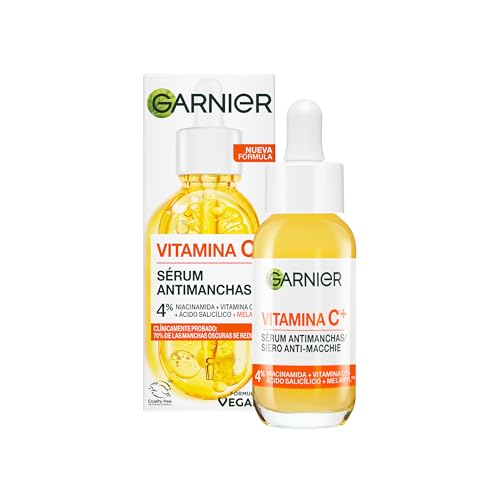
Garnier Vitamin C Anti-Stain Serum for Sensitive Skin
Today on Amazon — 7.49 € Primor — 10.60 € Druni — 13.99 €
The truth is that after this interview I feel much calmer, because now I know for sure (and never better said) that although the damage cannot be erased, the consequences can be improved. And, if I could say anything to my 15-year-old self, it would definitely be “put on sunscreen!”
In DAP | Toshisuke Kanazawa, 90-year-old Japanese bodybuilder: “I don't eat meat, fish, milk or yogurt. My three daily meals are based on brown rice, natto and miso soup”
In DAP | Ferran Adrià, chef, defends the use of additives: “Salt is much worse for your health than any stabilizer”