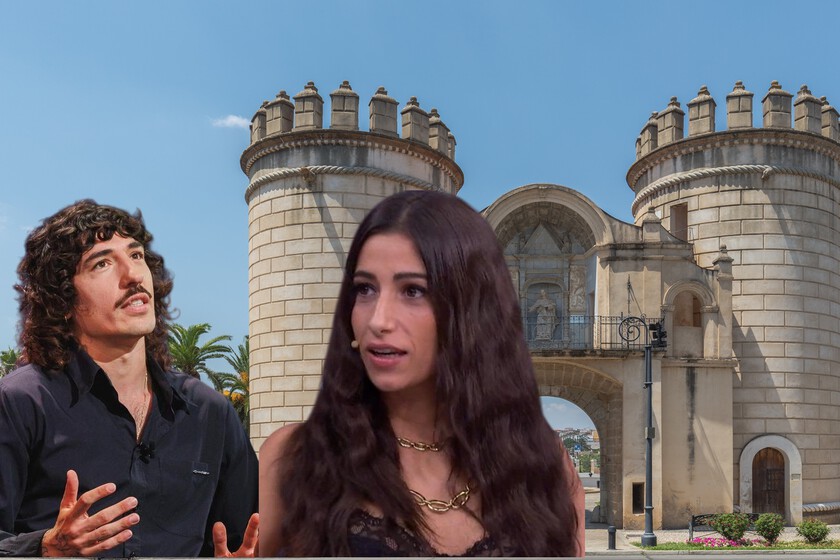
We did not know that Carolina Yuste and Héctor Bellerín were the crossover that we needed until they shared the stage at the Teatro Central in Seville, where the Betis defender lives, to talk about 'All my violence is yours', the actress's first novel. A few months later, Semana magazine published photographs of the two kissing in a park in Madrid, where the winner of two Goya awards resides, revealing a relationship that had been discreet for approximately a year.
Their personal stories, however, began at points on the map even further away. While Yuste was born in Badajoz, Bellerín grew up in Calella, where his family moved shortly after he was born in the city of Barcelona. Two very different places that the two of them now unite and that range from the medieval walls of Extremadura to the Maresme coast. Either of the two perfect to get away.
Badajoz, the city of Carolina Yuste
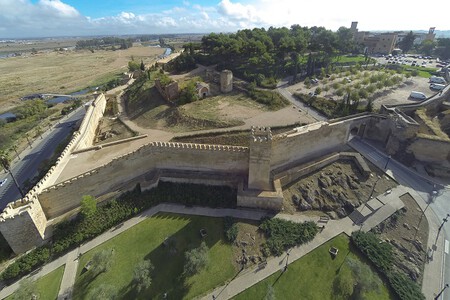
In Badajoz, a good way to start the walk is to go up to the Alcazaba and contemplate the history of the city from there. Its origin dates back to the 9th century, although the enclosure that has survived to this day owes much of its configuration to the Almohad reform of the 12th century. Almost the entire population lived within its walls for centuries. Because yes, what we see today as a monument was, before, every inhabited city. This idea is very important to keep in mind during the visit because the doors and towers then stop being museum pieces and become a kind of portal to a journey through time.
Badajoz Tourism
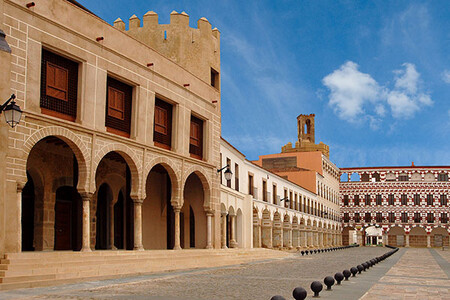
At the foot of this enclosure, the Upper Plaza introduces another essential stop with the facades of the colored Houses, their geometric decoration and their reddish tones, which have an almost scenographic presence. Here it is convenient to follow with your gaze the drawings of the walls, the repetition of the arches and the relationship between the arcades and the open space. The baroque ornamentation gives this corner a personality that makes the square unmistakable with any other Spanish square.
The historical walk continues by crossing the Arco del peso and entering the Plaza de San José. The two are united, but the proportions, the age of the houses and even the way of occupying the space change. San José is longer and preserves more modest buildings, including Mudejar houses. For centuries, much of the activity of Badajoz took place in this environment. The name of the arch also recalls something very specific that was done there for a long time because the weights and measures of the city were controlled there.
Badajoz Tourism
Another activity is to enter the Provincial Archaeological Museum, which is located within the fortified enclosure, in the old palace of the Counts of La Roca. With the building another layer is added to the tour: that of a stately residence with a Mudejar cloister within a fortress of Islamic origin. There it is nothing.
Calella, the landscape where Héctor Bellerín grew up
The Calella linked to Bellerín's childhood is located specifically in Maresme, in the province of Barcelona (not to be confused with the Calella de Palafrugell in Girona). To get closer to it, the Manuel Puigvert walk is a good start. It is an avenue next to the beach, laid out at the end of the 19th century, where the large plane trees and the railing by Jeroni Martorell are the icons on land. So it is a point where it is worth looking both towards the sea and towards the promenade itself, which is a hot meeting point and urban life.
The balustrade, the centuries-old trees and the length of the promenade are a perfect way to get to know Calella on a pedestrian scale, looking at how the city overlooks the beach. The complex is included in the Inventory of the Architectural Heritage of Catalonia. So it is not just a place to walk, it is also a piece of its history.
Catalan Tourism Agency
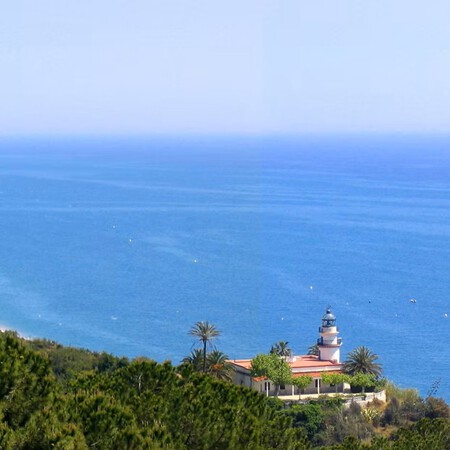
Afterwards, you can change perspective with the lighthouse. Inaugurated in 1859 and built on a promontory where there used to be a watchtower, from there you can see the city, the coast and the mountains of Montnegre and El Corredor. It is an ideal visit as a continuation of the walk since it offers a panoramic view of what has been seen before in parts.
Nearby are Les Torretes, two old optical telegraphy towers that make for a good Instagram photo. The military one was built in 1848, while the civil one dates back to 1857. Both were part of the networks that transmitted information between high points, before the electric telegraph made that system obsolete. Their activity was brief because they stopped operating in 1862, but they have remained as a memory of a time in which they were essential for sending messages and keeping distant territories connected when communication was neither so easy nor so immediate.
Catalan Tourism Agency
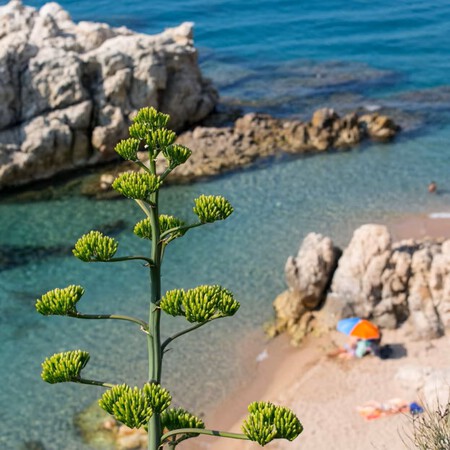
To the south of the lighthouse, the coastline changes its pattern with the coves of Les Roques. There are Rocapins, La Vinyeta and Roca Grossa, among others, with inlets and rocks that fragment the shore. It is a good place to finish the route and now look at the heights from below. After having seen the tree-lined promenade, the lighthouse and the towers, all that remains is to get closer to the water and enjoy being in front of the sea as much as you want.
Cover photo | El Hormiguero, Face to the show and Diego Delso
In Xataka | Five years in prison and more than 1.5 million euros for defrauding Social Security in the largest hotel scheme in Córdoba
In DAP | The roadside restaurant two hours from Madrid that Carlos Alcaraz, Fangoria or Miguel Ríos have visited: traditional cuisine at a good price with a Solete Repsol Guide