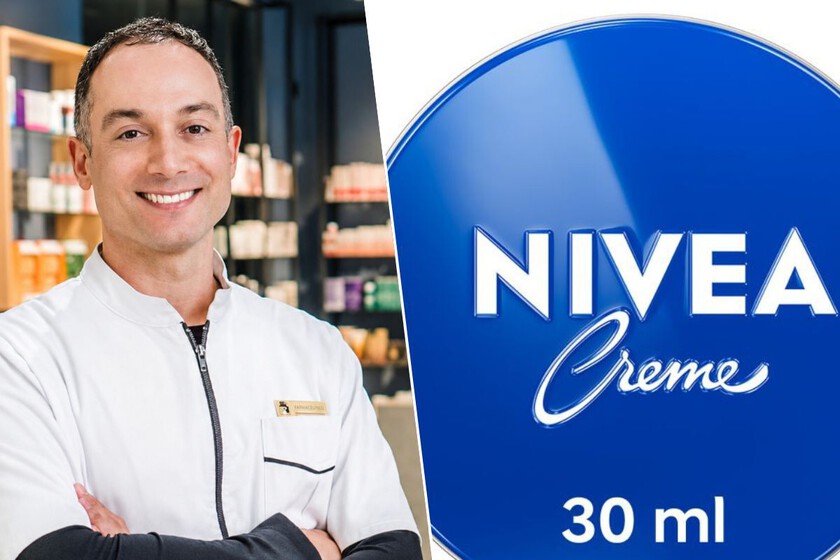
The Nivea in the blue can has always been very present in our homes but it is certainly currently experiencing a new resurgence. It is one of the creams that generates the most conversation and although there are all kinds of opinions, it is undoubtedly a cream that has many fans. There are those who love Nive to deeply hydrate their hair, also to perform an anti-wrinkle massage or as a makeup primer so that the base does not crack. It is even being recommended as an after sun, when in reality it has nothing to do with this function.
Pharmacist Eduardo Senante told the publication InStyle that Nivea cream is a very good product for hydrating but highlights that this does not mean that it is for everyone or for all purposes, as is the case with sunburned skin.
The first thing the expert clarifies is that “if you have been sunburned, the Nivea cream from the blue can is not the first cream you should use.” This does not mean that the Nivea cream in the blue can is not recommended by the professional, but rather that the function of this cream is not to soothe or regenerate the skin after a sunburn.
“The blue Nivea is not that it has gone out of fashion to use after the sun, it is simply that that is not the right time to use it,” explains Senante. Because although it is an all-terrain product, “the blue can Nivea is not a after sun nor the best product to treat a sunburn.” Therefore, the important thing here is to really know what the function of the Nivea of a lifetime is, to be able to use it at the right times and be able to get all the benefits from it.
After sun is the product to use

When we are exposed to the sun the skin is more sensitive, and even if we have not burned as such, the skin will always appreciate an after sun cream afterwards. The pharmacist explains that “the after sun It is formulated to care for and recover skin that has suffered intense or prolonged sun damage. It incorporates soothing, refreshing and restorative ingredients, in addition to having much lighter textures.” On the other hand, the Nivea cream does not have these qualities: “It is a very occlusive cream and, therefore, when we have a sunburn it is not a good idea to apply such an occlusive cream at first,” adds the expert.
When the skin has been exposed to the sun, it is hot, red and inflamed, and this is where you have to rely on ingredients capable of cooling and reducing inflammation. In this sense, after sun is the right product since it is intended to reduce the sensation of heat and regenerate the skin, so that it can recover from the stress caused by the sun. So, “using the Nivea cream from the blue can immediately after sun exposure is a resounding no,” says the pharmacist.
The Nivea in the blue can is best for hydrating
This means that the Nivea has no place in the summer season, at all. What's more, it is a product that must be taken into account, especially “if the skin has already recovered, a after sunit is at a normal temperature and the inflammation has disappeared, then the blue can Nivea can become a perfect ally to recover skin hydration and reduce dryness,” explains Eduardo.
Which means, once the skin is no longer inflamed and the after sun has done its job, that is when the Nivea can be used. Because if something characterizes this iconic cream, it is its powerful ability to hydrate and this is where Nivea comes into play. It is perfect for restoring the skin barrier, combating dryness and providing nutrition to the skin when it is already recovered.
What's more, the expert clarifies that this cream is a great option to use daily. “When we are on the beach or on vacation, its use as a regular hydration product does make a lot of sense,” explains the pharmacist.
In DAP | 3 original ways to reuse plastic bottle caps and give them a new use: ideal for creating a basket
In Xataka | Italy planted millions of fir trees to protect the Alps. 90 years later they have discovered that biodiversity has been reduced by half