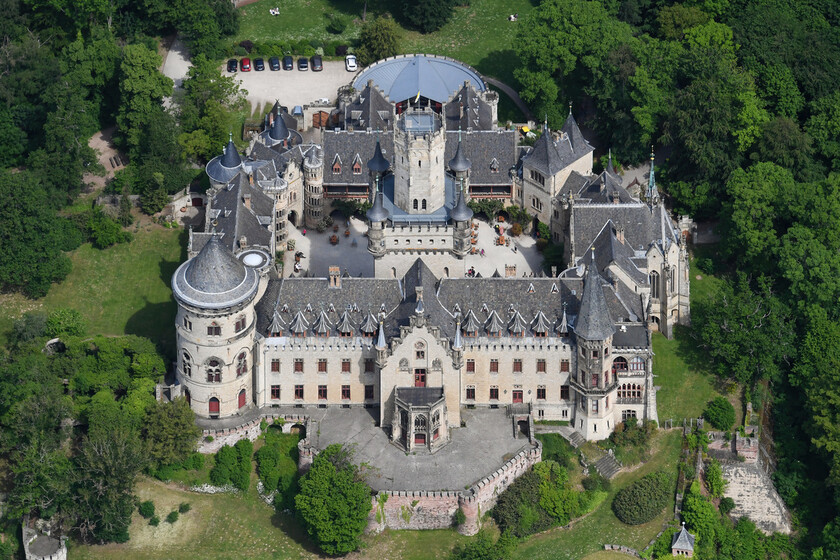
Marienburg Castle is located in the municipality of Pattensen, in Lower Saxony, Germany, and its size is one of the main attractions. We are not talking about any perimeter, but about 21 hectares of surface, which is equivalent to 168 Olympic swimming pools. Being such a remote spot on the map of our country, many of us were unaware of its existence, but the truth is that it has been a UNESCO World Heritage Site since 1997 and a dream place to visit at least once in your life.
It has been called the largest castle in the world on several occasions, but it has not always been a castle. In fact, it was originally a fortified monastery. If you doubt it, the history behind it is most curious. It was built in the 13th century by the Teutonic Knights, a Roman Catholic religious order, and became the seat of government for the entire state of the Order. In 1309, Grand Master Siegfried von Feuchtwangen moved his headquarters from Venice to this location and during the 14th and 15th centuries Marienburg became a symbol of the power of the Teutonic Order.
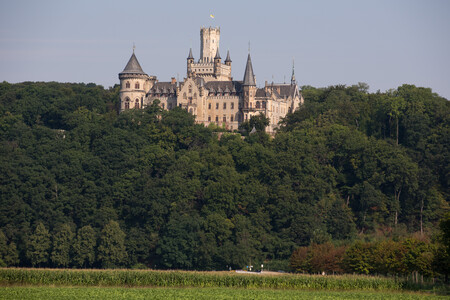
The castle's days as a religious Order ended after the defeat of the Teutonic Knights at the Battle of Tannenberg in 1410. In 1457, mercenaries sold the castle to the King of Poland and since then it was the residence par excellence of Polish rulers. From monastery to castle, this was its great change, although later, it fell into the hands of the Prussian government, becoming a military barracks and then came years and years of absolute abandonment.
In the 19th century everything changed due to the rise of romanticism and interest in the Middle Ages. Romantic poets and historians are the ones in charge of rediscovering the castle, opening the doors to art in this fortress and giving rise to one of the great restorations of the place. The figure of Conrad Steinbrecht was key to this, an architect who was in charge of launching the comprehensive repair of the castle with a dream result, which lasted until 1918.
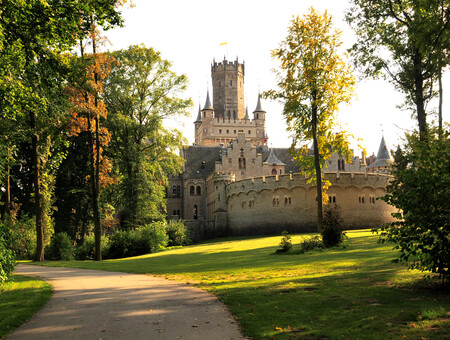
This castle was not spared, of course, from the Second World War as it also suffered numerous bombings, leaving the place reduced to ruins. In the 50s its great resurgence began and we could say that what you see rebuilt today was, literally, destroyed not so long ago. It is currently a historical museum, as well as the setting for one of the most successful teenage series in recent years. Yes, we are talking about the famous James and Ruby boarding school, from the Prime Video production 'Maxton Hall'.
Not just a super castle: what you can't miss in the surroundings
It's a spot that is worth visiting, because yes, now you can spend a day of sightseeing within the walls of this fortress. Of course, the small municipality south of Hannover where it is located has more things to see than this castle. Since you set foot in this area of Germany, you can quietly enjoy a combination of its nature and history, which is a great wonder.
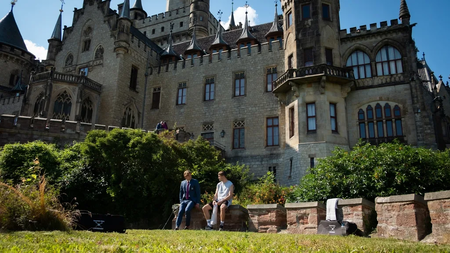
We recommend you escape for a Pattensen weekend and start your plan at Marienburg Castle. Although what is interesting, beyond this neo-Gothic fortress, is that landscape bathed by gentle hills, rural roads and endless fields to walk aimlessly. The best thing is its location: in less than 20 minutes you can completely change the scenery and walk along Lake Maschsee in Hannover or improvise a route through nearby towns that maintain that calm and authentic air.
Then there is the part that is our favorite of any trip: the local cuisine. For a special meal, the Schloss Restaurant Marienburg is a safe bet, with German cuisine and views that make this getaway a true fantasy. Of course, if you are looking for a more relaxed atmosphere, Taverna Asteria has that unexpected Mediterranean contrast in the middle of Lower Saxony. Without a doubt, a weekend straight out of a true fairy tale.