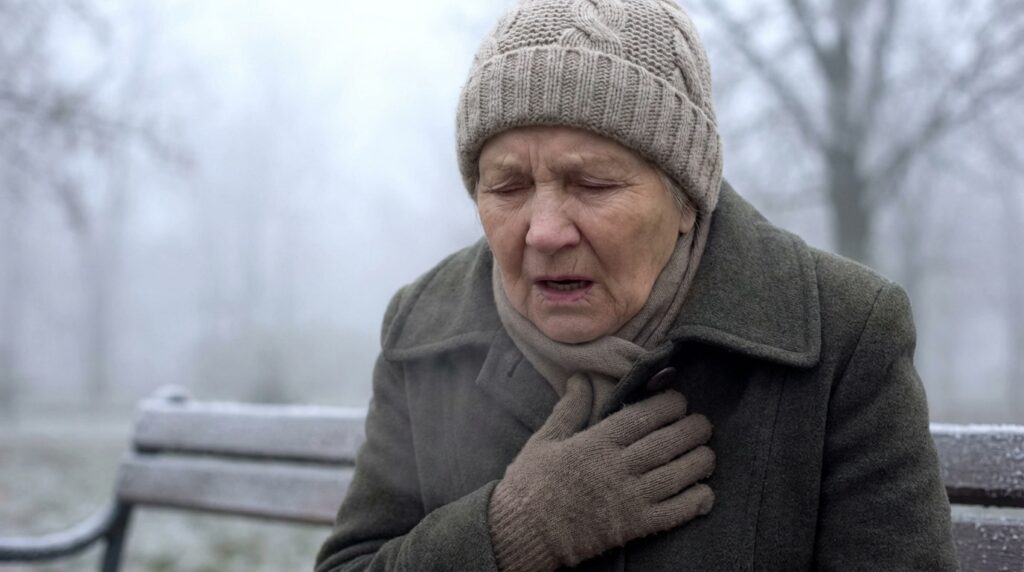
As the year turns, many notice an unexpected breathlessness on cold walks or after climbing a few flights. What feels like a minor inconvenience can hide a progressive, underestimated disease. Chronic morning cough, lingering chest tightness, or a slow retreat from activity often pass as age, winter, or habits. Yet these everyday signals can point to a serious, silent condition. The medical name is COPD, known in French as BPCO.
A widespread disease hiding in plain sight
Despite its reach, COPD remains underrecognized and underdiagnosed. Global estimates suggest it affects roughly one in ten adults, with many unaware of their status. People unconsciously adjust pace, avoid hills, or stop certain chores to accommodate a dwindling breath. By the time help is sought, impairment is often advanced and partially irreversible.
Symptoms we normalize until they escalate
“It’s just a small cough” may be the most dangerous sentence in respiratory health. A persistent cough, especially with morning phlegm, is not simply a smoker’s habit. Slow, sneaky shortness of breath—first on sprints, then on stairs, later on flat ground—often marks declining lung reserve. Some start parking closer, walking slower, or avoiding brisk weather to dodge breathlessness. These adaptations can mask a disorder that thrives on our quiet denial.
What is actually happening inside the lungs
COPD is defined by chronic, progressive airflow limitation that the lungs cannot fully reverse. Inflammation narrows the bronchi, and exhaled air becomes trapped—like trying to breathe out through a pinched straw. Over time, emphysema destroys tiny alveoli, shrinking the lung’s gas-exchange surface. Less oxygen gets in, less carbon dioxide gets out, and every effort feels heavier.
The disease’s twin hallmarks are:
- Persistent airway obstruction that reduces exhaled flow
- Structural damage to alveoli that weakens elastic recoil
Beyond cigarettes: multiple paths to injury
Smoking remains the main driver, linked to over 80% of cases. But other exposures also erode lungs, especially when combined with tobacco. Workplace dusts, fumes, and chemicals—on farms, in construction, or cleaning roles—carry real risk. Indoor biomass smoke from cooking, urban pollution, and genetic factors such as alpha‑1 antitrypsin deficiency may also contribute. In every scenario, long-term inflammation steadily narrows the airways.
How COPD reshapes daily life
As capacity falls, ordinary tasks turn into uphill efforts. Bathing, dressing, or carrying groceries can demand strategic pauses and careful pacing. Over time, fatigue, anxiety, and social withdrawal often follow, shrinking circles of activity. Winter infections hit harder, and exacerbations—sudden flares of cough and breathlessness—can lead to urgent care and hospital stays.
Early recognition changes the trajectory
COPD can be identified with spirometry, a simple test that measures exhaled volume and flow. It confirms obstruction, grades severity, and guides personalized care. Inhaled bronchodilators relax airway muscle, reduce symptoms, and improve tolerance for movement. Pulmonary rehabilitation combines exercise, education, and breathing techniques to rebuild confidence and daily function. Vaccinations, nutrition, and attention to indoor air quality reduce infections and flare risk.
- Practical lung protectors include smoking cessation, influenza and pneumococcal vaccines, regular moderate exercise, and exposure reduction at home and work.
Why awareness still lags behind the numbers
COPD lacks the cultural visibility of other chronic illnesses. Its slow onset, ordinary symptoms, and stigma around smoking keep it invisible. Many people equate wheeze with winter, and breathlessness with aging, not with a treatable condition. Meanwhile, the best outcomes come from earlier recognition and consistent management. Breaking the silence starts with naming the problem and measuring the lungs.
From knowledge to better breathing
The core message is both sobering and empowering: COPD is preventable, yet damage is largely permanent once established. Still, trajectory is not destiny—timely diagnosis, cleaner air, and evidence‑based care can preserve freedom to move and to live well. As one patient put it, “I didn’t lose my life overnight—I lost it one staircase at a time, until I learned to climb it back.”