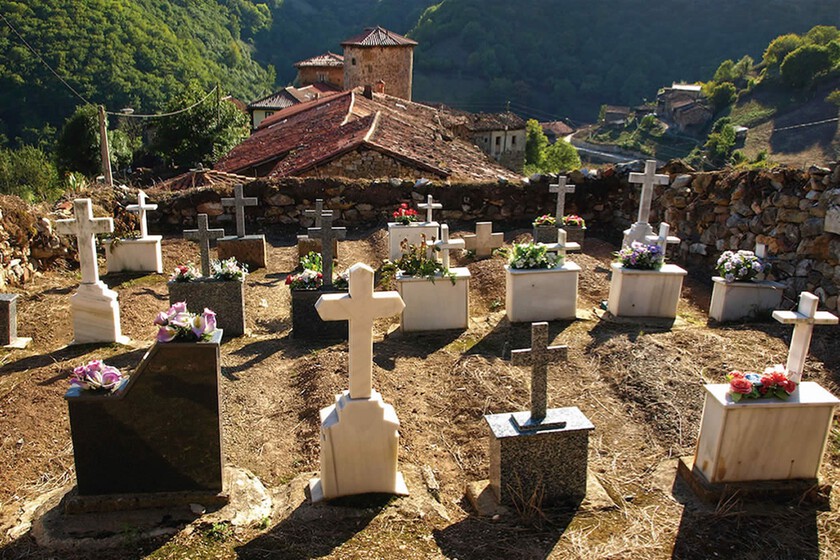
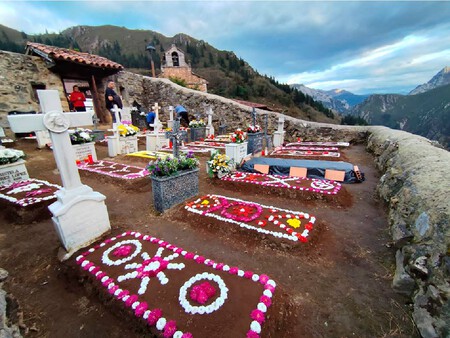
The small Banduso cemetery becomes a garden of geometric compositions, made by the neighbors to remember those who are no longer here. To do this, they place flowers on the ground forming patterns. Previously, the families have prepared the terrain for the graves: they have smoothed the earth and traced the motifs that they will later fill with color. It is the beautiful tradition that this Asturian town maintains from generation to generation for All Saints' Day.
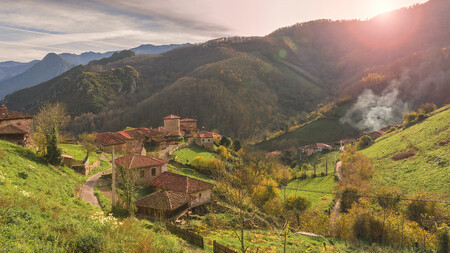
The custom itself would be reason enough to organize a visit, but it is not the only one. Around the communal cemetery is a village whose heritage goes far beyond its medieval tower. Banduso (officially Banduxu, and belonging to the council of Proaza, in the interior of Asturias) preserves a network of neighborhoods, homes and agricultural buildings that is a journey through the different stages of its history. In fact, it is protected as an Asset of Cultural Interest, in the category of Historical Site.
JVTfoto
The location also has a lot to do with its charm. The town occupies a hill between mountains and for a long time depended on an uphill road to communicate with the valley. Electricity, running water and modern roads did not arrive until the 1980s. Behind the rural image that continues to attract visitors there was, until not so long ago, a lifestyle very different from the current one.
What to see in Banduso
The church of Santa María and its surroundings are a good starting point to begin the visit. Its construction dates back to the 12th and 13th centuries, in the middle of the medieval development of the village. The walk through the surroundings allows you to get closer to that landscape of houses, granaries and bread baskets in which stately buildings coexist with others linked to field work.
L. Javier del Valle
A few meters away is the cemetery, where families prepare dark earth and spread it over the burials on All Saints' Eve. Then they make the drawings and flowers, also grown in their homes throughout the year for this date. This care applies even to graves that no longer have family members to take care of them and it is the rest of the neighbors who decorate them. In fact, graves do not have individual ownership and, when someone dies, they take the place of the person who had been in the cemetery the longest.
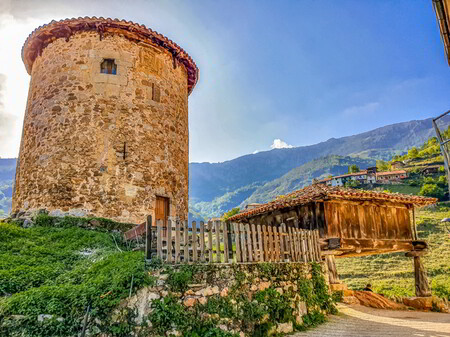
The other big obligatory stop is the tower of Bantuvo or Tuñón, next to the mansion known as El Palacio. Its circular plan, its four heights and the shield with the arms of the Miranda, the Banduso and the Tuñón distinguish it among the roofs. It is one of the best preserved late medieval defensive towers in the Principality, although it no longer serves as a town hall or a prison as it once did.
Where to eat delicious and cheap in Banduso
To eat and taste the local cuisine, we suggest going down to the town of Proaza. There, the menu at the Traslavilla restaurant, in the Plaza de la Abadía, offers traditional cachopo. Although if you are traveling with children or don't fancy something so hearty, they also have more universal options such as a hamburger with artisan bread and potatoes, ham croquettes or salad.
Another interesting address is La Senderuela, on Calle del Puente, whose cuisine features stews and mushrooms. Their menu includes Asturian pot, fabada and chestnut pot. They also serve a daily menu, so we can choose between treating ourselves to a spoonful or eating lighter.
Asturias Tourism
What to do around Banduso
The excursion to the area can begin even before reaching the first houses in the town. The medieval path ascends from the area around the Senda del Oso, following the Bantuvo stream, among chestnut trees, hazelnut trees and oak trees. It is about a three-kilometer climb, so returning along the same route is approximately six kilometers, in addition to the walk through the village. The ascent is completed in less than two hours, although you must take into account its slippery terrain and slopes, especially on the way down.
To extend the getaway with more than just the landscape, the Quirós Ethnographic Museum is the place to go if you want to get to know peasant life and the industrial transformation of these valleys well. It is installed on old blast furnaces and documents the weight of agriculture, livestock and mining during the 19th and 20th centuries. On the premises there is also a granary, a laundry and a rural school. All spaces that help to understand how life was worked, learned and shared before in the Asturian mountain towns.
Cover photo | Asturias Tourism
In Xataka | We have been changing the sheets every week for years. Science suggests that the important thing is not when you change them, but how you wash them
In Motorpasion | Scott Kilmer, mechanic with more than 50 years of experience: “When you drive on the highway, gasoline can clean the valves; it is the Italian tune-up”