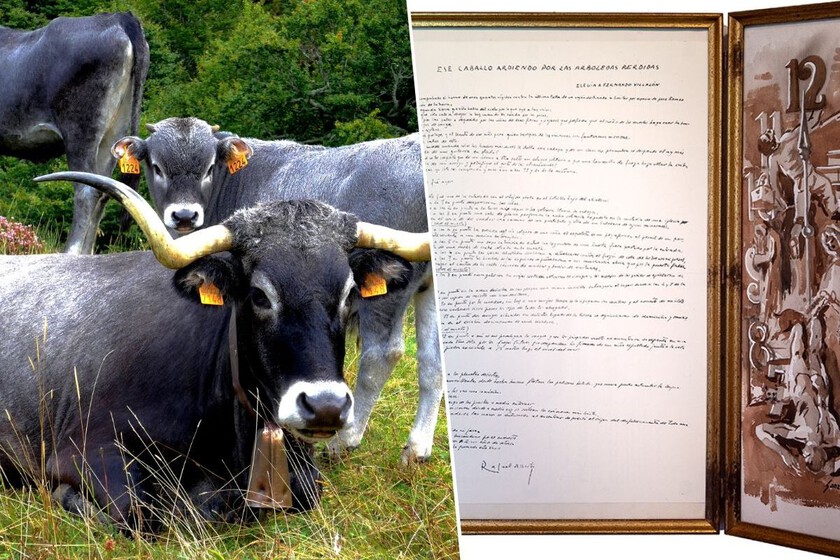
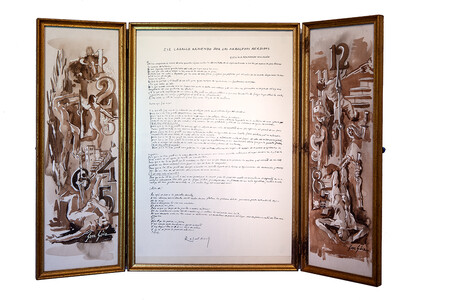
The slope is one of the great protagonists of any visit to Tudanca. Even the houses have had to adapt to the relief of this corner of the Nansa valley, in the interior of Cantabria. Among them is a house that keeps something that you do not expect in this type of rural postcards: the manuscript of one of Federico García Lorca's best-known poems.
The house is the Casona de Tudanca, to which you have to walk up through the narrow streets of Tudanca. While the poem is about 'Crying for Ignacio Sánchez Mejías', the elegy that Lorca dedicated to this bullfighter. The original is located there because it is preserved among the funds of the owner of the Mansion: the writer and critic José María de Cossío. Although the Granada poet's relationship with Tudanca goes beyond his posthumous presence in an archive.
Museums of Cantabria
Lorca visited said house with La Barraca, the university theater company he directed. During his stay at his friend Cossío's house he was named “honorary little bar.” Although that fact alone is enough to escape Tudanca, what is outside the house is also worth it. The urban center was declared a historical-artistic complex in 1983 due to how well preserved its rural mountain architecture is.
What to see in Tudanca
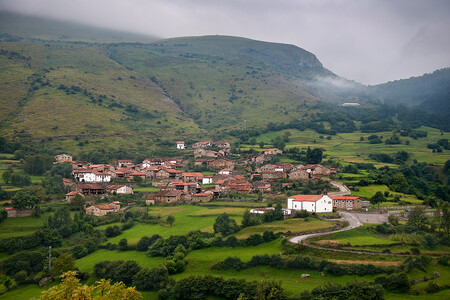
Before entering the Casona, it is advisable to tour the hamlet and stop to admire its traditional houses, with stone facades and wooden balconies. The landscape surrounding the houses also has its history, with the communal meadows of Tudanca, Santotís and La Lastra, where livestock are fed through grazing. In addition to being famous views for its oak groves, birches and riverside vegetation. The meadows are an inseparable part of life in Tudanca, of an organization of the territory in which livestock and the shared use of pastures have played an essential role.
Museums of Cantabria
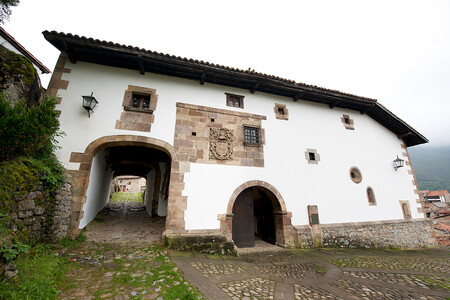
La Casona introduces another layer to the story. Pascual Fernández de Linares ordered it to be built in 1750, upon his return from Peru. Over time it passed to Cossío's family, who would end up making it their residence for long periods. After his death, in 1977, the house and its contents passed to the Provincial Council and the current museum-library was founded.
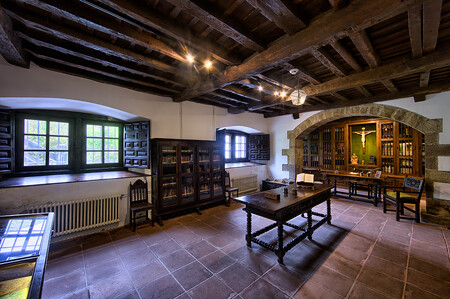
To fully understand what it means, it is advisable to know a little about its last owner. During his lifetime, Cossío gathered an extensive library and maintained a close relationship with numerous writers. In addition to Lorca, the house received Alberti, Unamuno and Gerardo Diego, among others, and preserves letters, portraits and documents that allow us to get closer to those friends: correspondence, dedications and papers that it decided to keep.
Tudanca Museums
Among these collections, as we said, Lorca's manuscript stands out, with its corrections and deletions. This is precisely what makes it so special, how close it makes you to think of such a well-known poem when it was still a page in progress, with words that its author changed before finishing it.
However, Tudanca also entered literature through another door. José María de Pereda not only stayed in the Casona but also turned it into the setting for the novel 'Peñas Above'. So the relationship between the town and the books is a two-way street: writers gathered here and their works were kept, but the place itself also ended up becoming literary material.
Cantabria Tourism
Where to eat delicious and cheap in Tudanca
The local cuisine features hearty dishes, made with beans, potatoes and pork products. It is a gastronomy linked to the rural life of the valley, which serves as a necessary continuation of the visit after touring the hills of the town. Among the options is the Las Nieves bar-restaurant, in Tudanca itself, specializing in legumes, large and small game, truffles and mushrooms. Already in La Lastra you will find El Refugio, an accommodation with restaurant service and a menu of pinchos and bar portions.
What to do around Tudanca
Tudanca shares its name with the Cantabrian municipality to which it belongs, also made up of La Lastra, Santotís and Sarceda. Keeping this in mind is important during the hearing because the services and roads are found in those other centers of the valley.
Luis Rogelio HM
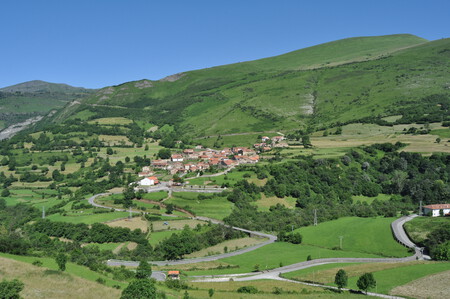
La Lastra, for example, offers impressive views of Tudanca and is a good opportunity to contemplate the town we have just visited from the outside. From that perspective, its position on the hillside and the relationship between the houses, the meadows and the mountains are better understood. It is a very easy and quick stop to complete the visit without stressing about wanting to cover a lot in a short time.
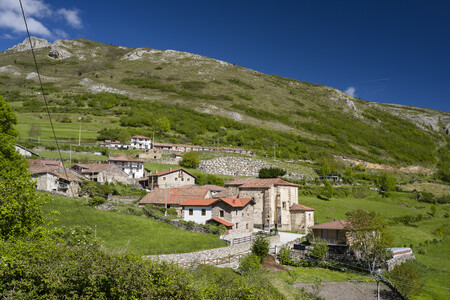
Those who want to spend more time walking can follow the Camino Real between Tudanca and Rozadío. Its layout takes advantage of part of an old communication route between the plateau and the port of San Vicente de la Barquera. The route crosses the middle section of the valley, within the Nansa River Special Conservation Area, accompanied by ash trees, willows and alders.
Felipe Cuenca
Of course, it is not advisable to take the route after heavy rain or large river floods and warn that there may be a lot of mud between Tudanca and the Sarceda bridge. Therefore, it is an excursion to plan according to the terrain conditions and the time available for the visit.
Another possibility is to continue towards the Peña Bejo Strait, between the La Lastra and La Cohilla reservoirs, which stands out for its landscape. After the rooms steeped in culture and the documents of the Casona, the valley complements the visit by returning attention to the mountain. In addition, it allows you to end the getaway with a complete image of Tudanca.
Cover photo | Teofrasto820 and Museums of Cantabria
In DAP | OCU warns about hamburger preparations in the supermarket: “80% are burger meat”
In Xataka | The US lost a ship loaded with bombs off London. 82 years later, the 1,400 tons that remain have a problem