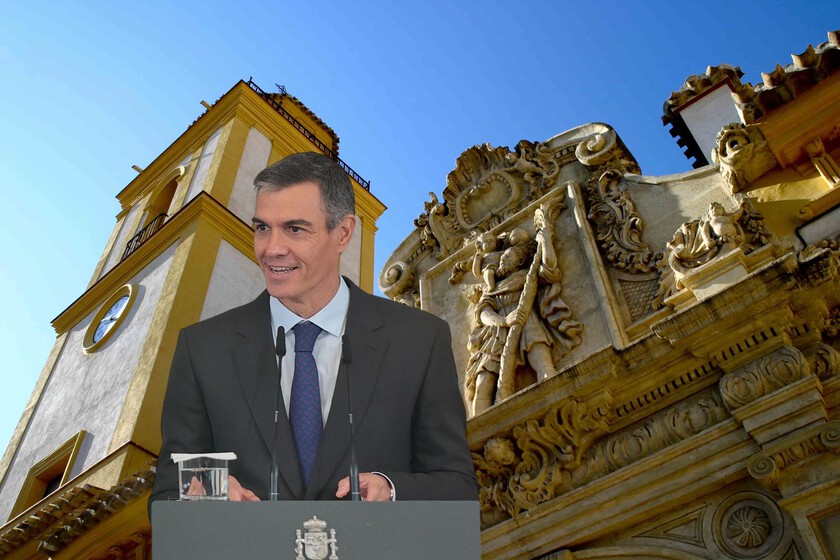
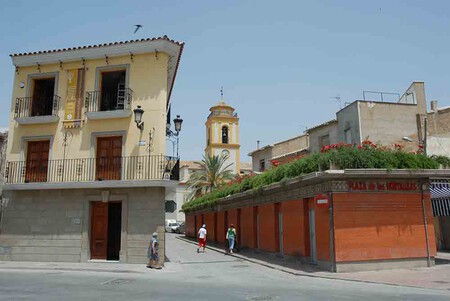
To trace Pedro Sánchez's Murcian roots, we must follow the trail of his second surname, which leads to the San Cristóbal neighborhood in Lorca. There are the settings in which part of the history of the Pérez-Castejón family took place, the family of merchants and blacksmiths from which his maternal grandfather, Mateo, came. Sánchez himself recalled that link at a rally held in the city in 2015: “Lorca is the land where my grandfather was born.”
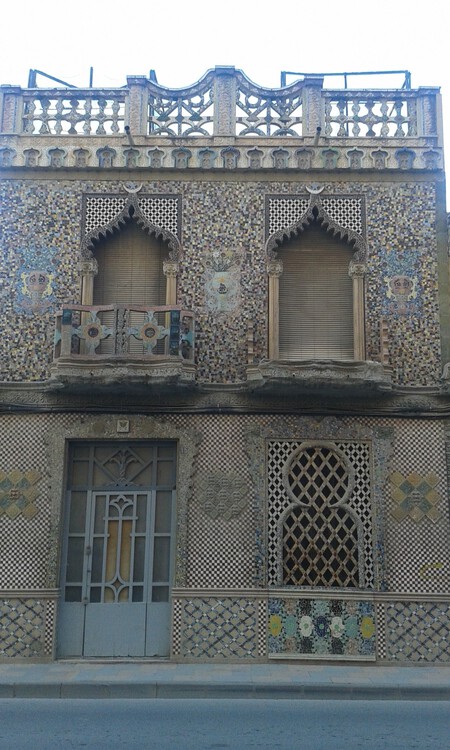
A good place to start a getaway to this place is Ortega Melgares Street, where Acacio Mateo's house is located, introducing an unexpected fantasy of tiles and curves with respect to the neighboring homes. That taste for modernism and trencadís took him to the San Cristóbal cemetery, where he built an equally unique family pantheon. In this way, the family history of Sánchez's maternal side serves as an entrance to a Lorca that can also be seen outside of its best-known monuments.
Because this city in the southwest of Murcia has a lot to tell. Its historic center, declared a Historical-Artistic Site in 1964, brings together palaces, churches and Renaissance and Baroque buildings; The remains of a Jewish quarter and a medieval synagogue are preserved in the castle. And then there are the Easter embroideries, which can be seen in its museums during the rest of the year. It is an escape to alternate from a facade to a fortress, from a patio to the details of a mantle.
Tourism Region of Murcia
What to see in Lorca
Acacio Mateo's house has that personal touch that makes a building interesting even before knowing its history. The façade moves between curves and countercurves, with floral and vegetal motifs made with tiles. The decoration continued inside, where tables, sideboards and a sideboard were made of masonry and also covered in ceramic.
Unfortunately, it currently suffers damage caused by the 2011 earthquakes and an interior tour is not available. It can only be seen from the outside. Both the house and the pantheon have been part of the municipal catalog of protected assets since 2023.
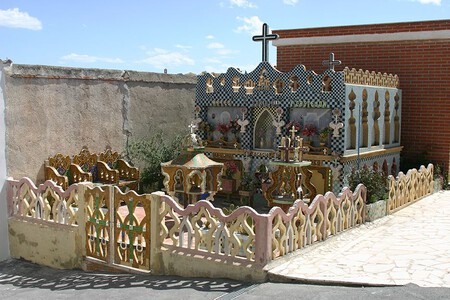
As we pointed out, the second part of the story is in the parish cemetery of San Cristóbal. Acacio built the pantheon in 1963, after the death of his father. He mixed whole tiles with trencadís (that coating of ceramic fragments that allows mosaics to be composed) and added benches, arches and an undulating fence. The result is a funerary space dominated by color and crazy shapes. Acacio himself and Sacramento Pérez-Castejón Sánchez, known in the neighborhood as Tía Sacramentos, are buried there.
The Plaza de España offers a change of scenery, with the old collegiate church of San Patricio and the Town Hall sharing the space. From here you can continue the walk following the architecture of the historic center and approach the House of Guevara, also called House of the Columns. Its baroque façade, with Solomonic columns and shields, makes it quite clear that the surname and social position of those who built it had to be seen from the street.
Find a Grave
In this case you can enter with a guided tour. Inside, paintings, furniture, ceramic floors and objects accumulated over different periods are preserved. This mix allows you to peer into a house inhabited for three centuries, with more than just architecture to admire. It is also worth taking a look at José Sala Just's old pharmacy, installed in the patio, with its furniture, containers and retro pharmacy supplies.
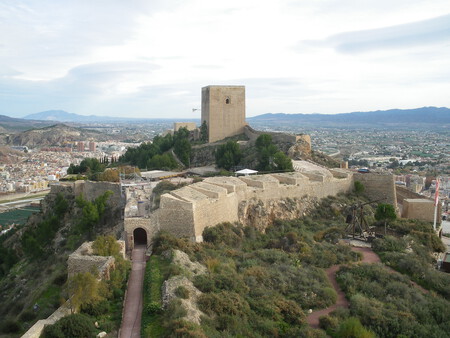
To continue, the castle brings together the Alfonsina Tower and the remains of the Jewish quarter and the 15th century synagogue. The visit allows you to explore a part of the city's medieval past within the fortress itself. And among so much stone, it's time to remember to look at the fabrics. The Paso Blanco Embroidery Museum, muBBla, exhibits works in silk and gold and keeps six objects of cultural interest in its Chamber of Wonders.
Luiyo
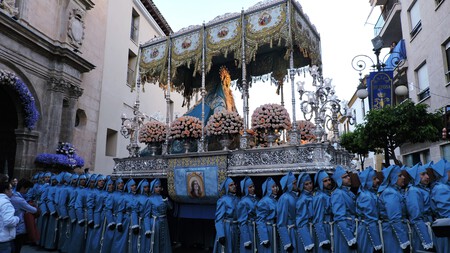
That of Paso Azul, the MASS, occupies the old convent of San Francisco and preserves the mantles and banners of the brotherhood. It is a visit that may be especially interesting to those who enjoy fashion and crafts because, no matter how attractive an embroidery may be, the focus is on the work behind each piece.
Where to eat delicious and cheap in Lorca
The stop for lunch can be made inside the castle. Las Caballerizas occupies the parade ground and serves an 18 euro menu, in addition to having à la carte service. Due to its location, it is perfect to recharge your batteries after visiting the fortress. Its proposal takes as reference the cuisine of the three cultures and the products of the Guadalentín region.
Pakolaviña
You also have to make room for crespillos and paprika cake, two preparations that stand out among Lorca's own flavors. Reserving part of your getaway to try them is an unmissable way to continue getting to know the city. Above all, when we have already seen a few facades.
What to do around Lorca
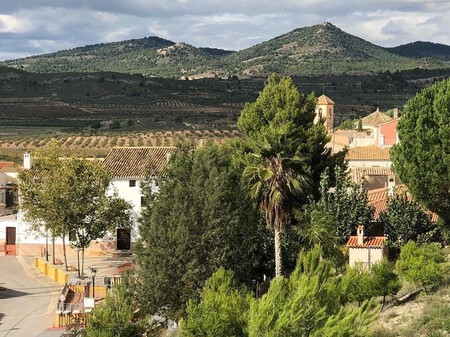
If the getaway lasts for a second day, you can head to the town of Coy, in the Highlands. It is almost 40 kilometers from the city and more than 850 meters above sea level, in an environment of vineyards and olive trees. The tradition of making jarapas is preserved there, a thick, multicolored handmade fabric originally made with strips of old rags or leftover wool.
Lorca tourism
The other direction leads to the Mediterranean. The regional park of Cabo Cope and Puntas de Calnegre, shared by Lorca and Águilas, brings together beaches, cliffs and fossil dunes. For those who prefer to end up by the sea, this part of the municipality allows them to extend the trip between coves and coastal reliefs. After starting out following a surname for San Cristóbal, ending here gives a pretty good snapshot of how much Lorca can change in a few kilometers.
Cover photo | Murcia Region Tourism and @sanchezcastejon
In DAP | OCU warns about hamburger preparations in the supermarket: “80% are burger meat”
In Xataka | The US lost a ship loaded with bombs off London. 82 years later, the 1,400 tons that remain have a problem