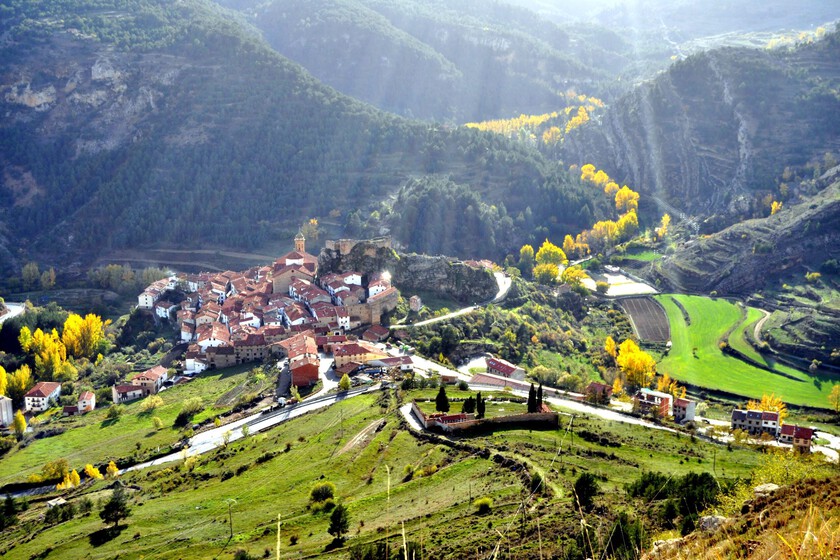
To get to know Linares de Mora, the first thing is to follow its houses with your gaze from the river to the highest part of the mountain. Between the red Arab tile roofs and the rock on which the town is built, it is difficult to know where one ends and the other begins. Above are the remains of the castle and below, a medieval stone bridge. Around, the pine forests of the Sierra de Gúdar.
This municipality in Teruel, with only 242 inhabitants, is a good getaway to take advantage of the mild autumn weather without having to choose between walking through the streets or going out into the mountains. In fact, Aragón Tourism recommends the surroundings of Linares specifically to see the color of the forests at this time of year. Hazelnuts, aspens, lindens and maples grow next to the pine forests. So the walk can start between the old walls and end next to the river, in the shade of a monumental pine tree.
Aragon Tourism
What to see in Linares de Mora
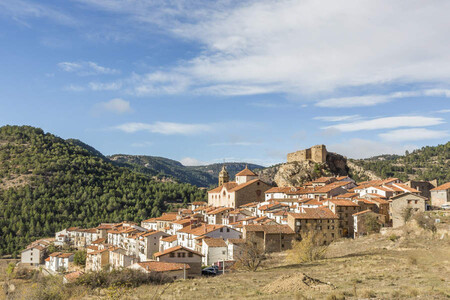
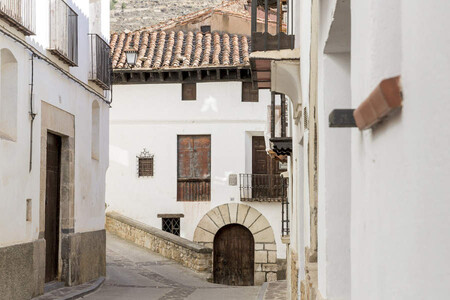
The historic center preserves the shape of a fortified town that had to adapt to a very steep slope. In fact, there are still several sections of wall and three entrances: the Portal Alto, the Portal Bajo or de la Fuente and the Portalico. The climb is not a procedure to reach the castle but rather allows you to contemplate how the houses, streets and old defenses occupy the little land that the mountain leaves them.
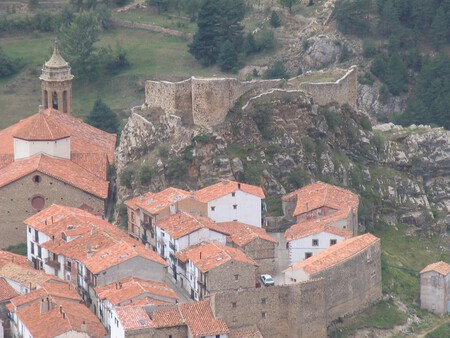
On the route the church of the Immaculate Conception appears, a baroque temple from the 18th century with the particularity that its bell tower is separated from the church and sits on an old tower in the wall. Higher up are the remains of the castle of the archbishops of Zaragoza. The fortress already existed in 1202, when Pedro II donated it to the Zaragoza bishopric; Today it preserves part of its structure and, above all, the place from which it continues to dominate the town.
Aragon Tourism
It is also a good idea to reserve some time to go down. Next to the river there is a medieval stone bridge with a single arch. After having seen Linares de Mora from the inside, it is one of the points from which its silhouette is best understood. You will not be surprised to discover that the historic complex has been declared an Asset of Cultural Interest and that, since 2025, the municipality belongs to the association of The Most Beautiful Towns in Spain.
Where to eat delicious and cheap in Linares de Mora
For something informal there is Bar Fina, on Escuela Street, famous for its homemade tapas. On Hospital Street is the Hostal Antiguo Hospital restaurant, which offers local food and is also open to those who are not staying there. As a third option, the Hostal Restaurante La Venta, on Regajo street, is also interesting.
What to do around Linares de Mora
The most rounded plan for this time leads to Pino del Escobón and El Molinete. The starting point of this excursion is located about four kilometers from the town, along the Valdelinares highway. There, next to the river, stands a pine tree that is more than 400 years old. From its recreational area you can continue towards an old flour mill, among pools, vegetation and small waterfalls. The route, of about 5.5 kilometers, is of low difficulty and stands out expressly for the landscape that the area offers in autumn.
Of course, it is advisable to watch how the river goes down before leaving because the itinerary to El Molinete crosses it several times and if it carries a lot of water it can complicate the walk. Whoever prefers to walk from the town itself has another alternative: the Pozo Navarro and Pino Obrado route, about seven kilometers round trip. It starts from the Portal Bajo and descends towards the Linares River. Thus, the getaway can be organized according to the time and the desire to walk. For example, the streets in the morning and, after eating, the forest.
Cover photo | Linares de Mora Town Hall
In Xataka | The Civil Guard chases the perpetrators of a 'simpa' in Cáceres for more than 100 km and ends up pulling one out of a bush
In Xataka | A boy from Sierra Leone began collecting scrap metal to make his own battery. What he achieved took him directly to MIT at the age of 15