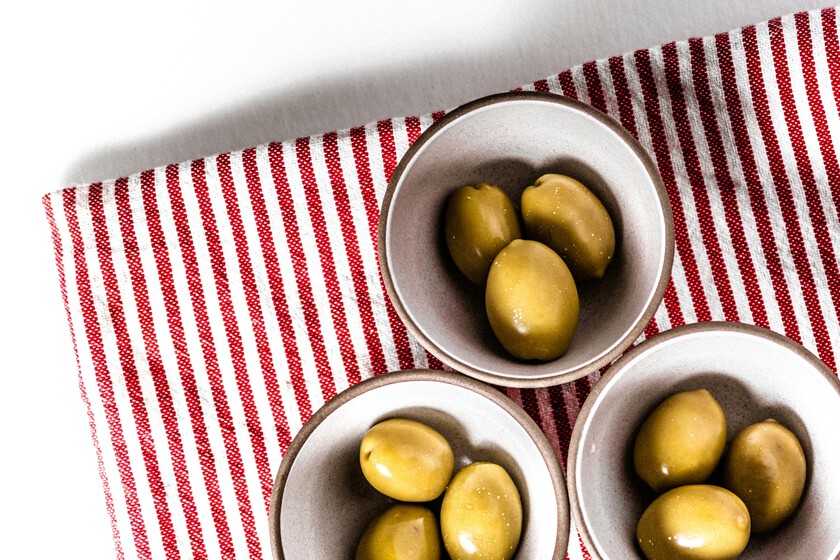
If you pick up a jar of olives stuffed with anchovy and read the label, chances are that among the ingredients you will find something like “anchovy paste” or just “anchovy.” But nothing about what exactly is in that pasta or how much anchovy is inside that olive. The same goes for olives stuffed with pepper, anchovies or anything else. Until now, the manufacturer had no obligation to really tell you what those olives that you eat for your Sunday snack are filled with, but all that will change with Royal Decree 142/2026 approved by the Government and published in the BOE.
More detailed labeling
A “pepper-stuffed” olive can contain anything from real pepper strips to a paste made from pepper trimmings, water, thickeners, salt and colorings. Legally, both could be labeled almost identically and as consumers, we could not tell the difference between one and the other by looking only at the list of ingredients. Filling is where there is the most room to reduce costs without it being noticeable to the naked eye, and the previous regulations allowed manufacturers to do so without the consumer becoming suspicious.
Although the decree came into force on March 1, 2026, products that were already on the market before that date can continue to be sold until stocks are exhausted, with a maximum of twelve months after the entry into force of this new law. That is, until March 1, 2027 we will be able to see jars of olives on the shelves in which there is this ambiguous labeling of those filled with olive paste.
The word “natural” is no longer a wild card for everything
This change in labeling not only affects olives, but also other pickled products and vinegars. The most practical change is applied to the “natural” label, which was a marketing claim and will now mean that the product does not contain additives (with specific exceptions). Until now, any manufacturer could use the name “natural” as a claim without any real obligation behind it, and that will also change with this decree.
In the case of vinegars, the decree better regulates the traditional practices of products with a Designation of Origin or Protected Geographical Indication, adjusting the permitted acidity limits and clarifying how they should be labeled. All this is not really a change in food safety but rather in transparency for the consumer. A change like the one we are experiencing with eggs and their labeling, which seeks to provide clarity so that when we buy in the supermarket, we know what we are buying.
On a practical level, your Mercadona olives will not taste any different, but you will be able to see the truth of the label more clearly and without hidden ingredients.