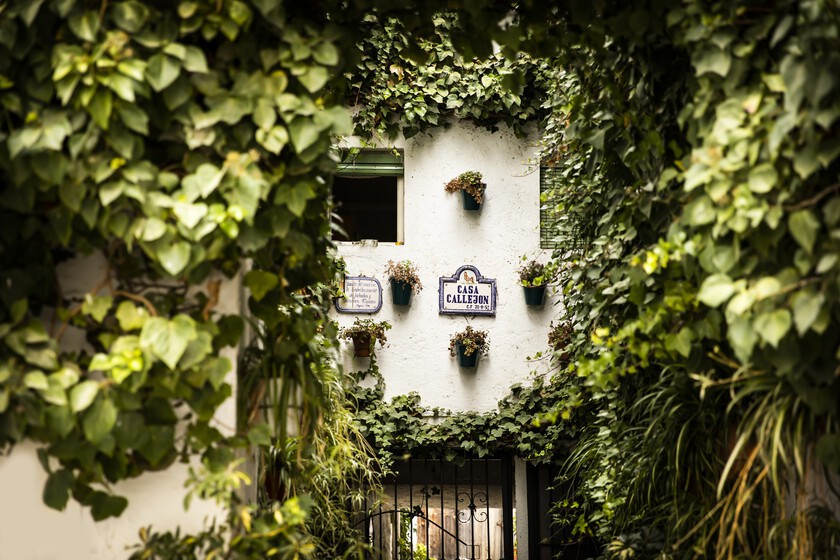
Some places appear in each and every travel guide that exists, while others are transmitted almost by ear, as if those who know them wanted to protect them from being known outside a certain circle. For years, many tourists have spoken of Órgiva as one of those secrets. Because it is enough to walk through its streets one afternoon to realize that, on this occasion, it is the tourists who are hiding it from us.
It is a fact that those who know this corner of Granada best are not national tourists, but rather British, German, Dutch, French and Swedes who have been living there for decades looking for time, silence and a different way of living. In this way, a town that has existed since the Middle Ages has managed to modernize without completely losing the rural soul of the Alpujarra.
Located on the southern slope of the Sierra Nevada, at the confluence of the Guadalfeo River and the Chico River, Órgiva serves as the capital of the western Alpujarra. It is the gateway to one of the most beautiful regions in Andalusia, but also a unique place within Spain. Neighbors of dozens of different nationalities live here, including Buddhist communities, Sufis, artists, organic farmers and families who decided to leave the big cities to build a life more connected to nature.
The result is a small multicultural universe that seems to operate by its own rules. While in other destinations tourism revolves around beaches and monuments, in Órgiva visitors arrive attracted by spiritual retreats, alternative life projects and the promise of recovering a more leisurely existence. It is not unusual to hear several languages in the same cafeteria or find meditation, yoga or regenerative agriculture workshops just a few minutes from the urban center.
Perhaps the best example of how different Órgiva is is in its mountains. Among terraces, olive trees and rural roads hides one of the largest Buddhist communities in Europe, a magnet for travelers looking to attend meditation retreats, live together for a few weeks in spiritual centers or simply experience the slow pace of a valley that seems to live outside the unspiritual rush of the modern world.
What to see in Órgiva
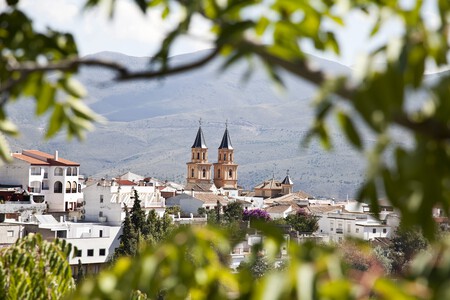
The most recognizable image of the municipality is formed by the two twin towers of the Parish of Our Lady of Expectation. Its dark spiers stand out against the white farmhouse and serve as a visual reference from different points of the valley. Built from the 16th century onwards, it is one of the most important buildings in the town and a good starting point to explore the historic center.
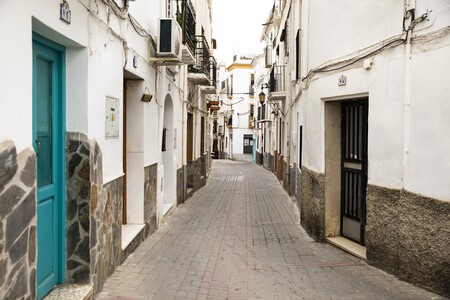
From there it is worth getting lost in the Barrio Alto, the area that best preserves the essence of the Alpujarras. Its steep streets, traditional tinaos and whitewashed facades remind us that, although Órgiva is the most dynamic town in the region, it is still part of that mountain universe that has made the Alpujarra famous.
The walk inevitably leads to the hermitage of San Sebastián, located on a small elevation from which you can get a beautiful panoramic view of the valley. Local tradition places an ancient Visigoth fortress here, long before the current religious building occupied the site.
Those who enjoy less conventional visits can also visit the Hurtado Library in Mendoza to discover its curious collection of copies of 'Don Quixote' in dozens of languages. And to better understand the history of the region, the Ruiz de Almodóvar Museum Archive is interesting, which brings together works of art, historical furniture and pieces related to Alpujarra memory.
A few kilometers from the urban center, the remains of Olías Castle recall the defensive past of this strategic area between the coast and the Sierra Nevada mountains.
Where to eat delicious and cheap in Órgiva
The gastronomy of Órgiva perfectly reflects the mestizo character of the town. Influences from around the world have been added to traditional Alpujarran cuisine thanks to the international community that has settled here in recent decades.
One of the most recommended names is El Limonero, a very popular restaurant among locals and visitors where Mediterranean recipes, Argentine proposals and local products coexist. Its daily menu and generous portions make it a very interesting option for those looking for good value for money.
Another safe bet is Mesón El Viejo Molino, one of those establishments where you can still breathe the local atmosphere and where it is possible to try traditional dishes. Hearty tapas and home-style cooking are a big part of its appeal.
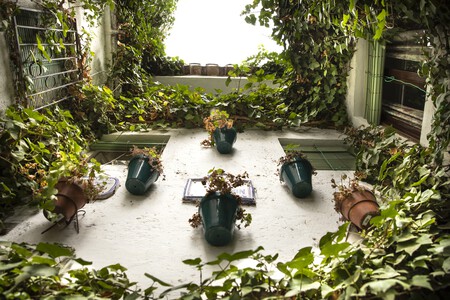
To see how different Órgiva is from the rest of Spanish towns, just sit in Venta María. Its Mediterranean proposal with Italian influences perfectly reflects the cultural mix that defines this town and has become one of the highest-rated restaurants in the area.
And, of course, any visit should include tasting some traditional Alpujarran specialties such as remojón, cod paprika, choto al colorín or fig cakes.
What to do around Órgiva
One of the great attractions of Órgiva is that it functions as a gateway to some of the most spectacular landscapes in Andalusia. From here there are roads that go into the heart of the Alpujarra and connect with well-known towns such as Pampaneira, Bubión or Capileira, considered among the most beautiful in Spain.
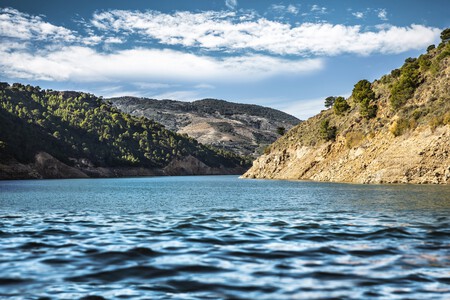
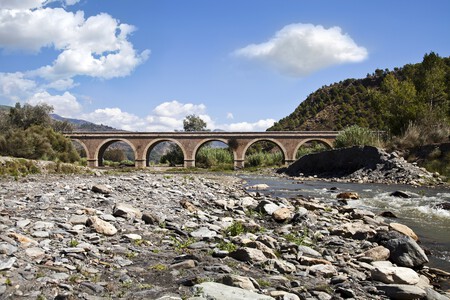
The proximity to the Sierra Nevada National Park also makes the area a paradise for hikers and nature lovers. There are routes that cross ravines, historic irrigation ditches and Mediterranean forests with constant views of the highest peaks of the peninsula. There, very close to the town of La Zubia and at 1435 meters above sea level is the Seven Eyes Bridge. It stands out, precisely, for its seven circular openings that reveal a landscape characterized by reeds, willows, poplars and other Mediterranean species.
It is also worth visiting Lanjarón, famous for its mineral waters and the relaxed atmosphere of its streets, or descend towards the tropical coast of Granada to discover how, in just half an hour by road, the landscape goes from the Sierra Nevada mountains to avocado plantations and views of the Mediterranean.
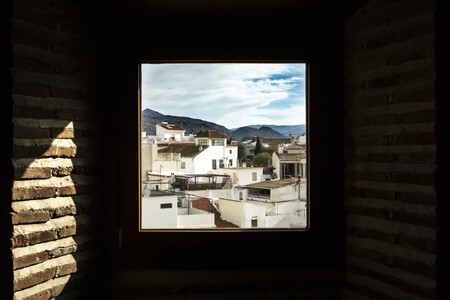
Perhaps that is where part of the charm of Órgiva lies. It is not just a town nor just the capital of the Alpujarra. It is a place where centuries-old traditions and alternative ways of life coexist, where shepherds share territory with British writers, Buddhist communities and organic farmers. A corner of Granada that many Spaniards don't even know about, although half of northern Europe discovered it a long time ago.
Decosphere | Jorge Ángel, nurse: “At night, when it starts to get cold, you have to open the blinds and start ventilating”
In DAP | The blue crab is a pest throughout the Mediterranean, but the Italians have found the key to resist the invasion: cultivate oysters