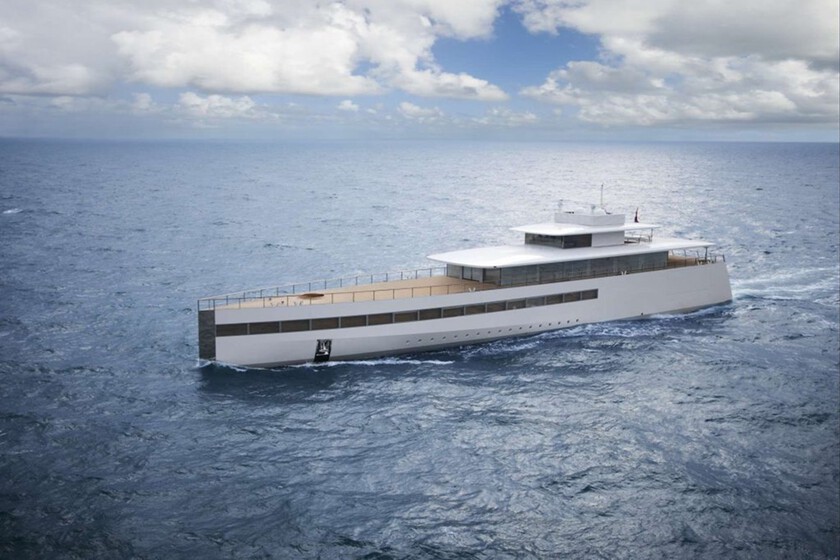
In the universe of superyachts, where every detail is designed to show off, few things acquire as much symbolic value as materials. Marbles brought from exclusive quarries, custom-designed glass and exotic woods from the most remote corners of the planet are a regular part of the catalog of whims of the billionaires who sail the seas every summer.
That's why one of Steve Jobs' least-known decisions is so striking. When he designed the Venus, the spectacular yacht that he would never see completed, the founder of Apple refused to use one of the most prestigious woods in the nautical industry and opted for a much closer alternative: poplar wood from León.
The favorite material of the most exclusive yachts
For decades, teak has been considered the gold standard of luxury boating. Its resistance to humidity, salt and the elements of the sea made it the preferred option for high-end boat covers.
However, behind its elegant appearance lies a much less glamorous reality. The enormous international demand has contributed for years to the deforestation of tropical forests in countries such as Myanmar, Laos, India and Thailand. In fact, the intensive exploitation of this wood has caused restrictions and bans in numerous markets due to environmental concerns associated with its extraction.

Ben Stanfield
Even so, teak continues to be used in some of the most spectacular yachts in the world. Even the shipyard responsible for Koru, Jeff Bezos's megayacht, was sanctioned for using teak from Myanmar, a country whose forestry industry has been under international scrutiny for years. It is in this context that the unexpected connection between Apple and the Leonese forests occurs.
Faithful to that legendary obsession with controlling every aspect of his products, the businessman personally supervised the design of the Venus together with French designer Philippe Starck. And when it came time to select materials, he ruled out teak in favor of a much less common option.
The chosen one was poplar wood grown in León, a variety of poplar especially valued for its combination of resistance, lightness and sustainability. In this way, both the decks and part of the structural elements of the yacht incorporated this Spanish wood.
The choice is surprising because it goes against the usual logic of contemporary luxury, where exclusivity is usually measured in kilometers traveled and rarity of origin. Jobs, however, found in a species grown in northwest Spain the technical qualities he was looking for for one of the most ambitious projects of his life.
photostephan.eu
Steve Jobs' last great design
The Venus occupies a unique place in the biography of the founder of Apple. It was one of the last projects he personally worked on before his death in 2011.
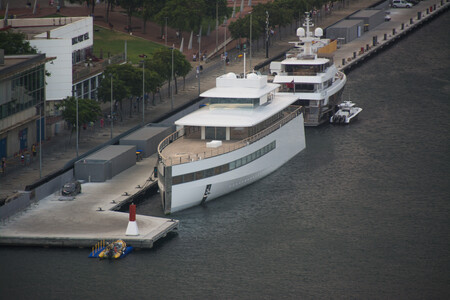
The boat, delivered a year later, reflects many of the aesthetic principles that defined its technological brand: clean lines, extreme minimalism and an apparent simplicity that hides enormous technical complexity.
Valued at around $120 million, the yacht reaches 78 meters in length and stands out for its sharp silhouette that seems closer to a futuristic device than a traditional boat. Seven 27-inch iMacs are installed on the bridge, while large glass surfaces connect the interior with the sea.
The result is a luxury vessel radically different from the classic ostentation in which other great fortunes invest. Choosing the forests of León was a discreet decision that is invisible to those who observe the yacht from the dock, but that says a lot about the way Jobs understood design. Or what is the same; The best choice is not always the most exotic.
Cover photo | Feadship
In Xataka | In 1972 Italy wanted to fit an entire city into a one kilometer building. Half a century later he is still paying the consequences
Live to the palate | Samantha Vallejo-Nágera, chef, and her best recipe with zucchini: “It is delicious baked with eggs, onion and yogurt”