
The skin changes over the years and sooner rather than later (much to our regret) these changes become noticeable. Generally, around 25 years of age, the skin gradually stops producing collagen and elastin, which means that at 40 there is a more notable loss of firmness and at 50, expression lines begin to turn into wrinkles and facial volume disappears. But other signs of aging such as spots are also making an appearance, which is why it is important to start with different and more specific skincare routines.
As Dr. Amira Chehade, an aesthetic doctor, explained to the publication Instyle: “From the age of 50, the skin stops showing only superficial signs of aging and begins to reflect deeper changes.” One of the reasons that the expert highlights is due to the decrease in estrogen, “the skin becomes thinner, drier and loses its ability to regenerate. This translates into less firmness, more sagging, more marked wrinkles and, in many cases, the appearance of spots,” she adds.
Knowing this, it is important to carry out more specific care with effective products, capable of slowing down and improving the appearance of the skin in every way. Because as Chehade says, after 50 the face changes as a whole, not just the skin. The facial oval is blurred, it does not look as defined, the volumes are modified and the general appearance is that of a more tired face.
The perfect skin care routine after age 50
At these ages it is important to understand that what worked for you before may now fall short, hence the importance of betting on a good anti-aging routine. Obviously sunscreen has to continue being our great ally but it will be time to include effective and transformative active ingredients such as vitamin C or retinol.
Pharmacist Marta Ortega and founder of the MLAB nutricosmetics brand has spoken on the matter: “On the one hand, we need to stimulate fibroblasts, increase the lipid composition of the skin, restore the skin barrier and protect our skin from oxidative stress and chronic inflammation, to minimize or alleviate the effects described above,” she adds.
Obviously, a routine can focus on maintenance, but to go one step further it is important to work from a different prism, one that is capable of repairing and stimulating, as Dr. Amira Chehade comments. “The skin requires active ingredients that work at a deep level, reinforce the skin barrier and compensate for the loss of structural support. The ideal routine should be simple, constant and well adapted to the needs of each skin. It is not about using many products, but about using the right ones and maintaining good consistency,” he clarifies.
Fundamental active ingredients after 50
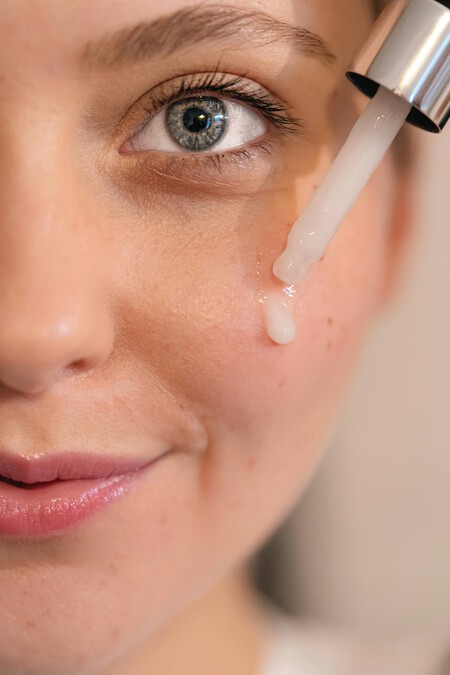
Among the most recommended by all experts, retinoids tend to be, especially for their ability to stimulate cell renewal and collagen synthesis. But in addition, retinal and retinol are ingredients that, when used properly, improve the quality of the skin, the texture is refined, wrinkles are softened and a wonderfully healthy skin luminosity is achieved.
Hyaluronic acid is another of the great ingredients. It deeply hydrates, reduces wrinkles and leaves a juicy and plump appearance.
Niacinamide has gained a lot of popularity in recent years and has become a must-have ingredient for many. Among its great advantages is its high tolerance, which is why we find it in many formulas due to its anti-inflammatory action. Unifies tone, improves texture and increases elasticity and firmness.
Among the essential anti-aging active ingredients is vitamin C. It is an antioxidant, improves spots, skin tone in general, provides luminosity and stimulates collagen production.
Peptides to improve skin firmness thanks to their ability to enhance collagen and elastin.
Ceramides have also earned an important position, and it is not uncommon to find anti-aging cosmetics with this ingredient. They function as a protective barrier, preventing loss of hydration and protecting the skin from external aggressions.
Mistakes to avoid at 50
One of the most common mistakes that Marta Ortega highlights is falling into fads or advertising that promises miracles. This in the end means that we end up buying products that are not effective or that do not meet the real needs of our skin, something essential after 50.
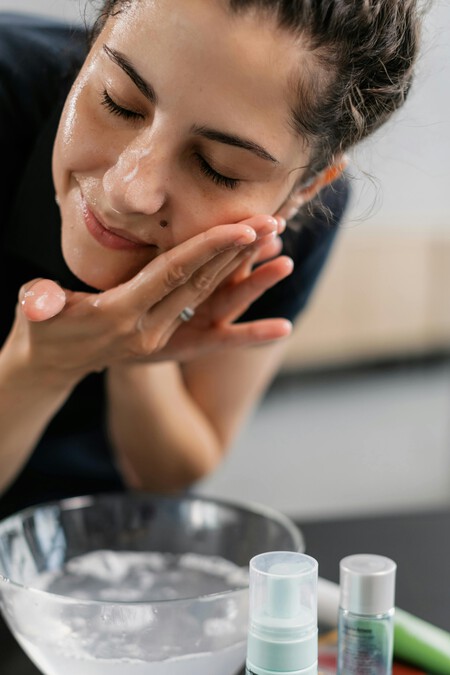
For her part, Dr. Chehade emphasizes that another big problem is not doing a good cleaning. “Accumulating traces of makeup, impurities or sebum directly affects the quality of the skin, dulls its appearance and makes it difficult for the active ingredients to penetrate correctly. If cleansing fails, the entire routine loses effectiveness.” As we well know, proper facial cleansing is one of those fundamental steps that transforms the skin the most.
Another aspect that the doctor emphasizes is the importance of using sun protection every day.
Nivea and olive oil, two classics for skin care
For years we have seen how creams as iconic as the Nivea in the blue can were not missing from many women's dressing tables, being their go-to moisturizing and anti-aging cream. It is true that before, skin care routines were not made up of the use of many products, but on the contrary, minimalism prevailed, and a cream as simple as Nivea was given all-terrain use.
Marta Ortega considers that the traditional Nivea cream can improve hydration and barrier function, but only recommends it for occasional use since it has high occlusivity.
Another classic has been the use of olive oil, which many women have confessed to using to remove makeup or nourish their skin. Dr. Rafael Fernández does not believe these products are effective: “They are very occlusive and can provide superficial hydration, something that can be pleasant in mature skin, especially if there is dryness. However, they do not act on a biological level or stimulate processes such as collagen production or cell renewal, that is, they can complement a routine, but they should not be the basis of the treatment if we seek to improve the quality of the skin in a real and sustained way,” emphasizes the expert. Likewise, Ortega considers that olive oil can destabilize the skin barrier by altering the composition of lipids.