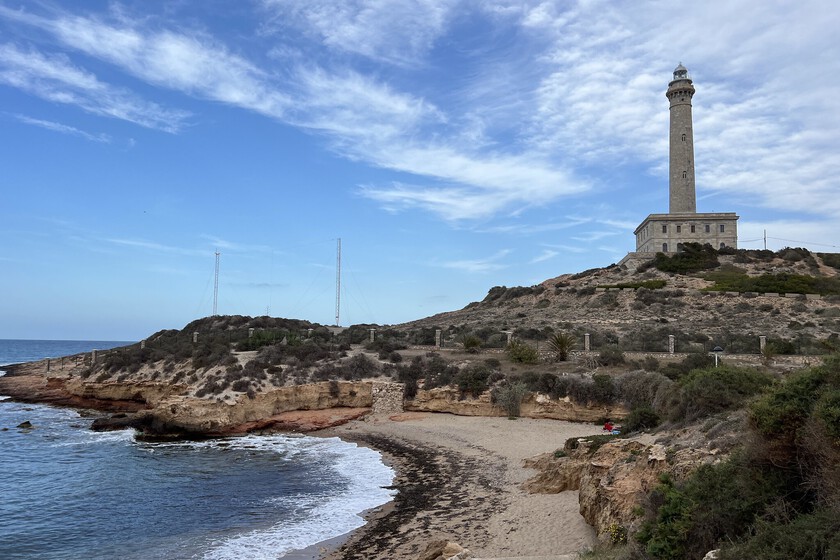
Coastal towns existed long before tourism discovered them and, in some cases, ruined them. In Cabo de Palos, luckily, the promenade has not ended up becoming a succession of franchises, apartments all the same and terraces without soul. Here the feeling of being in a real fishing village still survives.
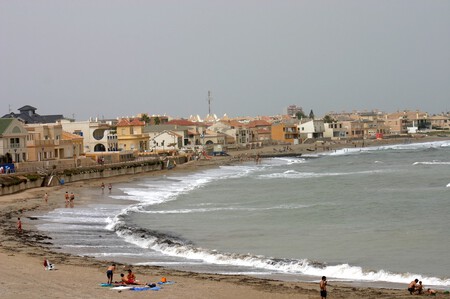
Located on the coast of Cartagena (Murcia), Cabo de Palos was born linked to fishing and that heritage is still present and visible in its daily life. You don't have to look too hard, just go to the port and contemplate the picture of nets stretched out in the sun, small boats coming and going, boxes of fish and sailors working while life goes on around you. It is not an artificial postcard, it is routine. And that is precisely why it is so beautiful.
I HQ
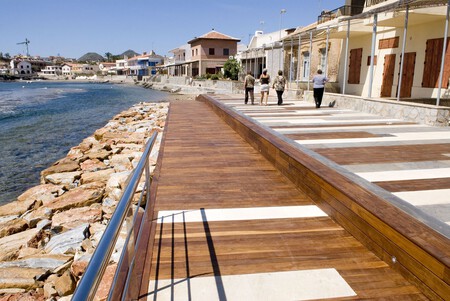
The best place to understand this character is Paseo de la Barra, one of those corners that alone justify a getaway. Here the Mediterranean accompanies each step on one side while the promenade borders the port area between moored boats, terraces and low houses that still retain the usual simple air. It doesn't have the artifice of other, more spectacular boardwalks, it has something better: personality.
In one of its sections, La Zeneta appears, the oldest part, where some homes almost touch the water and the landscape preserves the irregular and spontaneous charm that cannot be projected on an urban plan. It is the type of beauty that is born alone over the years. But if the walk tells the visual history of the town, the gastronomy finishes explaining everything. Because Cabo de Palos has its own dish: the cauldron. It is not a simple local recipe, but a hallmark.
Enrique Freire
The cauldron was born from the humble kitchen of the area's fishermen, who prepared rice on board with the rock fish that they could not sell, using an iron container from which it inherited its name. Over time, that practical and filling food ended up becoming one of the great gastronomic emblems of Murcia and an attraction to visit Cabo de Palos.
Today it is made with an intense broth of fish, ñoras, garlic and tomato, and is usually served in two courses: first the rice and then the fish on the side. Eating it in front of the sea where it emerged is an accessible luxury. The getaway is completed by going up to the Cabo de Palos Lighthouse, whose light was turned on for the first time in 1865 and continues to dominate the coast from the top of the promontory that gives its name to the town.
Cartagena City Council
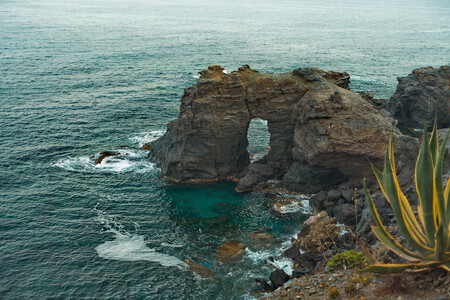
One of the best ways to discover Cabo de Palos is by walking from the port to the lighthouse following the coastal path. The route advances between cliffs, ravines and natural viewpoints. During the journey, small coves of crystal clear water appear hidden between rocks and whimsical shapes. Some are just a spit of sand or gravel, others look like natural pools. They are corners especially appreciated by those looking for a quiet swim away from the busiest beaches.
Beneath the surface of the sea lies another of the great reasons to escape to Cabo de Palos. This is the Marine Reserve of Cabo de Palos and Islas Hormigas, which is considered one of the most valuable in the Mediterranean due to the richness of its seabed and the biodiversity it houses. In fact, this small town in Murcia has become a reference destination for diving lovers who come from all over Europe, attracted by its transparent waters, schools of fish, rock formations and old sunken shipwrecks.
Off the coast there are also the well-known Hormigas Islands, a group of rocky islets that emerge from the sea and give the landscape an almost wild air. Its silhouette, visible on clear days, reminds us that the Mediterranean still retains a wilder and less domesticated facet. Do you need even more reasons to include it on your list this summer?
Cover Forum | Mikel Agirregabiria