In the 80s, the penne alla vodka They were served in New York nightclubs. This dish became an eighties icon but its origin is not entirely clear. According to Pasquale Bruno Jr., penne a la vodka were invented in a restaurant in Bologna, Italy. Other culinary historians say that it was born in the United States in the 1980s. And in 'Food for Friends', Barbara Kafka states that salsa was common in Italy before it triumphed in the United States. Regardless, it is a dish that we love.
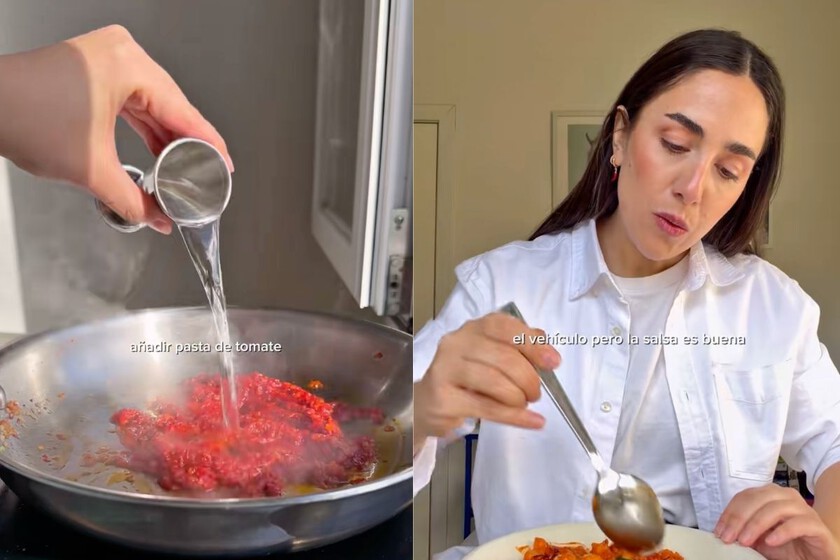
Vodka pasta is one of those pasta recipes that are perfect for not getting bored and whose base is a very creamy, slightly spicy sauce with an incredible aroma. And according to cook Paula Casado, it is suitable not only for pasta, but also for legumes. “Any pasta sauce works the same with legumes, because in the end the pasta is not the dish, it is just the vehicle,” he explained on his social networks. “If the sauce is good, the dish works the same if you change the vehicle,” she added, and as she herself states, “it is a very convenient way to add more vegetable protein to my dishes.”
Casado's idea is that instead of using the classic penne or macaroni with that vodka sauce, let's use some cooked legumes from a jar, in your case chickpeas. For this recipe you need: three shallots, a couple of cloves of garlic, tomato concentrate, basil, cooking cream and vodka, as well as a jar of cooked chickpeas.
@paulacasadochef Publi CHICKPEAS ALLA VODKA 🍅🌶️ The same delicious sauce, just change the vehicle🙂↔️🙂↔️ I love the cooked chickpeas from @Legumbres Luengo: they absorb the flavor, hold the sauce and without doing anything different, you add protein and fiber, a small plate 10/10 right🫰🏻🫰🏻😌 What pasta sauce do we try next with? #WorldPulseDay #luengo #easyrecipes #chickpeas #allavodka
♬ original sound – Paula Casado
We start by chopping the shallots (you can substitute them with a chive) into a very fine brunoise, along with the garlic, which you will also chop very finely. You put it in a pan with a knob of butter and let it cook until it turns golden brown. Then you add a couple of tablespoons of tomato concentrate and, if you want, some chili flakes to give it the characteristic spicy touch. Sauté everything together for a minute and add a shot of vodka, a shot.
Let it cook for a few seconds and add a couple of whole basil branches and cooking cream. Stir well to integrate everything and let it cook over low heat until the sauce has a creamy consistency. Then adjust the salt, remove the basil branches and add a little more butter to give shine to the sauce, and plenty of Parmesan cheese.
We are going to drain the chickpeas and add them to the sauce for a couple of minutes so that the flavors integrate. Casado puts them in the oven until they are golden brown. “You bake them until they are well au gratin,” he explains, so turn the oven to maximum power and add more cheese on top so that it melts. Once outside, you can decorate with fresh basil leaves and a little burrata for a crazy dish with little effort. As Casado explains well, “without doing anything different, you add protein and fiber to the dish,” just changing the pasta for a legume.
Note: some of the links in this article are affiliated and may provide a benefit to Trendencias.