Any nutritionist you ask will tell you that legumes should be an essential part of our diet. In addition to being a source of fiber, they are rich in vegetable proteins. Chickpeas, for example, and according to the Spanish Nutrition Foundation, have 19.4 grams of protein per 100 grams. Chickpeas are also the legume with the most phosphorus and calcium, they have a high proportion of essential amino acids and complex carbohydrates and minerals such as potassium and magnesium.
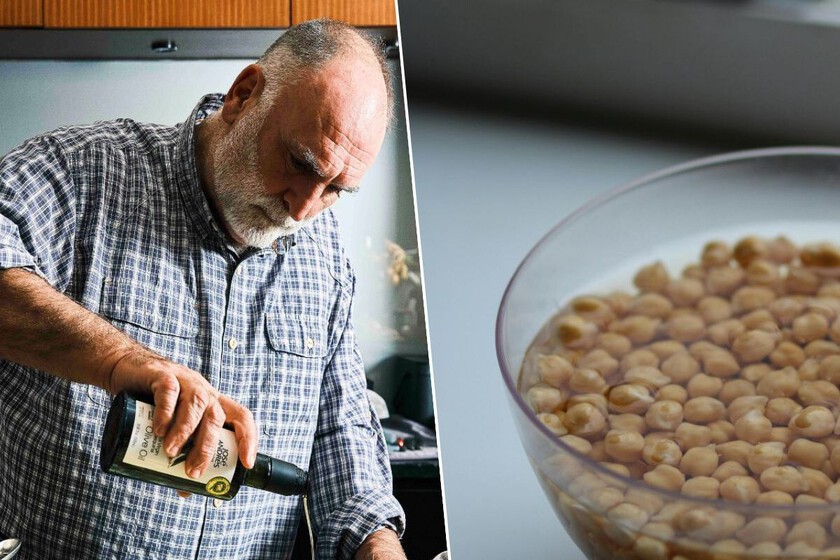
If you want to include this food in your diet, you can always go for those that come cooked and canned, but if you are looking to save some money, it is best to buy dried legumes and make them from scratch. It is not as complicated as it may seem, and there is a trick that José Andrés, the well-known Asturian chef, shared so that they always turn out tender. I did it on one of the 'Let's cook with José Andrés' programs broadcast by RTVE and it is as easy as adding an ingredient that you have at home to the water in which we will soak the chickpeas: baking soda.
“When I soak the chickpeas I add a little baking soda because it helps the water lose its acidity,” he explained to us. In this way, he adds, “it helps us make the chickpeas very tender and tasty.” You only have to add a teaspoon to alter the flavors and only change the alkalinity of the water, especially in “hard” water areas. This way we manage to soften its fibers and achieve a creamy texture without peeling too much.
Once the soaking time is over (at least 8 hours before cooking them), we will throw away that water because it has already done its job. When we have drained the legume, explains Andrés, “we put the chickpeas in the pot and cover them with mineral water.” It is not essential if you have good tap water, but it ensures that “it is neutral water that does not give us flavors that we do not want.”
Although we could cook the chickpeas without prior soaking, not doing so could affect their digestibility and cooking time. When we soak them, we also reduce their antinutrients, which according to Santiago Campillo, biologist and scientific communicator, are “a series of substances that prevent the correct absorption of nutrients.” It reduces its bioavailability and prevents the nutrients from being absorbed well, and since we want to have all the benefits of this legume, it is best to listen to José Andrés. Soak them but with baking soda to ensure they are soft and delicious.