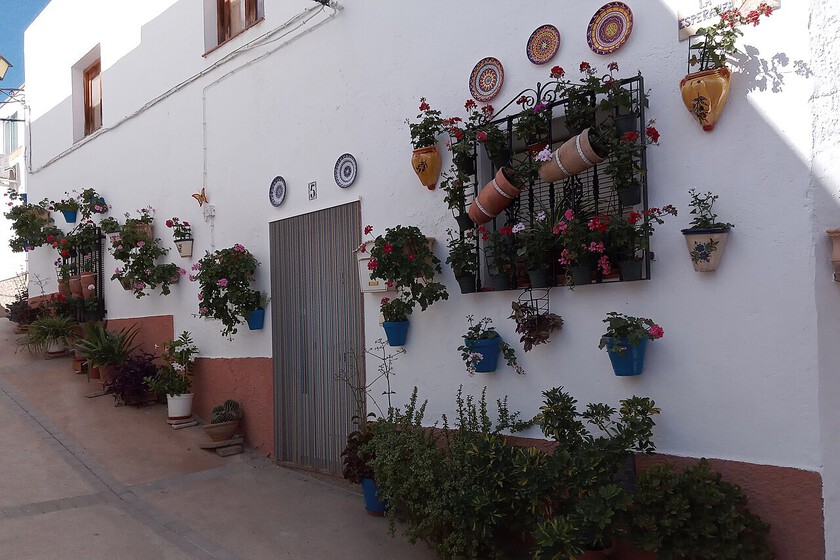
Almería is much more than that white labyrinth overlooking the Mediterranean that is Mojácar or the artisan tradition and the colorful streets of Níjar. The most experienced travelers know that there is another corner that has nothing to envy them and that, furthermore, is not overcrowded. It is a small white town where flowers are not decoration, but almost a way of life.
It is called Lucainena de las Torres and it has something difficult to find even in Andalusia: an impeccable aesthetic of streets full of pots in which sometimes it even seems that there are more flowers than neighbors. And it is not such a big exaggeration if you take into account that only about 690 inhabitants live here.
The white town hidden between mountains
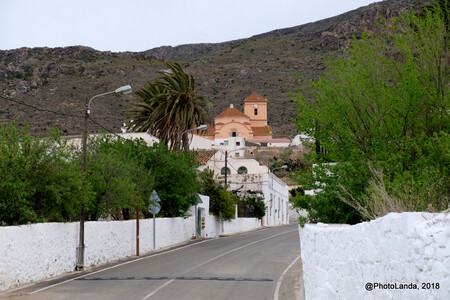
Lucainena de las Torres is located in the heart of the Sierra Alhamilla, in the interior of the province of Almería, about 50 kilometers from the capital. The landscape that surrounds the town mixes ocher mountains, ravines and a harsh nature that contrasts with the almost luminous cleanliness of the white town of the urban area.
PhotoLanda
In fact, from the top of some viewpoints, the houses look like small white specks dotting the landscape. It is not surprising that it is part of the list of the most beautiful towns in Spain, a recognition that only Mojácar and this small mountain town can boast of within the province.
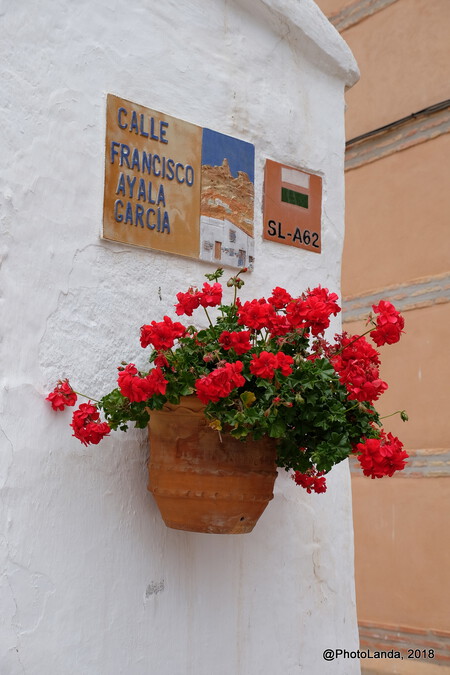
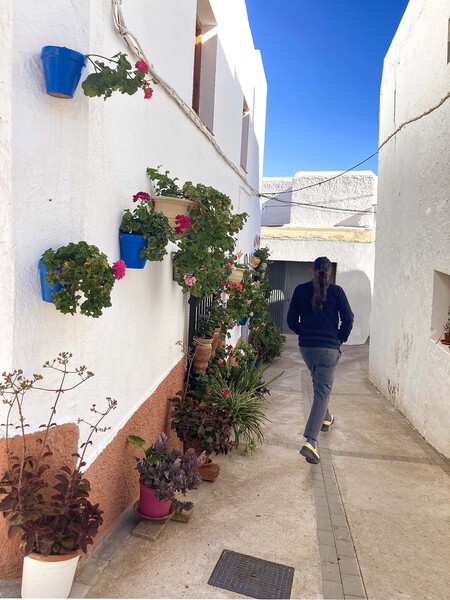
The first thing that catches your attention when walking through Lucainena is the extreme care with which its streets look. The pristine white facades are covered with flower pots that hang from the walls, rest on windowsills or line the floor. Geraniums, bougainvilleas and seasonal flowers turn every corner into a small improvised garden.
It is the neighbors themselves who are in charge of maintaining them, watering them and replacing them with others when necessary. The result is a town-garden where there is practically no corner without a plant or a flower.
PhotoLanda
What to see Lucainena de las Torres (besides flowers)
The walk usually begins in the town square, the heart of the town. Nearby are the old public laundries, where for decades residents gathered to wash clothes or collect water. A few steps away there is also the Church of Our Lady of Montesión, built on an old mosque and rebuilt in the 17th century.
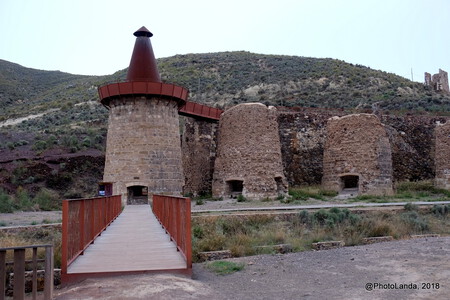
Although today rural tourism and tranquility define the town, during the 19th and early 20th centuries Lucainena experienced a real boom thanks to mining. The extracted mineral was processed in the calcination ovens, enormous industrial structures that are still preserved and that today form part of the historical landscape of the municipality. From here, the material was transported by train to the coast.
PhotoLanda
Today, that old railway line has been transformed into a Greenway that can be traveled on foot or by bicycle. The section that crosses the mining area allows us to understand how this small town reached more than 2,400 inhabitants in 1900.
The natural environment also plays a significant role. From the Poyo de la Cruz viewpoint or the Garruchete viewpoint you can get some of the best panoramic views of the town and the surrounding mountains. In particular, dominating the landscape is the Peñón de Lucainena, which exceeds a thousand meters.
Not far away is the Juagarí ravine, where a source of sulfurous waters is born to which popular tradition attributes healing properties. The story goes that it all started when a sick pig wallowed in said waters and recovered shortly after. From there, some public baths were even built in the 19th century.
Alicia Camacho Adarve
And to eat?
Among the most typical dishes, gurullos with rabbit stand out, a traditional pasta that is cooked in a stew. Also the wheat pot, the pumpkin stew or the corn balls. To finish or take as souvenirs, their roscos, cream buns or almond curds are famous.
With all this it is clear that, although Lucainena de las Torres does not have the tourist fame of other towns in the province, it has something difficult to imitate. It's signed up for a spring getaway.
Cover photo | Eduardo Milla